

1 Paisa – Nepal
Nepal
Context

Material
References
KM: #Click to copy to clipboard590
Numista: #47348
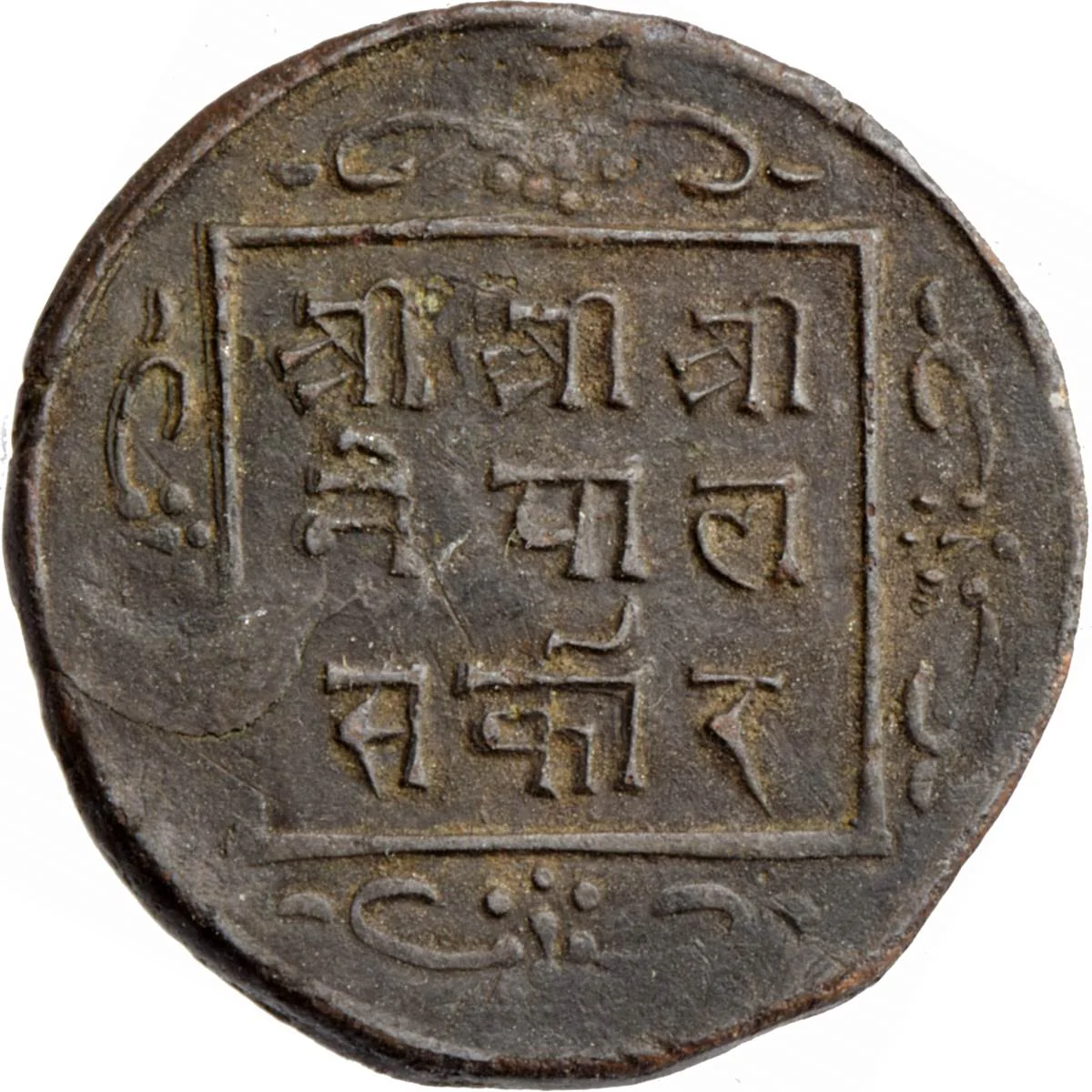
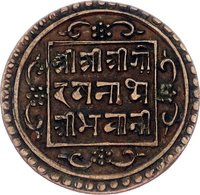
Obverse
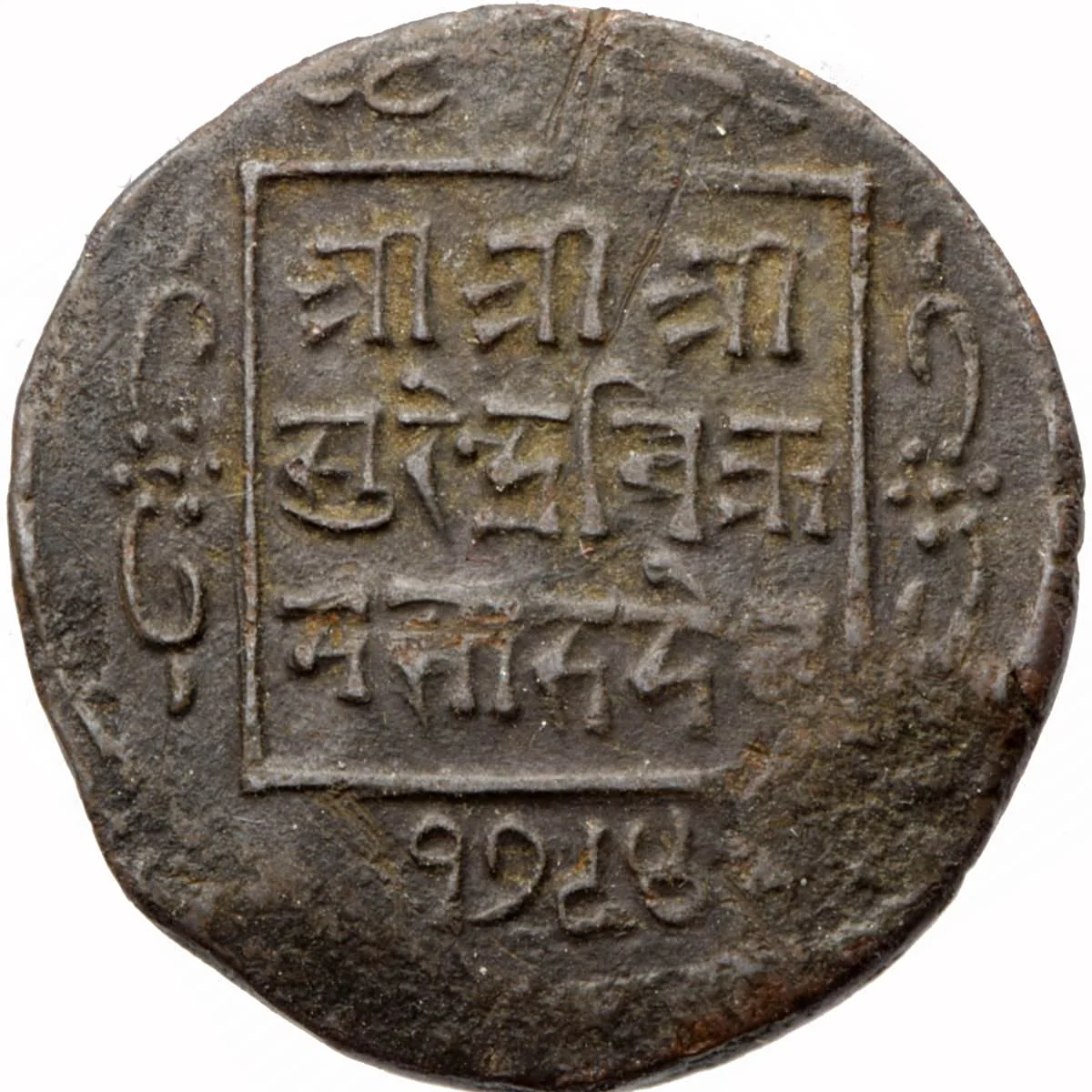
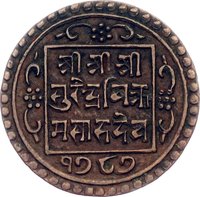
Reverse
Edge
Plain
Mintings
| Year | Mint Mark | Mintage | Quality | Collection |
|---|---|---|---|---|
| 1865 | — | — | ||
| 1866 | — | — | ||
| 1867 | — | — | ||
| 1868 | — | — | ||
| 1869 | — | — | ||
| 1870 | — | — | ||
| 1871 | — | — | ||
| 1872 | — | — | ||
| 1874 | — | — | ||
| 1875 | — | — | ||
| 1876 | — | — | ||
| 1877 | — | — | ||
| 1880 | — | — |
Historical background
In 1865, Nepal's currency situation was characterized by a complex and fragmented system, heavily influenced by its political and economic ties to both Tibet and British India. The primary circulating coins were the Mohar and the Dam, with the silver Mohar being the higher denomination. However, the system was not decimalized, leading to cumbersome calculations. Crucially, two separate rupee currencies were in concurrent circulation: the Nepalese silver rupee (Nepali Rupaiya) and the Indian silver rupee. Their exchange rates fluctuated based on silver content and market demand, creating confusion for trade and administration.
This monetary duality was a direct reflection of Nepal's geopolitical position. Trade with Tibet, conducted via the trans-Himalayan route, relied heavily on the Nepalese rupee, which was also minted for Tibet under a longstanding treaty. Conversely, burgeoning trade and employment (especially from Gurkha recruitment) with British India to the south brought a steady influx of Indian rupees into the Nepalese economy. The Rana regime, which had been in power since 1846, struggled to manage this bimetallic inflow and maintain sovereign control over the currency.
Recognizing the inefficiencies, Prime Minister Jang Bahadur Rana initiated a significant reform in 1865. He introduced a new, standardized silver coinage to replace the old Mohars, fixing the Nepalese rupee's value at a 2:3 ratio against the Indian rupee (1.5 Nepalese rupees = 1 Indian rupee). This decree aimed to stabilize the exchange rate, simplify transactions, and assert state authority over the monetary system. While implementation took time, the 1865 reform laid the essential groundwork for a more unified national currency, moving Nepal away from a purely medieval system toward one better suited for modernizing state finance and regional trade.
This monetary duality was a direct reflection of Nepal's geopolitical position. Trade with Tibet, conducted via the trans-Himalayan route, relied heavily on the Nepalese rupee, which was also minted for Tibet under a longstanding treaty. Conversely, burgeoning trade and employment (especially from Gurkha recruitment) with British India to the south brought a steady influx of Indian rupees into the Nepalese economy. The Rana regime, which had been in power since 1846, struggled to manage this bimetallic inflow and maintain sovereign control over the currency.
Recognizing the inefficiencies, Prime Minister Jang Bahadur Rana initiated a significant reform in 1865. He introduced a new, standardized silver coinage to replace the old Mohars, fixing the Nepalese rupee's value at a 2:3 ratio against the Indian rupee (1.5 Nepalese rupees = 1 Indian rupee). This decree aimed to stabilize the exchange rate, simplify transactions, and assert state authority over the monetary system. While implementation took time, the 1865 reform laid the essential groundwork for a more unified national currency, moving Nepal away from a purely medieval system toward one better suited for modernizing state finance and regional trade.
🌟 Uncommon