

5 para – Yugoslavia
Add to wishlist
Context
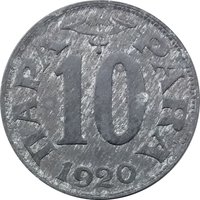
Year: 1920
Issuer: Yugoslavia
Ruler: Peter I
Currency:
(1918—1941)
Demonetization: 30 November 1932
Total mintage: 3,825,514
Material
References
KM: #
Numista: #14908
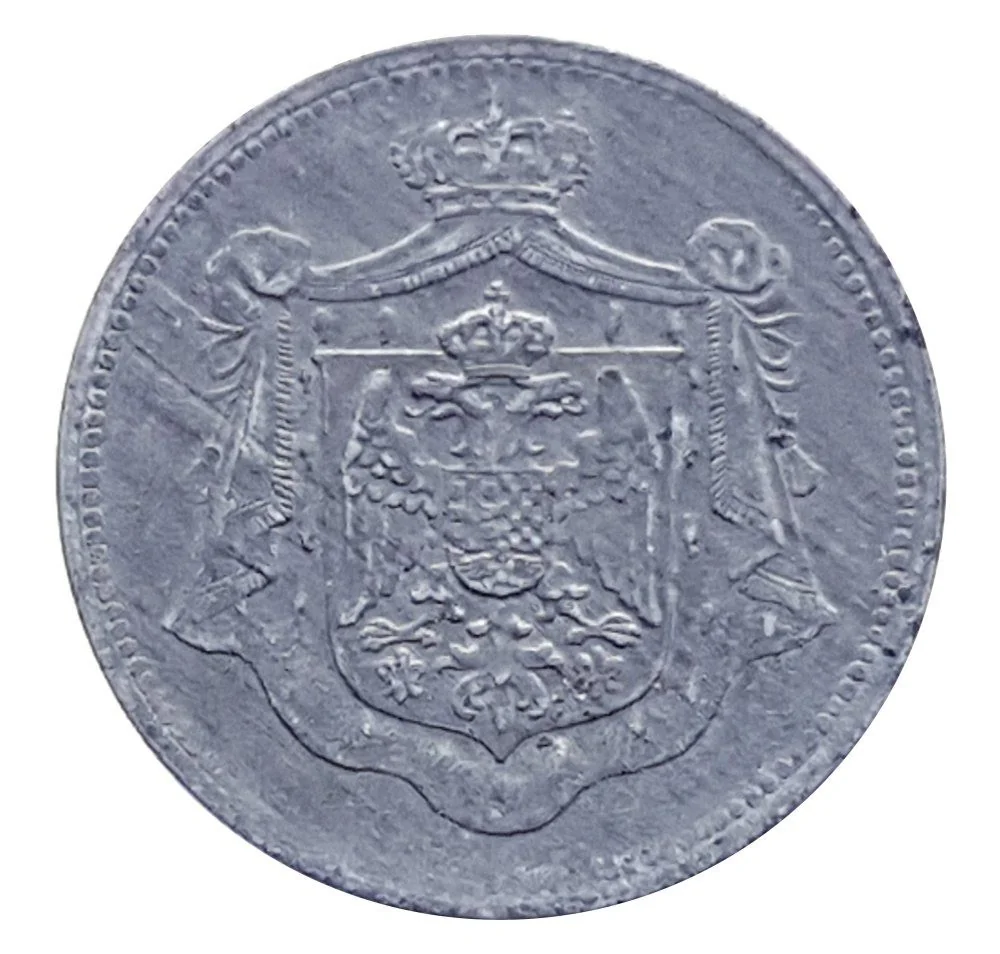
Obverse
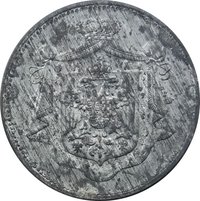
Description:
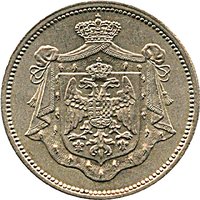
Heraldic emblem
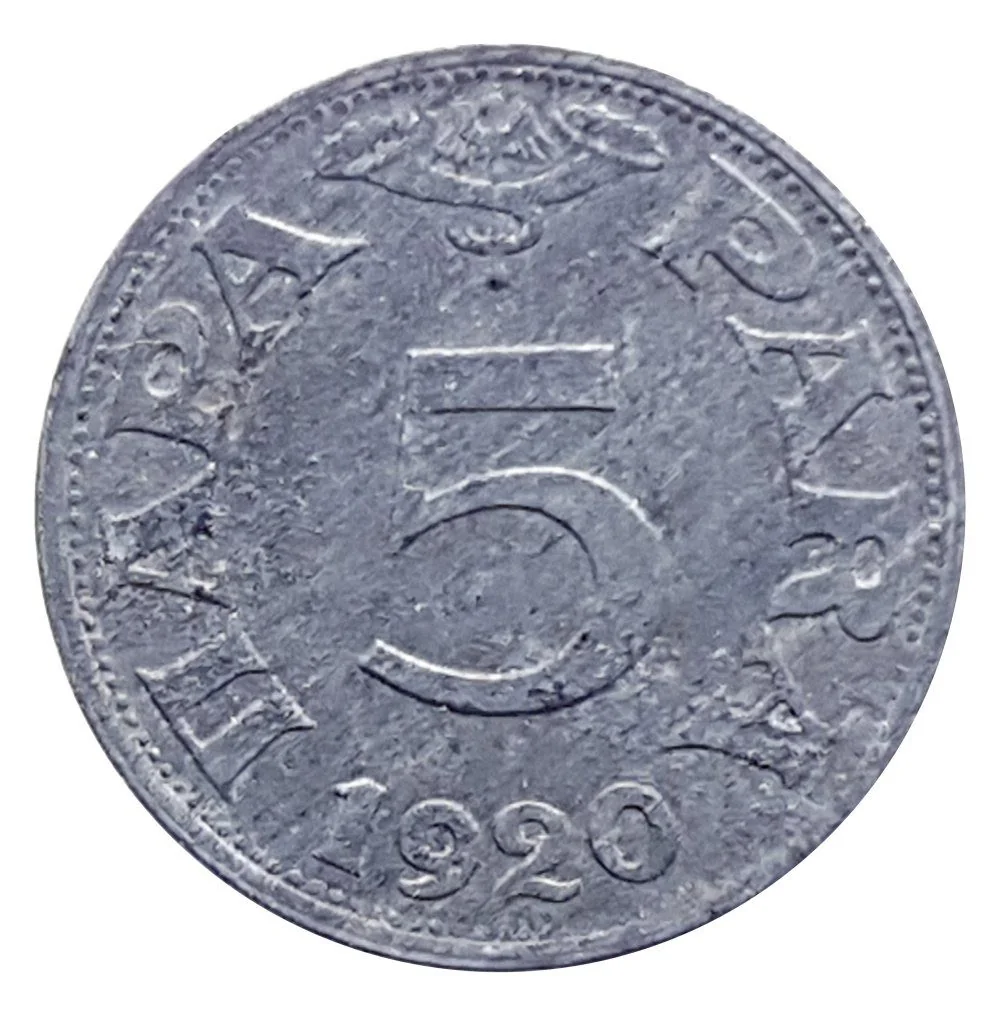
Reverse
Edge
Plain
Categories
| Animal> Bird |
| Symbol> Crown |
| Symbol> Caduceus |
| Symbols> Coat of Arms |
| Symbol> Cornucopia |
| Symbol> Double-headed eagle |
Mints
| Name | Mark |
|---|---|
| Münze Österreich | — |
Mintings
| Year | Mint Mark | Mintage | Quality | Collection |
|---|---|---|---|---|
| 1920 | — | 3,825,514 |
Historical background
Following the devastation of the First World War and the unification of the South Slavic territories into the Kingdom of Serbs, Croats, and Slovenes (the future Yugoslavia), the currency situation in 1920 was one of profound disarray and transitional complexity. The new state inherited a patchwork of distinct monetary systems from the former Austro-Hungarian, Serbian, and Montenegrin administrations. In practice, this meant that the Austrian crown, Hungarian crown, Serbian dinar, Montenegrin perper, and even the Bulgarian lev all circulated simultaneously, creating a chaotic and inefficient economic landscape that hindered national integration and trade.
The government's immediate priority was to establish a unified national currency. In January 1920, the provisional Kronendinar was introduced, defined as equivalent to one pre-war Austro-Hungarian crown. This was a stopgap measure designed to facilitate the exchange and withdrawal of the various inherited currencies. However, this process was slow and the economy remained fragile, burdened by wartime destruction, a large agrarian base, and the pressures of post-war reconstruction. Inflationary pressures, though not yet hyperinflation as seen in neighboring Austria or Hungary, were a growing concern due to budget deficits and a limited capacity for taxation.
Therefore, 1920 was a year of foundational monetary legislation aimed at long-term stability. The key development was the passing of the "Law on the Monetary System" on February 5, 1920, which formally established the Yugoslav dinar as the sole legal tender. The new dinar was defined in terms of gold, pegged to the French franc at a rate of 1 dinar = 0.0571 grams of pure gold. While the full implementation and physical replacement of old currencies would take several more years, this law provided the crucial legal framework, marking the definitive end of the monetary fragmentation of the past and the beginning of a unified Yugoslav currency system.
The government's immediate priority was to establish a unified national currency. In January 1920, the provisional Kronendinar was introduced, defined as equivalent to one pre-war Austro-Hungarian crown. This was a stopgap measure designed to facilitate the exchange and withdrawal of the various inherited currencies. However, this process was slow and the economy remained fragile, burdened by wartime destruction, a large agrarian base, and the pressures of post-war reconstruction. Inflationary pressures, though not yet hyperinflation as seen in neighboring Austria or Hungary, were a growing concern due to budget deficits and a limited capacity for taxation.
Therefore, 1920 was a year of foundational monetary legislation aimed at long-term stability. The key development was the passing of the "Law on the Monetary System" on February 5, 1920, which formally established the Yugoslav dinar as the sole legal tender. The new dinar was defined in terms of gold, pegged to the French franc at a rate of 1 dinar = 0.0571 grams of pure gold. While the full implementation and physical replacement of old currencies would take several more years, this law provided the crucial legal framework, marking the definitive end of the monetary fragmentation of the past and the beginning of a unified Yugoslav currency system.
🌱 Fairly Common