

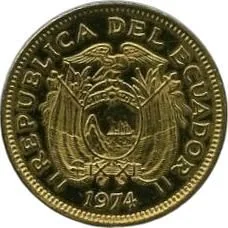
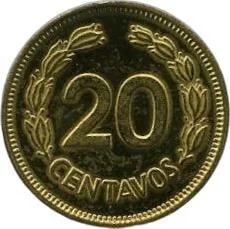
20 centavos – Ecuador
Add to wishlist
Ecuador
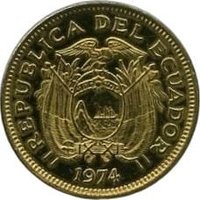
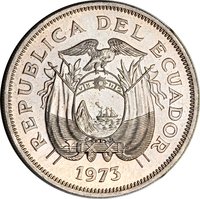
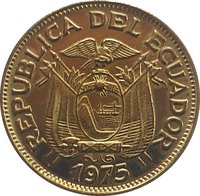
Obverse
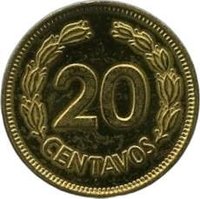
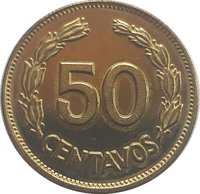
Reverse
Edge
Categories
| Symbols> Coat of Arms |
| Symbol> Wreath |
Mints
| Name | Mark |
|---|---|
| Monnaie de Paris | — |
Mintings
| Year | Mint Mark | Mintage | Quality | Collection |
|---|---|---|---|---|
| 1974 | — | — |
Historical background
In 1974, Ecuador's currency situation was characterized by relative stability under the sucre, which had been the national currency since 1884. The country was experiencing an economic boom, often referred to as the "Ecuadorian Miracle," driven by a surge in oil exports following the discovery of major reserves in the Amazon and the completion of the Trans-Ecuadorian Pipeline in 1972. This influx of petrodollars, managed by the military government of General Guillermo Rodríguez Lara, strengthened the country's foreign reserves and provided a sense of fiscal confidence, allowing the sucre to maintain a fixed exchange rate.
This fixed exchange rate regime, pegged to the U.S. dollar, was maintained by the Central Bank of Ecuador and provided predictability for trade and investment during this period of rapid growth. The government's substantial oil revenues initially helped to offset trade deficits and finance ambitious public spending programs in infrastructure and industry without immediate pressure on the currency. Consequently, 1974 did not see a currency crisis; instead, it represented the peak of an oil-fueled expansion that masked underlying structural economic vulnerabilities.
However, this apparent stability was precarious and built on a mono-export model. The reliance on oil revenues made the sucre and the broader economy highly susceptible to fluctuations in global oil prices. While not yet apparent in 1974, the spending patterns and external borrowing of the era, combined with a failure to diversify the economy, would later contribute to severe balance-of-payments problems, mounting foreign debt, and intense pressure on the sucre in the following decade, ultimately leading to a profound economic crisis and the currency's eventual replacement by the U.S. dollar in 2000.
This fixed exchange rate regime, pegged to the U.S. dollar, was maintained by the Central Bank of Ecuador and provided predictability for trade and investment during this period of rapid growth. The government's substantial oil revenues initially helped to offset trade deficits and finance ambitious public spending programs in infrastructure and industry without immediate pressure on the currency. Consequently, 1974 did not see a currency crisis; instead, it represented the peak of an oil-fueled expansion that masked underlying structural economic vulnerabilities.
However, this apparent stability was precarious and built on a mono-export model. The reliance on oil revenues made the sucre and the broader economy highly susceptible to fluctuations in global oil prices. While not yet apparent in 1974, the spending patterns and external borrowing of the era, combined with a failure to diversify the economy, would later contribute to severe balance-of-payments problems, mounting foreign debt, and intense pressure on the sucre in the following decade, ultimately leading to a profound economic crisis and the currency's eventual replacement by the U.S. dollar in 2000.
✨ Legendary