Logo Title
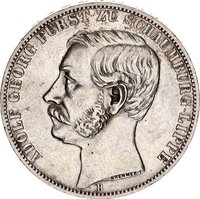
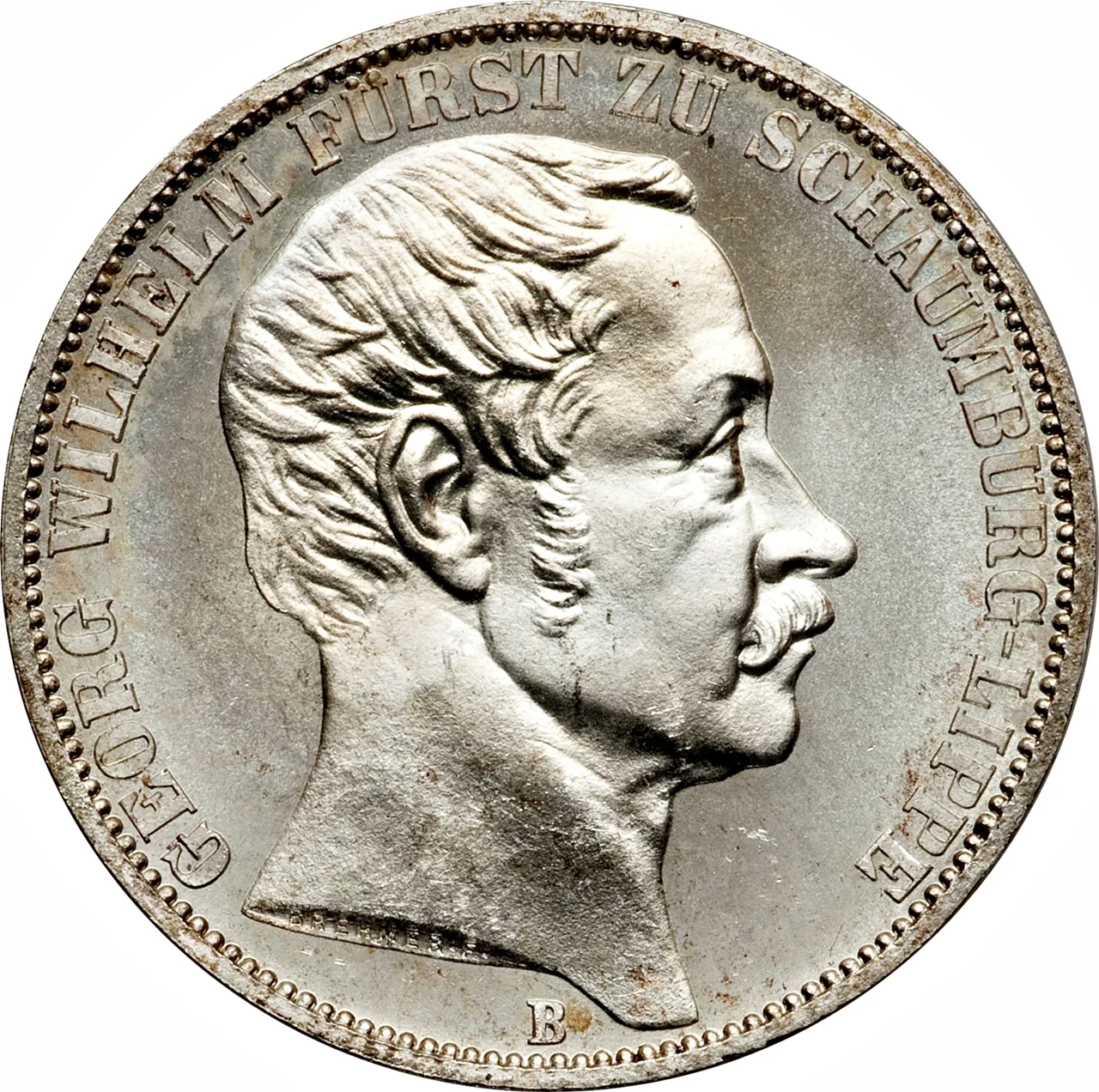
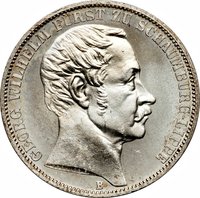
obverse
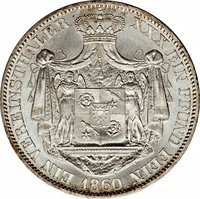
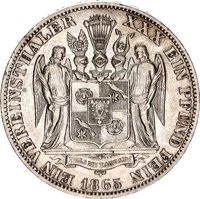
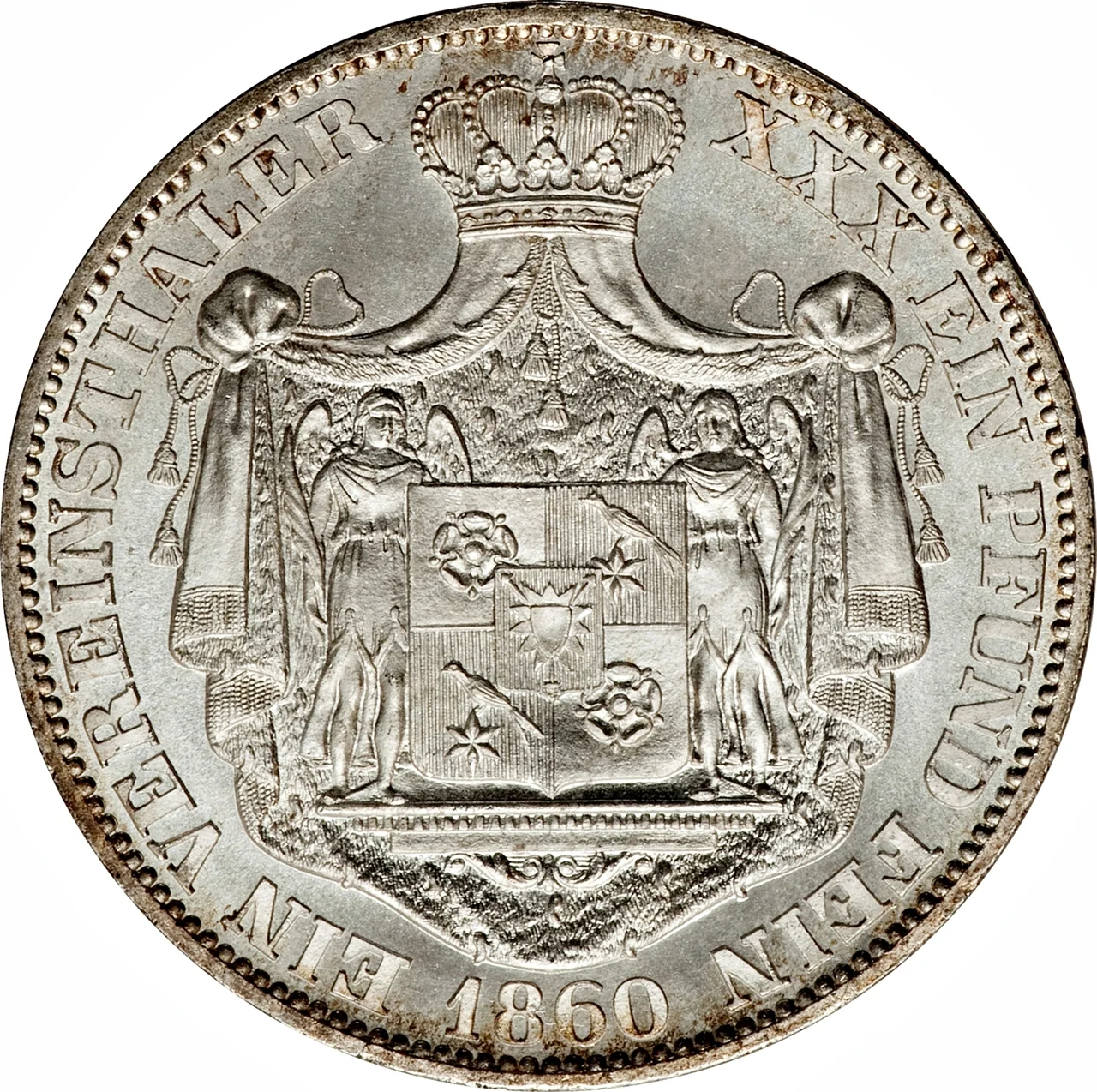
reverse
Heritage Auctions

1 Vereinsthaler – Principality of Schaumburg-Lippe

Germany
Context
Year: 1860
Country: Germany Country flag
Currency:
(1857—1873)
Subdivision: 1 Vereinsthaler = 1⁄30 Metric Pound
Demonetized: Yes
Total mintage: 8,356
Material
Diameter: 33 mm
Weight: 18.52 g
Silver weight: 16.67 g
Shape: Round
Composition: 90% Silver
Magnetic: No
Technique: Milled
Alignment: Medal alignment
Obverse
OBVERSE ↑
flip
Reverse
REVERSE ↑
References
KM: #Click to copy to clipboard46
Numista: #47268
Value
Bullion value: $47.15

Obverse

Description:
Bust of Georg Wilhelm, encircled by legend.
Inscription:
GEORG WILHELM FÜRST ZU SCHAUMBURG-LIPPE

B
Translation:
George William, Prince of Schaumburg-Lippe
Script: Latin
Language: German

Reverse

Description:
Crowned, draped shield with surrounding legend.
Inscription:
EIN VEREINSTHALER

XXX EIN PFUND FEIN

1860
Script: Latin

Edge

Lettering:WIENER-MÜNZVERTRAG ~ 24 ~ JAN. ~ 1857 ~
Legend:
WIENER-MÜNZVERTRAG ~ 24 ~ JAN. ~ 1857 ~
Translation:
WIENER-MÜNZVERTRAG ~ 24 ~ JAN. ~ 1857 ~
Language: German
Mints

NameMark
Hanover

Mintings

YearMint MarkMintageQualityCollection
18608,356

Historical background

In 1860, the currency situation in the Principality of Schaumburg-Lippe was defined by its participation in the German Customs Union (Zollverein) and its adherence to the prevailing North German monetary conventions. The principality did not issue its own independent coinage but operated within the framework of the "Vereinsthaler" system, established by the Vienna Monetary Treaty of 1857. This treaty created a common silver standard across most German states, with the Vereinsthaler as the central unit. Consequently, the currency in daily use was the Hanoverian Vereinsthaler and its subdivisions, as Schaumburg-Lippe fell within the monetary sphere of the Kingdom of Hanover.

Despite this overarching system, the principality did exercise a limited right of coinage. It minted small-denomination, fractional coins for local circulation, such as Groschen and Pfennige. These coins, bearing the image of Prince Adolf I Georg, were legally tied to the Vereinsthaler standard and were intended to facilitate everyday trade within its borders. However, they circulated alongside a variety of other German state coins and foreign currencies, a typical situation of monetary plurality before full national unification.

Therefore, the 1860 currency landscape was one of integrated complexity. While economically aligned with the Zollverein's broader trade and monetary policies, Schaumburg-Lippe maintained a modest expression of its sovereignty through its subsidiary coinage. This arrangement would persist until the political unification of the German Empire in 1871, which introduced the unified Goldmark and decisively ended the era of fragmented state coinages across Germany.
💎 Extremely Rare