

1 vereinsthaler – Schaumburg-Lippe
Add to wishlist
Germany
Context
Year: 1865
Country: Germany
Issuer: Schaumburg-Lippe
Period:
Ruler: Adolphus I
Currency:
(1857—1873)
Subdivision: 1 vereinsthaler = 1⁄30 Metric Pound
Demonetized: Yes
Total mintage: 7,000
Material
References
KM: #
Numista: #42354
Value
Bullion value: $42.64
Obverse
Description:
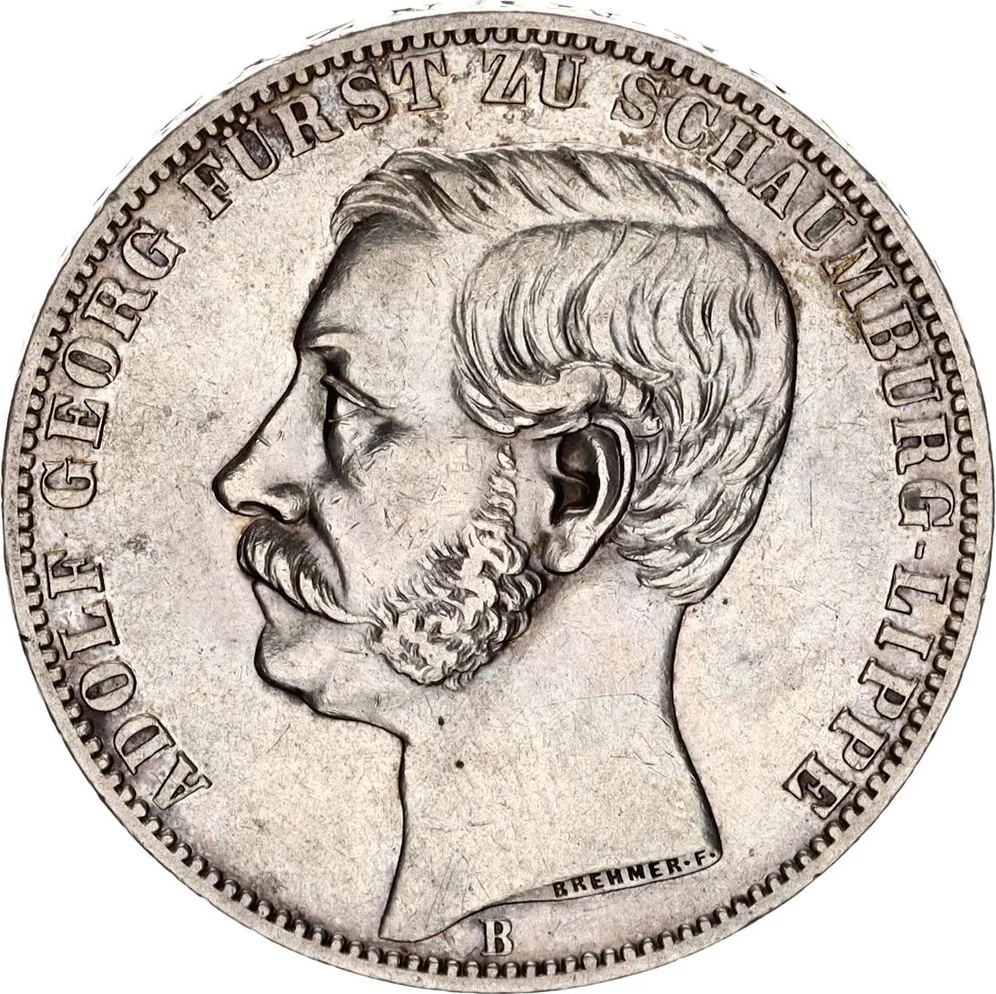
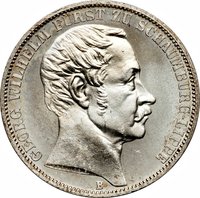
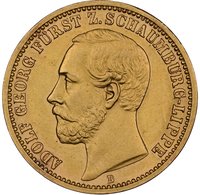
Left-facing bust.
Inscription:
ADOLF GEORG FÜRST ZU SCHAUMBURG-LIPPE
BREHMER·F·
B
BREHMER·F·
B
Translation:
Adolf Georg Prince of Schaumburg-Lippe
Brehmer F.
Brehmer F.
Script: Latin
Language: German
Engraver: Heinrich Friedrich Brehmer
Reverse
Description:
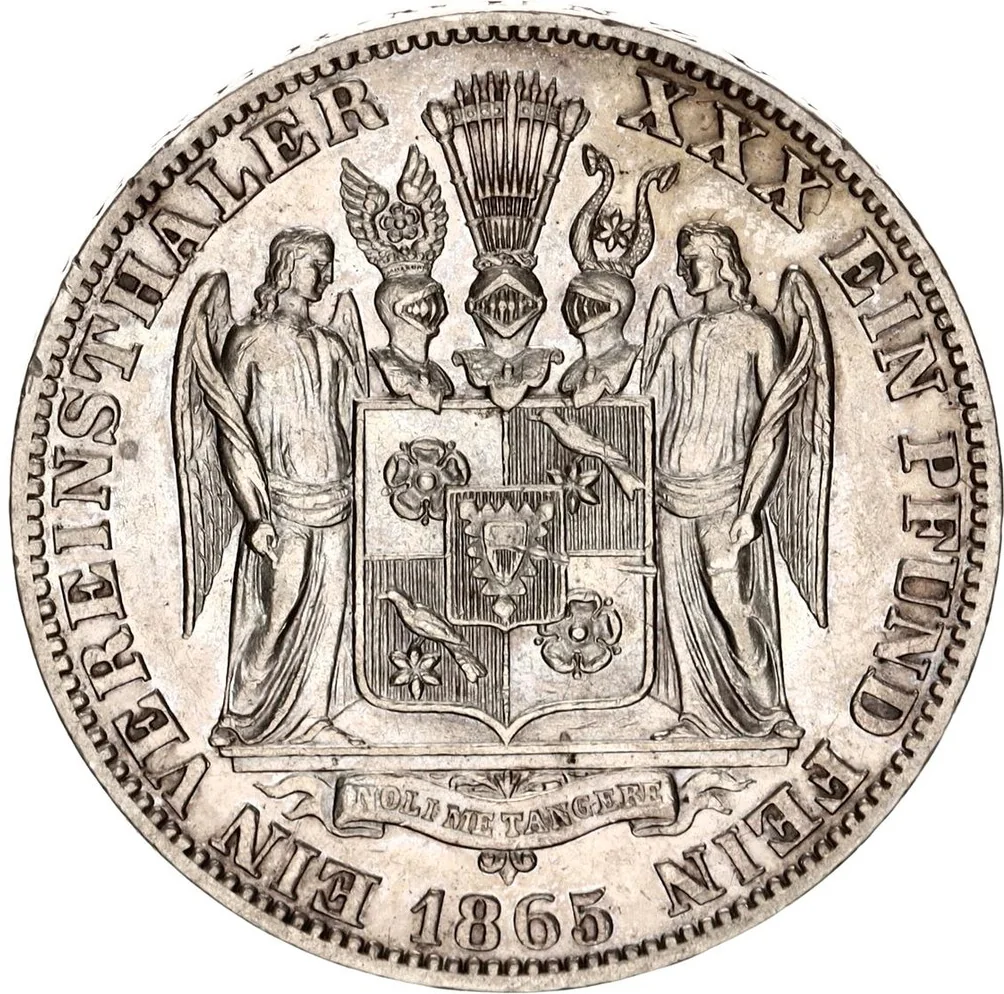
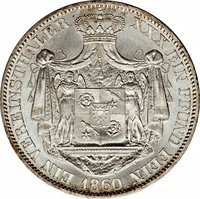
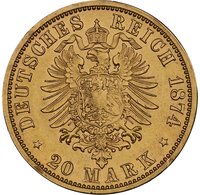
Angels supporting a coat of arms, encircled by legend.
Inscription:
EIN VEREINSTHALER XXX EIN PFUND FEIN
1865
1865
Script: Latin
Edge
Lettering:WIENER-MÜNZVERTRAG ~ 24 ~ JAN. ~ 1857 ~
Legend:
WIENER-MÜNZVERTRAG ~ 24 ~ JAN. ~ 1857 ~
Translation:
WIENER-MÜNZVERTRAG ~ 24 ~ JAN. ~ 1857 ~
Language: German
💎 Extremely Rare