

5 centavos – Philippines
Add to wishlist
Philippines
Context
Years: 1944–1945
Issuer: Philippines
Period:
(1935—1946)
Currency:
(1857—1967)
Demonetized: Yes
Total mintage: 136,354,000
Material
References
KM: #
Numista: #4711
Obverse
Description:
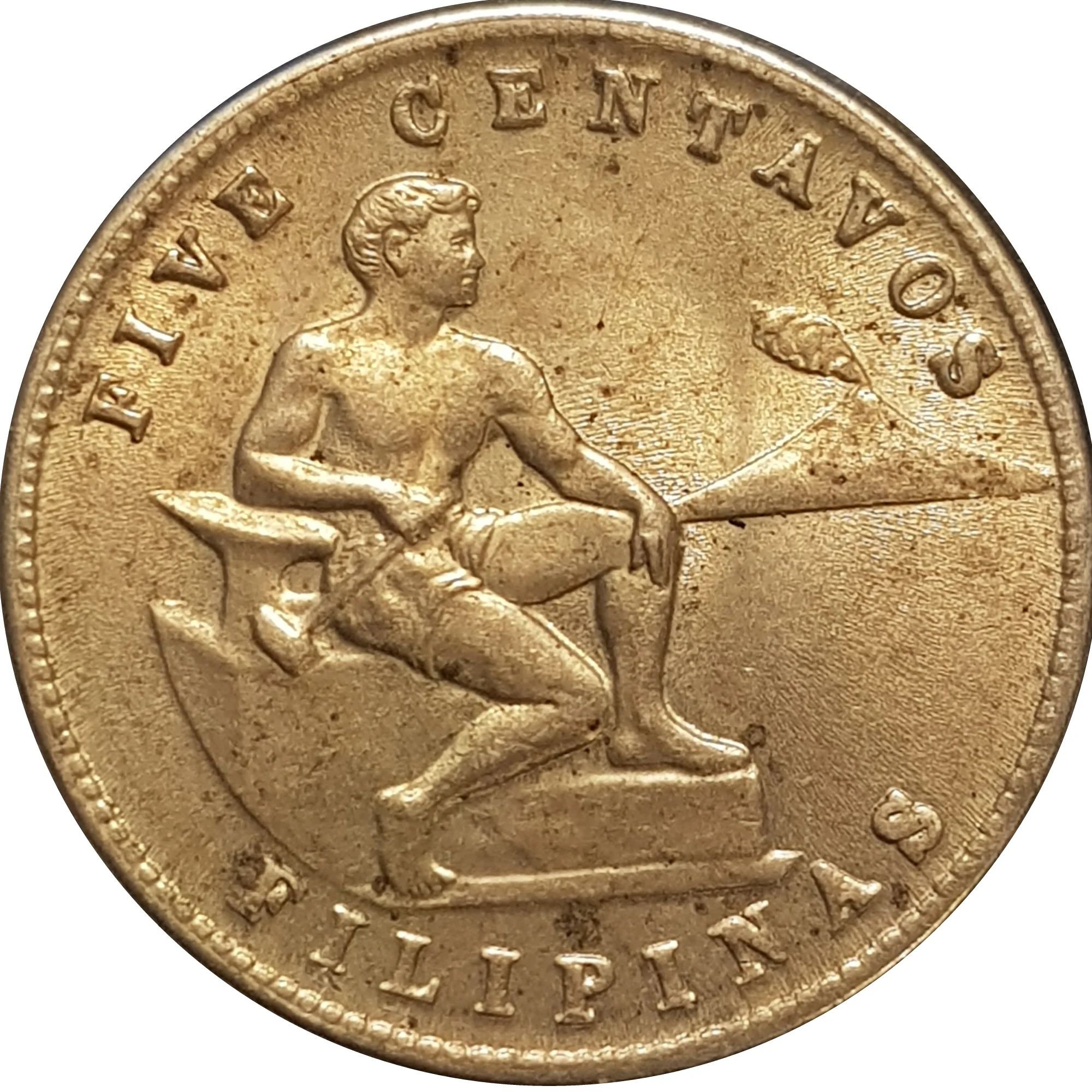
Man seated with hammer and anvil, volcano smoking at right.
Inscription:
FIVE CENTAVOS
FILIPINAS
FILIPINAS
Translation:
FIVE CENTAVOS
PHILIPPINES
PHILIPPINES
Script: Latin
Designer: Ambrosia Morales
Reverse
Description:
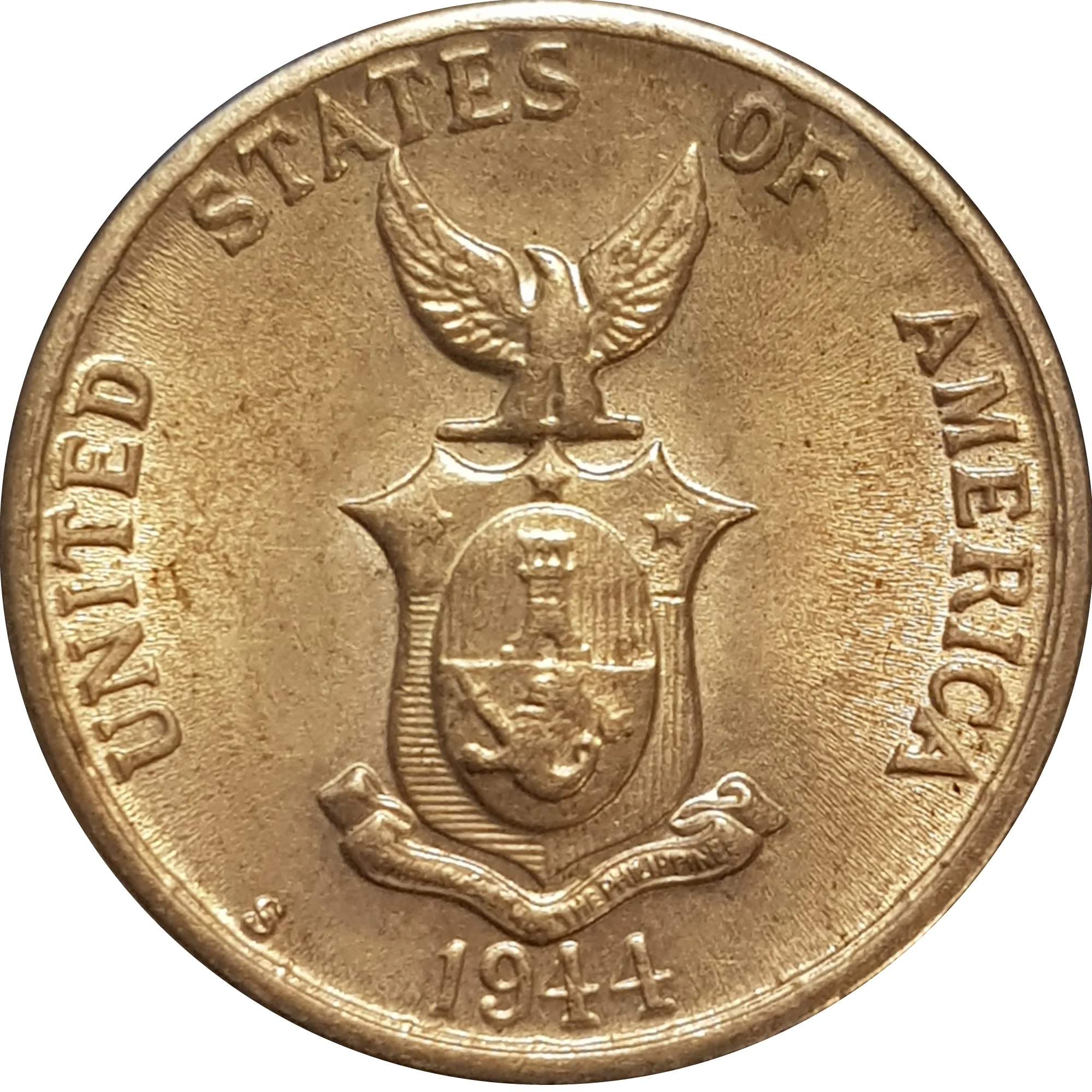
Philippine coat of arms.
Inscription:
UNITED STATES OF AMERICA
COMMONWEALTH OF THE PHILIPPINES
S 1944
COMMONWEALTH OF THE PHILIPPINES
S 1944
Script: Latin
Designers: Melicio Figueroa, Charles Barber
Edge
Plain
Categories
| Symbols> Coat of Arms |
| Geography> Mountain |
Historical background
The currency situation in the Philippines in 1944 was one of profound chaos and economic warfare, defined by the concurrent circulation of multiple competing currencies. Following the Japanese invasion in 1941-42, the occupying forces introduced "Japanese War Notes" (often called "Mickey Mouse Money"), which rapidly depreciated due to massive, unbacked printing to fund the occupation. By 1944, this currency was nearly worthless, leading to hyperinflation where citizens needed sacks of cash for basic goods, and a rampant black market flourished, operating largely on barter or trust.
Simultaneously, pre-war Philippine Commonwealth pesos and US dollars remained in the hands of the population but were outlawed by the Japanese, who punished their possession severely. Most significantly, in tandem with General Douglas MacArthur's return to Leyte in October 1944, US and Philippine Commonwealth forces introduced a new, stable currency. These "Victory Pesos" or "Emergency Circulating Notes" were printed in the United States and backed by the Philippine government-in-exile, intended to immediately replace the Japanese occupation currency and restore financial order in liberated areas.
Thus, 1944 was a pivotal year of transition from a collapsed occupation currency to a liberated one. The landscape was a dangerous patchwork: worthless Japanese notes in still-occupied zones, valuable and hoarded pre-war currencies, and the new Victory Pesos advancing with the front lines. This monetary fragmentation perfectly mirrored the fractured physical and political state of the archipelago, culminating in the US government declaring all Japanese military currency worthless immediately after Japan's surrender in 1945.
Simultaneously, pre-war Philippine Commonwealth pesos and US dollars remained in the hands of the population but were outlawed by the Japanese, who punished their possession severely. Most significantly, in tandem with General Douglas MacArthur's return to Leyte in October 1944, US and Philippine Commonwealth forces introduced a new, stable currency. These "Victory Pesos" or "Emergency Circulating Notes" were printed in the United States and backed by the Philippine government-in-exile, intended to immediately replace the Japanese occupation currency and restore financial order in liberated areas.
Thus, 1944 was a pivotal year of transition from a collapsed occupation currency to a liberated one. The landscape was a dangerous patchwork: worthless Japanese notes in still-occupied zones, valuable and hoarded pre-war currencies, and the new Victory Pesos advancing with the front lines. This monetary fragmentation perfectly mirrored the fractured physical and political state of the archipelago, culminating in the US government declaring all Japanese military currency worthless immediately after Japan's surrender in 1945.
🌱 Very Common