

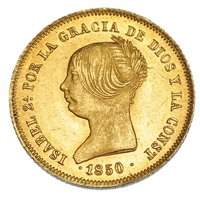
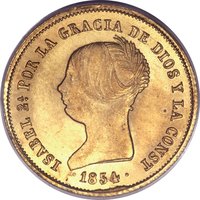
Obverse
Description:
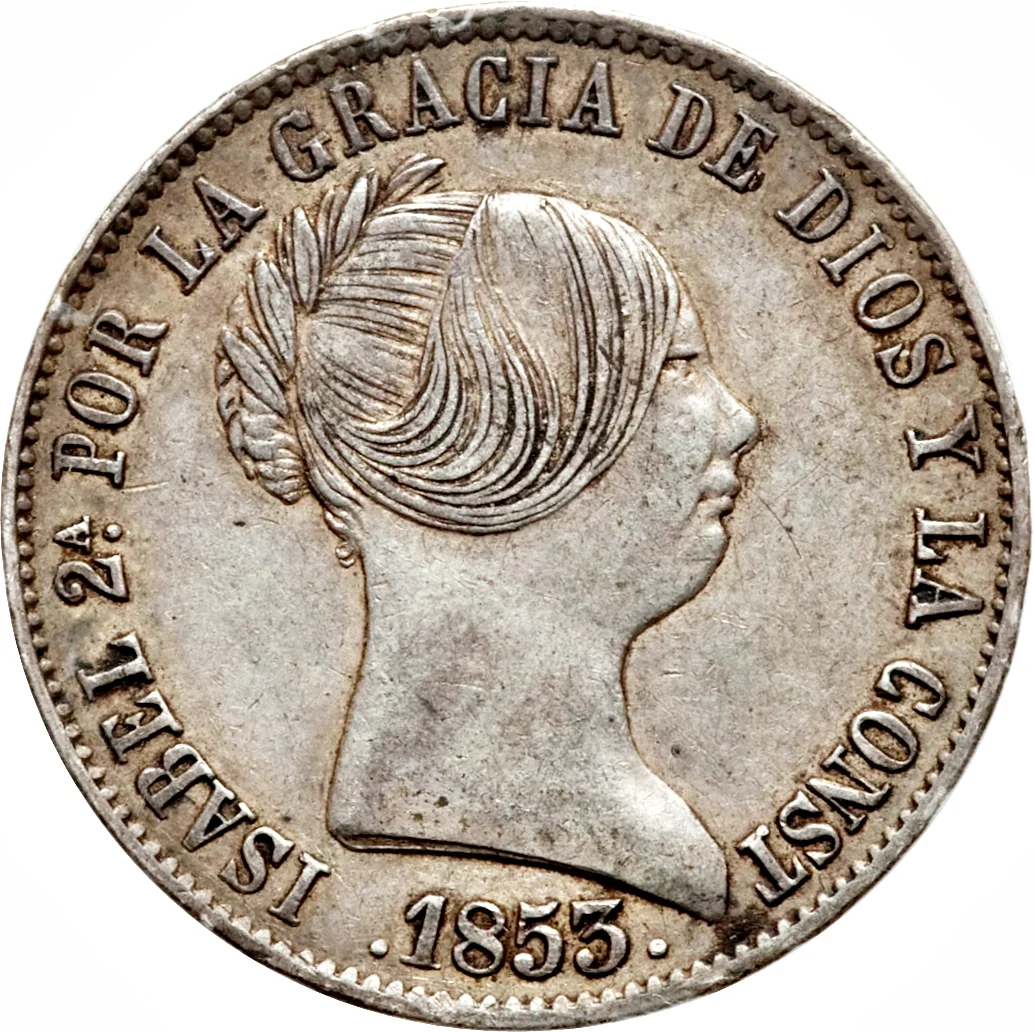
Young Isabella II facing right.
Inscription:
ISABEL 2A. POR LA GRACIA DE DIOS Y LA CONST
.1853.
.1853.
Translation:
Isabel 2nd, by the grace of God and the Constitution.
1853.
1853.
Script: Latin
Language: Spanish
Engraver: Remigio Vega
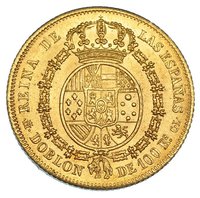
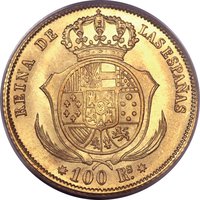
Reverse
Description:
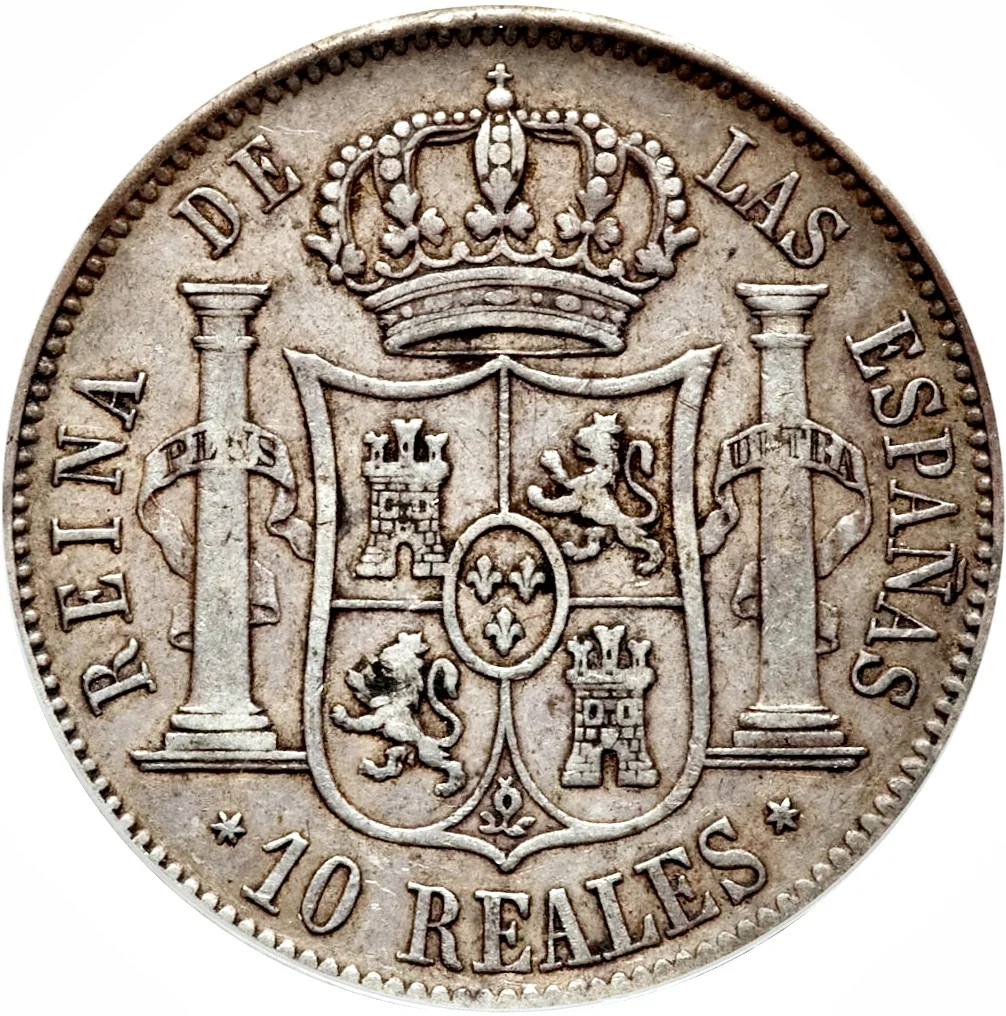
Spanish coat of arms with the Pillars of Hercules.
Inscription:
REINA DE LAS ESPAÑAS
PLUS ULTRA
🟌 10 REALES 🟌
PLUS ULTRA
🟌 10 REALES 🟌
Translation:
Queen of the Spains
Further Beyond
🟌 10 Reales 🟌
Further Beyond
🟌 10 Reales 🟌
Script: Latin
Language: Spanish
Engraver: Remigio Vega
Edge
Categories
| Person> Monarch |
| Symbols> Coat of Arms |
Mints
| Name | Mark |
|---|---|
| Royal Mint of Seville | — |
| Royal Mint of Madrid | (🟌) |
| Barcelona Mint / La Seca | (🟎) |
Mintings
| Year | Mint Mark | Mintage | Quality | Collection |
|---|---|---|---|---|
| 1851 | — | — | ||
| 1852 | — | — | ||
| 1853 | — | — | ||
| 1854 | — | — | ||
| 1855 | — | — | ||
| 1856 | — | — |
Historical background
In 1851, Spain's currency situation was characterized by a complex and fragmented system, a legacy of centuries of regional autonomy and the political turmoil of the early 19th century. The nation lacked a unified, state-controlled coinage. While the real was the official unit of account, a multitude of coins circulated simultaneously, including older Spanish issues from various monarchs, French francs from the Napoleonic occupation, and even Portuguese and Latin American coins. Most significantly, many regions, particularly Catalonia and the Basque Country, still actively minted and used their own local currencies, such as the peseta catalana and the peseta de Bilbao, which existed alongside the national units.
This monetary chaos created significant obstacles to internal trade and economic modernization. The value of coins depended not only on their metal content (primarily silver and copper, as gold was scarce) but also on their origin and public trust, leading to constant exchange difficulties and uncertainty. The government's finances were also strained, having relied heavily on debt issuance and seigniorage (profit from minting coins) to fund the Carlist Wars and other state expenses, which contributed to inflationary pressures and undermined confidence in the currency.
The year 1851 itself was part of a transitional period. The government of the Moderate Decade (Década Moderada) under General Narváez was attempting to centralize the state and reform the economy. While the definitive move to a unified national currency—the peseta—would not occur until 1868, the 1850s saw increasing political and intellectual pressure for monetary reform. Thus, the situation in 1851 was one of acknowledged dysfunction, setting the stage for the centralizing reforms that would eventually create the Bank of Spain (1856) and pave the way for a single, modern currency system.
This monetary chaos created significant obstacles to internal trade and economic modernization. The value of coins depended not only on their metal content (primarily silver and copper, as gold was scarce) but also on their origin and public trust, leading to constant exchange difficulties and uncertainty. The government's finances were also strained, having relied heavily on debt issuance and seigniorage (profit from minting coins) to fund the Carlist Wars and other state expenses, which contributed to inflationary pressures and undermined confidence in the currency.
The year 1851 itself was part of a transitional period. The government of the Moderate Decade (Década Moderada) under General Narváez was attempting to centralize the state and reform the economy. While the definitive move to a unified national currency—the peseta—would not occur until 1868, the 1850s saw increasing political and intellectual pressure for monetary reform. Thus, the situation in 1851 was one of acknowledged dysfunction, setting the stage for the centralizing reforms that would eventually create the Bank of Spain (1856) and pave the way for a single, modern currency system.
⭐ Somewhat Rare