

10 fils – Bahrain
Add to wishlist
Bahrain
Context
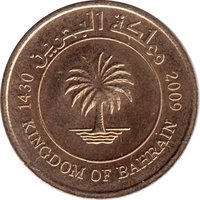
Year: 2009
Islamic (Hijri) Year:: 1430
Issuer: Bahrain
Ruler: Hamad bin Isa Al Khalifa
Currency:
(since 1965)
Material
References
KM: #
Numista: #46715
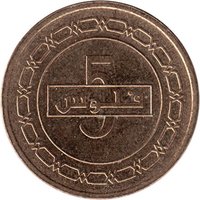
Value
Exchange value: 0.010 BHD
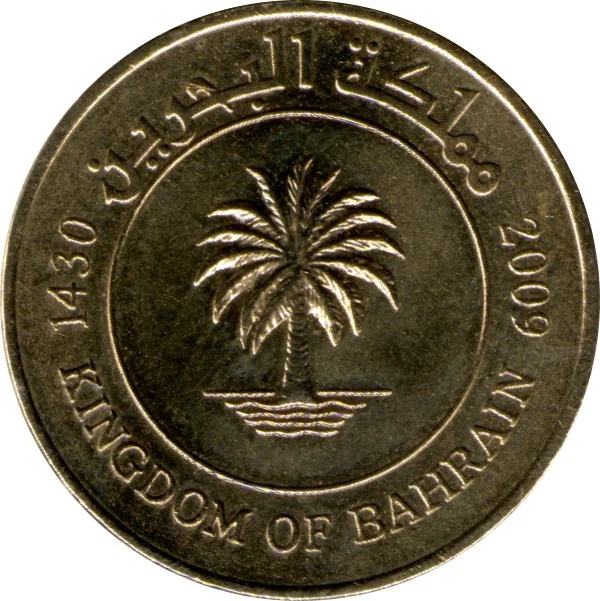
Obverse
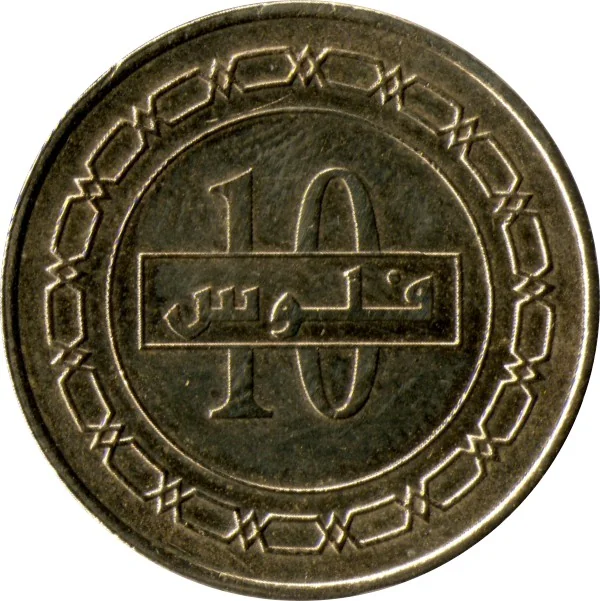
Reverse
Edge
Plain
Mints
| Name | Mark |
|---|---|
| Royal Mint | — |
Mintings
| Year | Mint Mark | Mintage | Quality | Collection |
|---|---|---|---|---|
| 2009 | — | — |
Historical background
In 2009, Bahrain's currency situation was defined by its unwavering peg to the US dollar, a policy maintained since 2001. This fixed exchange rate of 0.376 Bahraini Dinars (BHD) to 1 USD provided critical stability for the small, open economy, particularly as a regional financial hub. The peg helped anchor monetary policy, control inflation, and foster confidence for foreign investment and trade, which were vital pillars of the nation's economic strategy. This commitment was especially significant during the global financial crisis, as it signaled resilience amidst regional and international volatility.
The year presented challenges, however, primarily stemming from the global economic downturn and a sharp decline in oil prices from their mid-2008 peak. This put pressure on Bahrain's fiscal and external balances, as hydrocarbon revenues constituted a major portion of government income. While the dollar peg provided exchange rate stability, it also meant Bahrain imported the US Federal Reserve's ultra-loose monetary policy, keeping local interest rates low. This environment, coupled with the economic slowdown, raised concerns about potential asset price inflation and reduced the central bank's independent tools to stimulate the domestic economy.
Ultimately, the currency regime emerged from 2009 intact and unquestioned. The government and the Central Bank of Bahrain reaffirmed their absolute commitment to the dollar peg, viewing it as a non-negotiable cornerstone of economic stability. The pressures of the year underscored the trade-offs of the peg—sacrificing independent monetary policy for stability—but also reinforced its perceived necessity. The focus remained on using fiscal policy and regulatory measures to navigate the post-crisis landscape, while the currency itself remained a symbol of predictability in an uncertain time.
The year presented challenges, however, primarily stemming from the global economic downturn and a sharp decline in oil prices from their mid-2008 peak. This put pressure on Bahrain's fiscal and external balances, as hydrocarbon revenues constituted a major portion of government income. While the dollar peg provided exchange rate stability, it also meant Bahrain imported the US Federal Reserve's ultra-loose monetary policy, keeping local interest rates low. This environment, coupled with the economic slowdown, raised concerns about potential asset price inflation and reduced the central bank's independent tools to stimulate the domestic economy.
Ultimately, the currency regime emerged from 2009 intact and unquestioned. The government and the Central Bank of Bahrain reaffirmed their absolute commitment to the dollar peg, viewing it as a non-negotiable cornerstone of economic stability. The pressures of the year underscored the trade-offs of the peg—sacrificing independent monetary policy for stability—but also reinforced its perceived necessity. The focus remained on using fiscal policy and regulatory measures to navigate the post-crisis landscape, while the currency itself remained a symbol of predictability in an uncertain time.
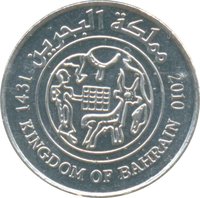
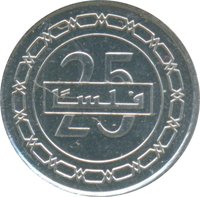
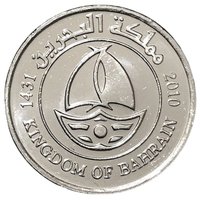
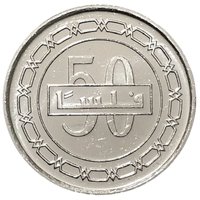
Series: 2009 Bahrain circulation coins
🌱 Common