

1 paisa – Hyderabad-Elichpur Feudatory
Add to wishlist
India
Context
Year: 1848
Islamic (Hijri) Year:: 1264
Country: India
Issuer: Hyderabad-Elichpur Feudatory
Ruler: Akbar Shah II
Currency:
Demonetized: Yes
Material
Diameter: 17.88 mm
Weight: 11.29 g
Shape: Irregular round
Composition: Copper
Magnetic: No
Technique: Hammered
Alignment: Medal alignment
flip
References
Numista: #467066
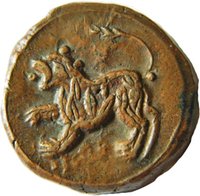
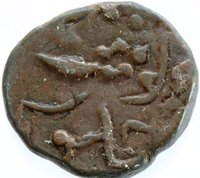
Obverse
Description:
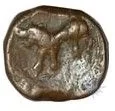
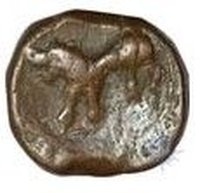
Tiger walking left, tail raised.
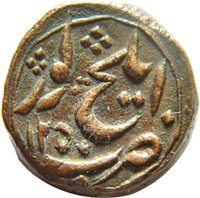
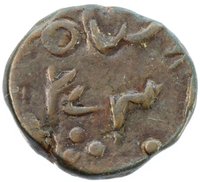
Reverse
Description:
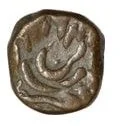
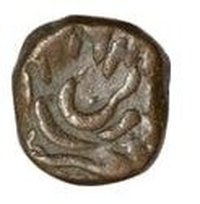
Mint and ruler, in Persian.
Script: Urdu
Edge
Plain
Mintings
| Year | Mint Mark | Mintage | Quality | Collection |
|---|---|---|---|---|
| 1848 | — | — |
Historical background
In 1848, the currency situation in the Hyderabad-Elichpur (Ellichpur) feudatory, part of the larger Hyderabad State under the Nizam's rule, was complex and fragmented. The region did not have a uniform monetary system. While the Nizam's government issued its own silver rupee (the "Hali Sicca"), its circulation competed with a plethora of older, worn, and often debased coins from previous Mughal and Maratha regimes still in use. Furthermore, the powerful British East India Company, whose influence was paramount following the Subsidiary Alliance, actively promoted its own currency, the British Indian rupee, for official transactions and trade, creating a dual-pressure system on the local economy.
The feudatory itself, ruled by the Nawab of Elichpur, likely had limited minting rights, if any. The primary currency in practical circulation would have been a mixture of Nizam's rupees and British rupees, with their exchange value fluctuating based on silver content and acceptance. This created significant challenges for trade, taxation, and daily commerce, as merchants and peasants had to constantly navigate exchange rates and assess the purity of coins. The instability was exacerbated by the practice of "money-changing" (sarrafs), who played a necessary but often exploitative role in this heterogeneous monetary environment.
Ultimately, the currency picture in 1848 Elichpur was one of transition and inconsistency, caught between a fading feudal past and an encroaching colonial order. The Nizam's currency authority was weakening, while the British rupee was not yet fully dominant. This period represents the tail end of a pre-standardized monetary era, where multiple coinages coexisted, causing inconvenience and economic inefficiency, which would eventually lead to the full integration of Hyderabad State's currency with the British Indian system later in the 19th century.
The feudatory itself, ruled by the Nawab of Elichpur, likely had limited minting rights, if any. The primary currency in practical circulation would have been a mixture of Nizam's rupees and British rupees, with their exchange value fluctuating based on silver content and acceptance. This created significant challenges for trade, taxation, and daily commerce, as merchants and peasants had to constantly navigate exchange rates and assess the purity of coins. The instability was exacerbated by the practice of "money-changing" (sarrafs), who played a necessary but often exploitative role in this heterogeneous monetary environment.
Ultimately, the currency picture in 1848 Elichpur was one of transition and inconsistency, caught between a fading feudal past and an encroaching colonial order. The Nizam's currency authority was weakening, while the British rupee was not yet fully dominant. This period represents the tail end of a pre-standardized monetary era, where multiple coinages coexisted, causing inconvenience and economic inefficiency, which would eventually lead to the full integration of Hyderabad State's currency with the British Indian system later in the 19th century.
✨ Legendary