

5 cents – United States
Add to wishlist
United States
Context
Years: 1838–1853
Issuer: United States
Period:
(since 1776)
Currency:
(since 1785)
Total mintage: 19,706,250
Material
References
KM: #
Numista: #14854
Value
Exchange value: 0.05 USD = $0.05
Bullion value: $2.95
Obverse
Description:
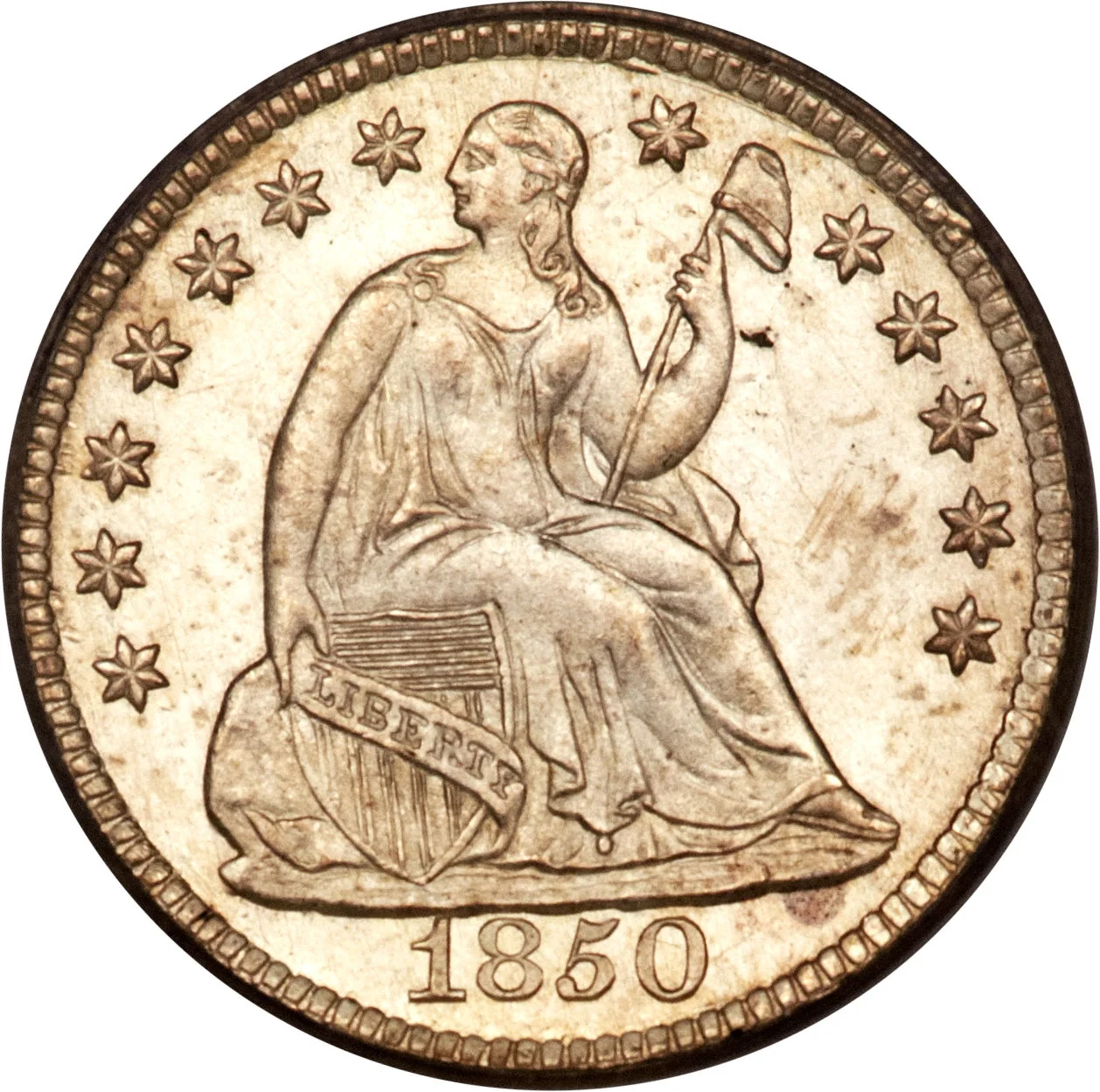
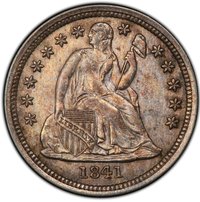
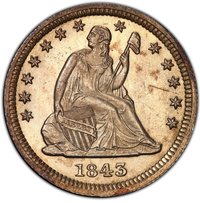
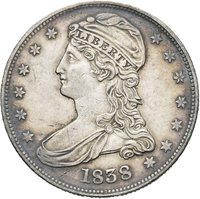
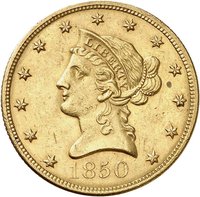
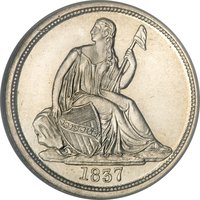
Liberty seated, flanked by 13 stars for the colonies, with the date below.
Inscription:
1850
Script: Latin
Engraver: Christian Gobrecht
Reverse
Description:
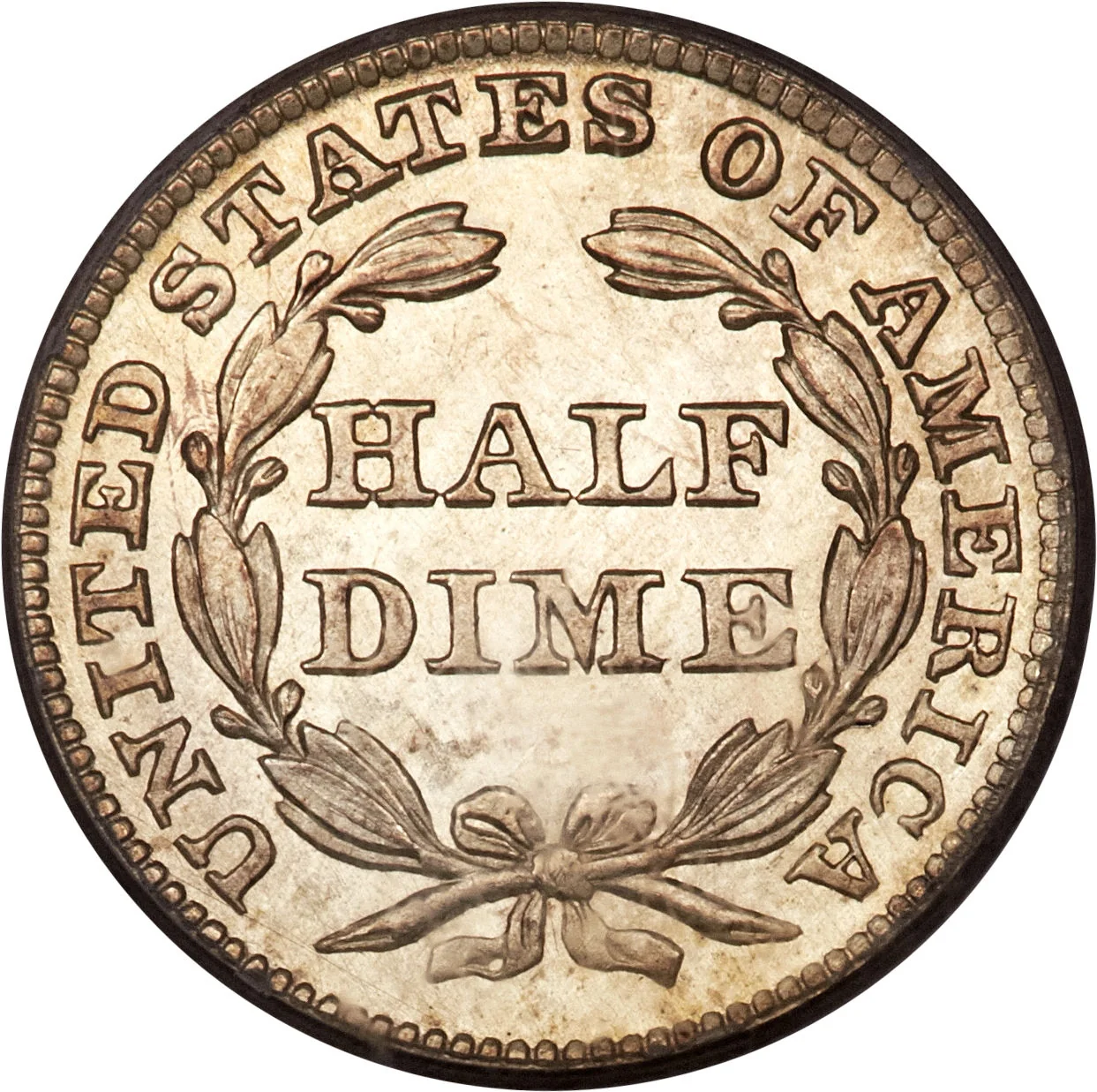
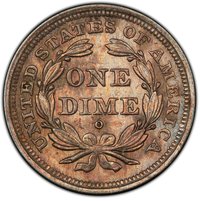
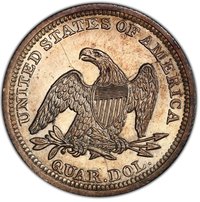
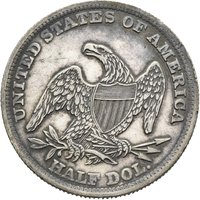
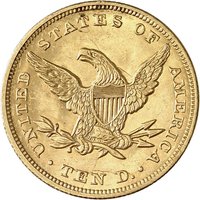
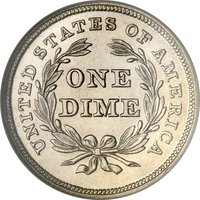
Wreath with value, country name on rim.
Inscription:
UNITED STATES OF AMERICA
HALF
DIME
HALF
DIME
Script: Latin
Engraver: Christian Gobrecht
Edge
Reeded
Mintings
| Year | Mint Mark | Mintage | Quality | Collection |
|---|---|---|---|---|
| 1838 | — | 2,225,000 | ||
| 1839 | — | 1,069,150 | ||
| 1839 | O | 1,291,600 | ||
| 1840 | — | 1,034,000 | ||
| 1840 | O | 695,000 | ||
| 1841 | — | 1,150,000 | ||
| 1841 | O | 815,000 | ||
| 1842 | — | 815,000 | ||
| 1842 | O | 350,000 | ||
| 1843 | — | 1,165,000 | ||
| 1844 | — | 430,000 | ||
| 1844 | O | 220,000 | ||
| 1845 | — | 1,564,000 | ||
| 1846 | — | 27,000 | ||
| 1847 | — | 1,274,000 | ||
| 1848 | — | — | ||
| 1848 | O | 600,000 | ||
| 1849 | — | — | ||
| 1849 | O | 140,000 | ||
| 1850 | — | 955,000 | ||
| 1850 | O | 690,000 | ||
| 1851 | — | 781,000 | ||
| 1851 | O | 860,000 | ||
| 1852 | — | 1,000,500 | ||
| 1852 | O | 260,000 | ||
| 1853 | — | 135,000 | ||
| 1853 | O | 160,000 |
Historical background
In 1838, the United States was emerging from the economic turmoil of the Panic of 1837, a crisis deeply rooted in currency and banking. The nation operated without a central bank, as President Andrew Jackson had vetoed the recharter of the Second Bank of the United States in 1832 and subsequently moved federal deposits to state-chartered "pet banks." This created a fragmented and unstable financial system dominated by hundreds of state banks, each issuing its own paper banknotes. The value of this paper currency was highly speculative, varying based on public confidence in the individual issuing bank and often trading at a steep discount, especially for banks farther from major commercial centers.
The period was defined by a clash between proponents of "hard money" (specie—gold and silver coin) and advocates of "soft money" (paper banknotes). Jackson's Specie Circular of 1836, which required payment for public lands in gold or silver, had contracted the money supply and contributed to the panic. By 1838, the debate centered on how to restore stability. Some, following Jacksonian principles, distrusted all paper and wanted a currency backed by and redeemable in specie. Others, particularly in commercial and developing regions, saw state bank paper as essential for economic growth and credit expansion. The federal government itself was essentially divorced from direct currency issuance.
Consequently, the American economy in 1838 functioned with a chaotic mix of foreign coins, U.S. minted specie, and a vast array of state banknotes of fluctuating value. There was no uniform national currency, and counterfeiting was rampant. While a brief recovery occurred in 1838, it was short-lived, and the underlying instability of the decentralized, specie-poor system persisted. The era highlighted the critical need for a more regulated banking and currency system, a problem that would not be addressed until the National Banking Acts of the 1860s.
The period was defined by a clash between proponents of "hard money" (specie—gold and silver coin) and advocates of "soft money" (paper banknotes). Jackson's Specie Circular of 1836, which required payment for public lands in gold or silver, had contracted the money supply and contributed to the panic. By 1838, the debate centered on how to restore stability. Some, following Jacksonian principles, distrusted all paper and wanted a currency backed by and redeemable in specie. Others, particularly in commercial and developing regions, saw state bank paper as essential for economic growth and credit expansion. The federal government itself was essentially divorced from direct currency issuance.
Consequently, the American economy in 1838 functioned with a chaotic mix of foreign coins, U.S. minted specie, and a vast array of state banknotes of fluctuating value. There was no uniform national currency, and counterfeiting was rampant. While a brief recovery occurred in 1838, it was short-lived, and the underlying instability of the decentralized, specie-poor system persisted. The era highlighted the critical need for a more regulated banking and currency system, a problem that would not be addressed until the National Banking Acts of the 1860s.
🌱 Common