

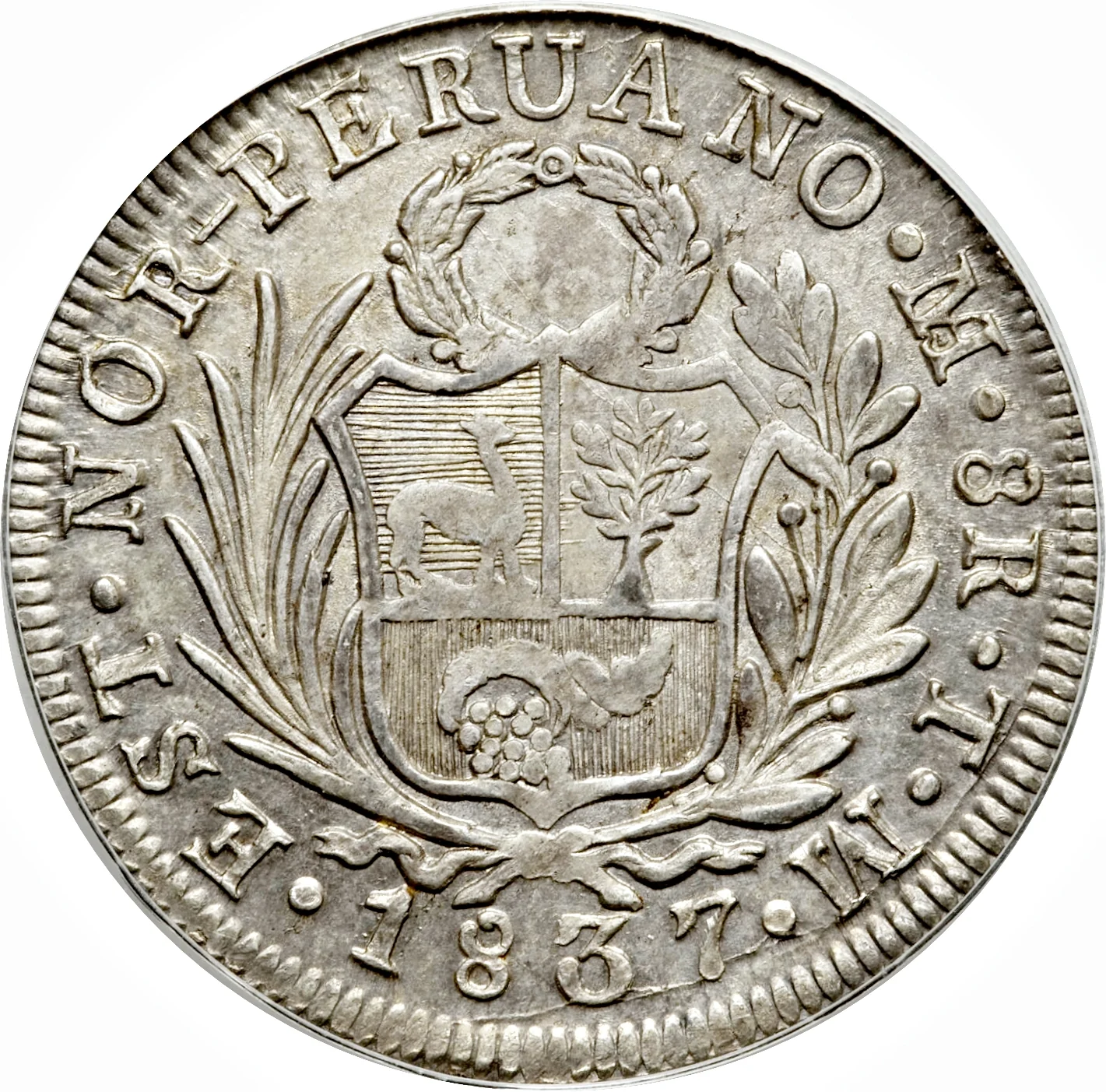
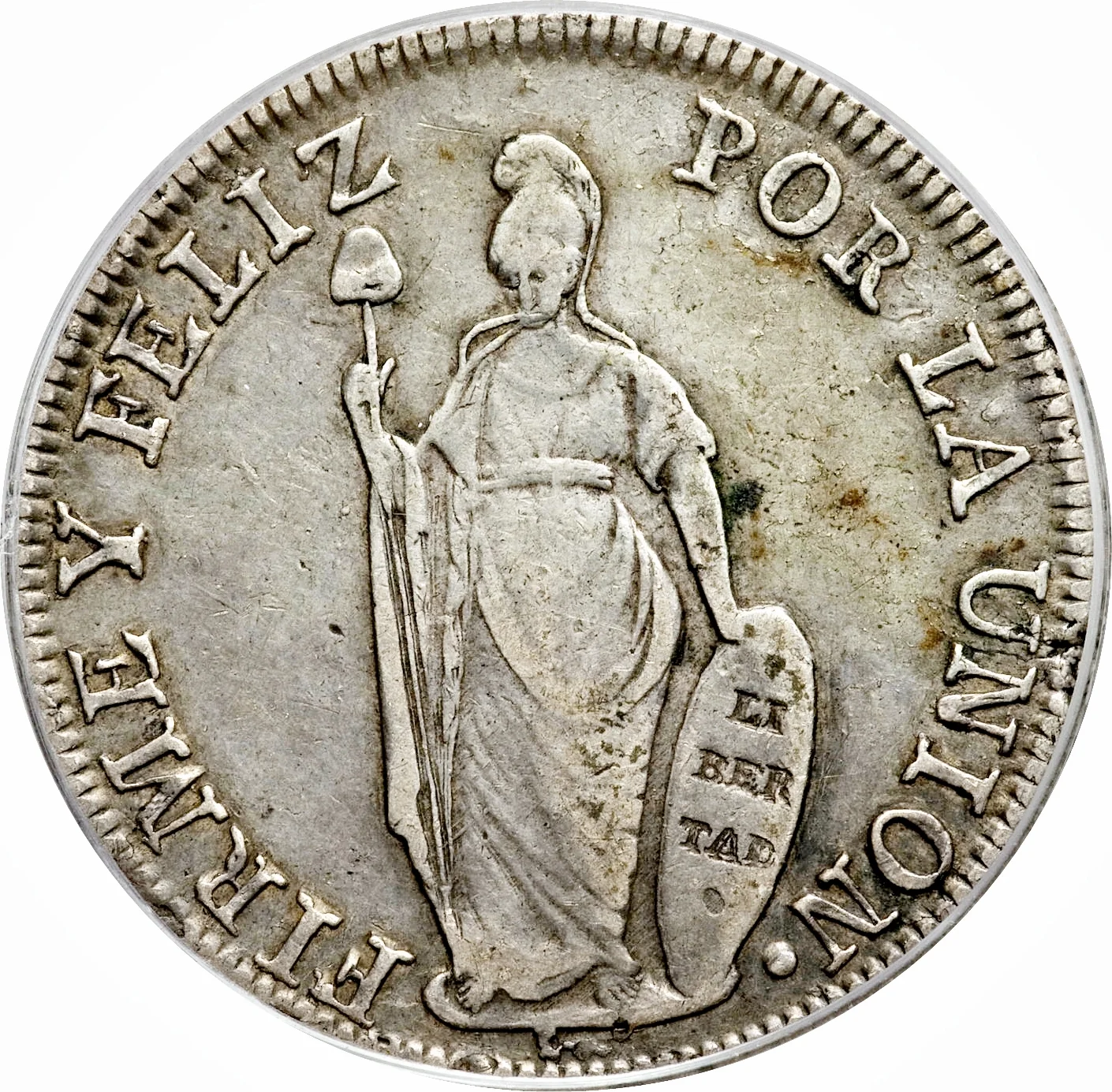
8 reales – Republic of North Peru
Add to wishlist
Peru
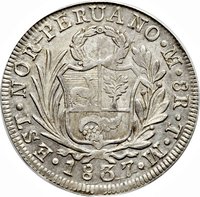
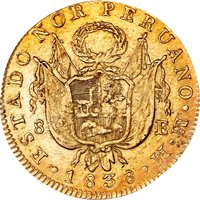
Obverse
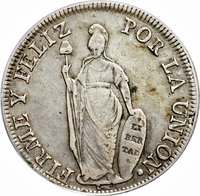
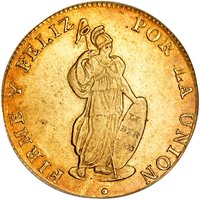
Reverse
Edge
Mints
| Name | Mark |
|---|---|
| Lima | — |
Mintings
| Year | Mint Mark | Mintage | Quality | Collection |
|---|---|---|---|---|
| 1836 | TM | — | ||
| 1837 | M | — | ||
| 1837 | TM | — | ||
| 1838 | M | — | ||
| 1838 | MB | — | ||
| 1839 | MB | — |
Historical background
In 1836, the currency situation in the short-lived Republic of North Peru was intrinsically linked to its political creation. The state was formed that year as a constituent country within the Peru–Bolivian Confederation, a political union orchestrated by Marshal Andrés de Santa Cruz. As such, North Peru did not have an independent monetary policy or a distinct, new currency. Its monetary system was a continuation of the chaotic and fragmented one inherited from the early post-independence Republic of Peru, characterized by a severe shortage of circulating coinage.
The primary circulating medium remained the silver peso and its fractional coinage (reales), but years of war and economic disruption had severely depleted the supply. This scarcity was compounded by the circulation of worn and clipped coins from the colonial era, alongside a limited minting of republican coinage at the Lima mint, which bore the new national coat of arms. Furthermore, foreign coins, particularly Bolivian soles and Spanish colonial pieces of eight, circulated widely out of necessity, creating a complex and unreliable exchange environment.
Ultimately, the monetary landscape was one of instability and transition, reflecting the Confederation's precarious existence. The government in Lima, under the authority of President Luis José de Orbegoso and the overarching control of Santa Cruz, lacked the stability and resources to implement a comprehensive currency reform. The situation remained unresolved until the dissolution of the Confederation following its defeat in the War of the Confederation (1836-1839), after which North Peru was reabsorbed into a reunified Peruvian state, which later pursued more coherent monetary policies.
The primary circulating medium remained the silver peso and its fractional coinage (reales), but years of war and economic disruption had severely depleted the supply. This scarcity was compounded by the circulation of worn and clipped coins from the colonial era, alongside a limited minting of republican coinage at the Lima mint, which bore the new national coat of arms. Furthermore, foreign coins, particularly Bolivian soles and Spanish colonial pieces of eight, circulated widely out of necessity, creating a complex and unreliable exchange environment.
Ultimately, the monetary landscape was one of instability and transition, reflecting the Confederation's precarious existence. The government in Lima, under the authority of President Luis José de Orbegoso and the overarching control of Santa Cruz, lacked the stability and resources to implement a comprehensive currency reform. The situation remained unresolved until the dissolution of the Confederation following its defeat in the War of the Confederation (1836-1839), after which North Peru was reabsorbed into a reunified Peruvian state, which later pursued more coherent monetary policies.
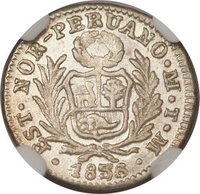
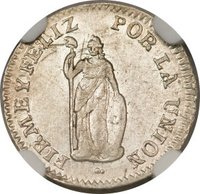
💎 Very Rare