


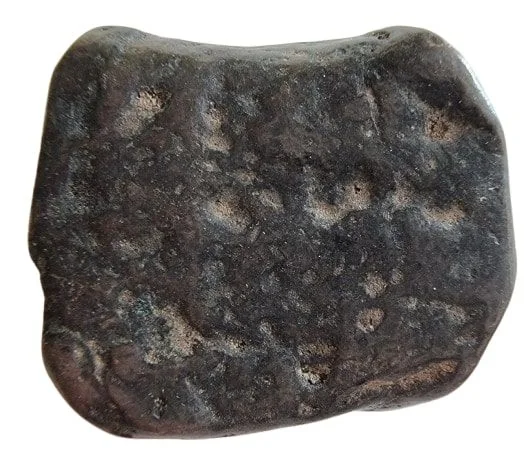
Nepal
Context

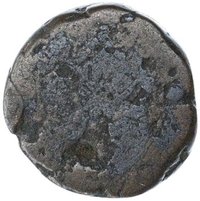
Material
Weight: 40 g
Thickness: 7 mm
Shape: Irregular square
Composition: Copper
Magnetic: Yes
Technique: Cast
References
Numista: #466316
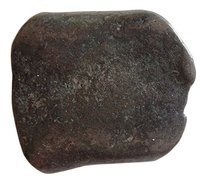
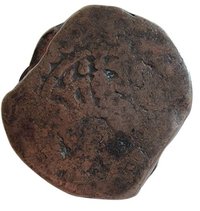
Obverse
Description:
Simple.
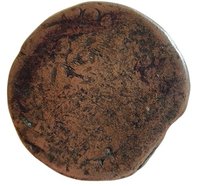
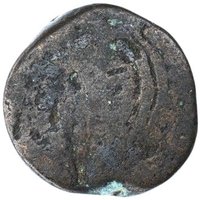
Reverse
Description:
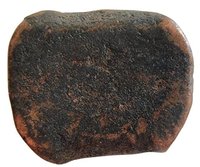
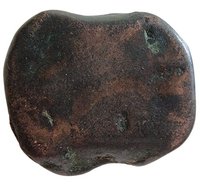
Simple.
Edge
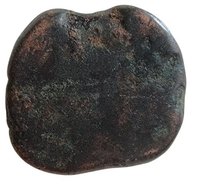
Plain
Mintings
| Year | Mint Mark | Mintage | Quality | Collection |
|---|---|---|---|---|
| — | — | — |
Historical background
In the early 19th century, Nepal's currency situation was characterized by a complex and fragmented system, heavily influenced by its political and economic relations with its powerful neighbors. Following the unification of the kingdom under Prithvi Narayan Shah in the late 18th century, the newly formed Gorkha state sought to establish its own monetary identity. The primary circulating coins were silver mohars and copper dams, minted in various denominations at mints (khut) in Kathmandu, Patan, and Bhaktapur. However, the system was not uniform, and the value and purity of coins could vary, reflecting the lingering economic distinctions of the formerly independent valley kingdoms.
This period was marked by significant external pressure, most notably from the Anglo-Nepalese War (1814-1816) and the subsequent Treaty of Sugauli. The war's financial burden drained the treasury, and the treaty's stipulation of a large war indemnity to the British East India Company forced Nepal to mint vast quantities of debased silver coins to meet the payment. This led to a severe devaluation of the rupee and economic instability. Furthermore, the treaty formalized economic subordination, as Nepal was compelled to accept the British Indian rupee as legal tender for trade in the Tarai regions, creating a dual-currency dynamic that undermined sovereign monetary control.
Thus, by 1800 and in the two decades that followed, Nepal's currency was in a state of transition and strain. It was a tool of nascent state-building, yet it was also a vulnerability exposed by military conflict. The circulation of both Nepali-minted coins and British Indian rupees laid the groundwork for a dependent economic relationship with British India, a defining feature that would shape Nepal's monetary policy for over a century. The era closed with a currency system that was sovereign in name but increasingly influenced by external political and economic forces.
This period was marked by significant external pressure, most notably from the Anglo-Nepalese War (1814-1816) and the subsequent Treaty of Sugauli. The war's financial burden drained the treasury, and the treaty's stipulation of a large war indemnity to the British East India Company forced Nepal to mint vast quantities of debased silver coins to meet the payment. This led to a severe devaluation of the rupee and economic instability. Furthermore, the treaty formalized economic subordination, as Nepal was compelled to accept the British Indian rupee as legal tender for trade in the Tarai regions, creating a dual-currency dynamic that undermined sovereign monetary control.
Thus, by 1800 and in the two decades that followed, Nepal's currency was in a state of transition and strain. It was a tool of nascent state-building, yet it was also a vulnerability exposed by military conflict. The circulation of both Nepali-minted coins and British Indian rupees laid the groundwork for a dependent economic relationship with British India, a defining feature that would shape Nepal's monetary policy for over a century. The era closed with a currency system that was sovereign in name but increasingly influenced by external political and economic forces.
Series: 1800 Nepal circulation coins



✨ Legendary