

Iran
Context
Material
Weight: 1.25 g
Silver weight: 1.25 g
Shape: Irregular round
Composition: Silver
Magnetic: No
Technique: Hammered
References
KM: #Click to copy to clipboard822.3
Numista: #465859
Value
Bullion value: $3.63
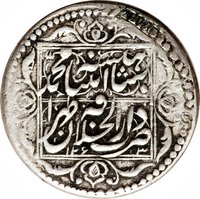
Obverse
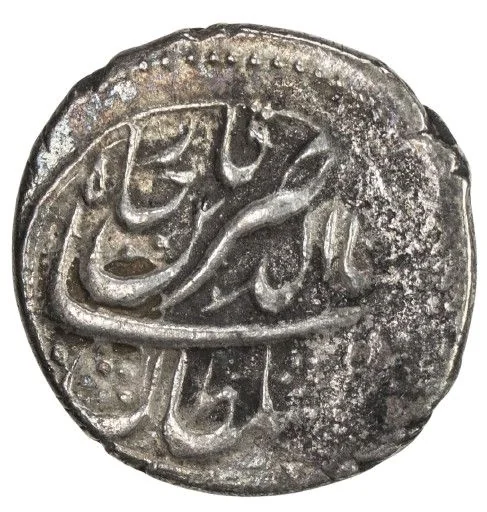
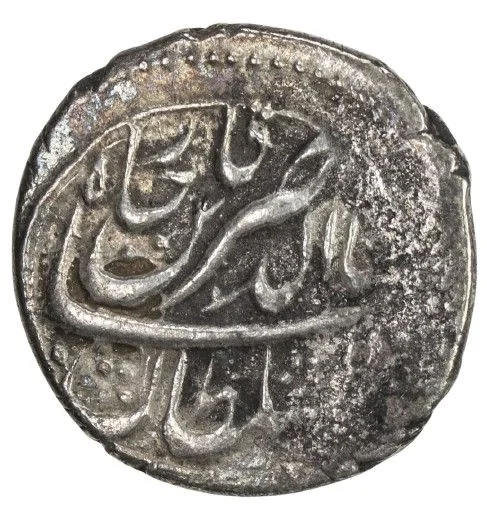
Inscription:
السلطان ابن السلطان
ناصرالدین شاه قاجار
ناصرالدین شاه قاجار
Translation:
The Sultan, Son of the Sultan
Nasir al-Din Shah Qajar
Nasir al-Din Shah Qajar
Language: Arabic
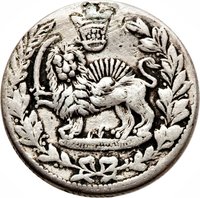
Reverse
Edge
Mints
| Name | Mark |
|---|---|
| Tehran | طهران |
Mintings
| Year | Mint Mark | Mintage | Quality | Collection |
|---|---|---|---|---|
| 1845 | — | — | ||
| 1858 | — | — | ||
| 1871 | — | — |
Historical background
In 1845, Iran’s monetary system was a complex and fragmented reflection of its economic and political weakness under the Qajar dynasty. The country lacked a unified, modern currency, operating instead on a bimetallic system of silver qirans and gold tomans (1 toman = 10 qirans). However, the actual circulation was dominated by a bewildering variety of domestic and foreign coins. These included not only royal mint issues but also coins struck by provincial governors and a massive influx of foreign silver, particularly Russian rubles, Austrian thalers (Maria Theresa thalers), and British Indian rupees, which circulated freely due to their reliable silver content.
This monetary chaos was exacerbated by chronic state bankruptcy and debasement. The Qajar treasury, perennially short of funds due to extravagant court spending, military costs, and foreign concessions, frequently reduced the silver content of newly minted coins to generate seigniorage revenue. This practice led to a severe loss of public confidence, as newer coins were intrinsically worth less than older ones, causing Gresham’s Law (“bad money drives out good money”) to operate forcefully. Consequently, older, full-weight coins and trusted foreign specie were hoarded or used in foreign trade, while the debased currency fueled domestic inflation and market disorder.
The situation was a direct symptom of Iran’s integration into a global economic system on highly disadvantageous terms. European powers, especially Russia and Britain, exerted increasing political and commercial influence, and their stable currencies often displaced local money in significant transactions. The inability to control the money supply or establish a sovereign, trusted currency underscored the central government’s limited authority and crippled economic development, setting the stage for later, albeit unsuccessful, 19th-century monetary reforms attempted by reforming ministers like Amir Kabir.
This monetary chaos was exacerbated by chronic state bankruptcy and debasement. The Qajar treasury, perennially short of funds due to extravagant court spending, military costs, and foreign concessions, frequently reduced the silver content of newly minted coins to generate seigniorage revenue. This practice led to a severe loss of public confidence, as newer coins were intrinsically worth less than older ones, causing Gresham’s Law (“bad money drives out good money”) to operate forcefully. Consequently, older, full-weight coins and trusted foreign specie were hoarded or used in foreign trade, while the debased currency fueled domestic inflation and market disorder.
The situation was a direct symptom of Iran’s integration into a global economic system on highly disadvantageous terms. European powers, especially Russia and Britain, exerted increasing political and commercial influence, and their stable currencies often displaced local money in significant transactions. The inability to control the money supply or establish a sovereign, trusted currency underscored the central government’s limited authority and crippled economic development, setting the stage for later, albeit unsuccessful, 19th-century monetary reforms attempted by reforming ministers like Amir Kabir.
✨ Legendary