

5 Lire – Italy
Italy
Context
Years: 1863–1865
Issuer: Italy 
Ruler: Vittorio Emanuele II
Currency:
(1861—2001)
Demonetized: Yes
Total mintage: 604,766
Material
References
KM: #Click to copy to clipboard17
Numista: #46565
Value
Exchange value: 5 ITL
Bullion value: $241.23
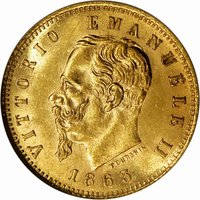
Obverse
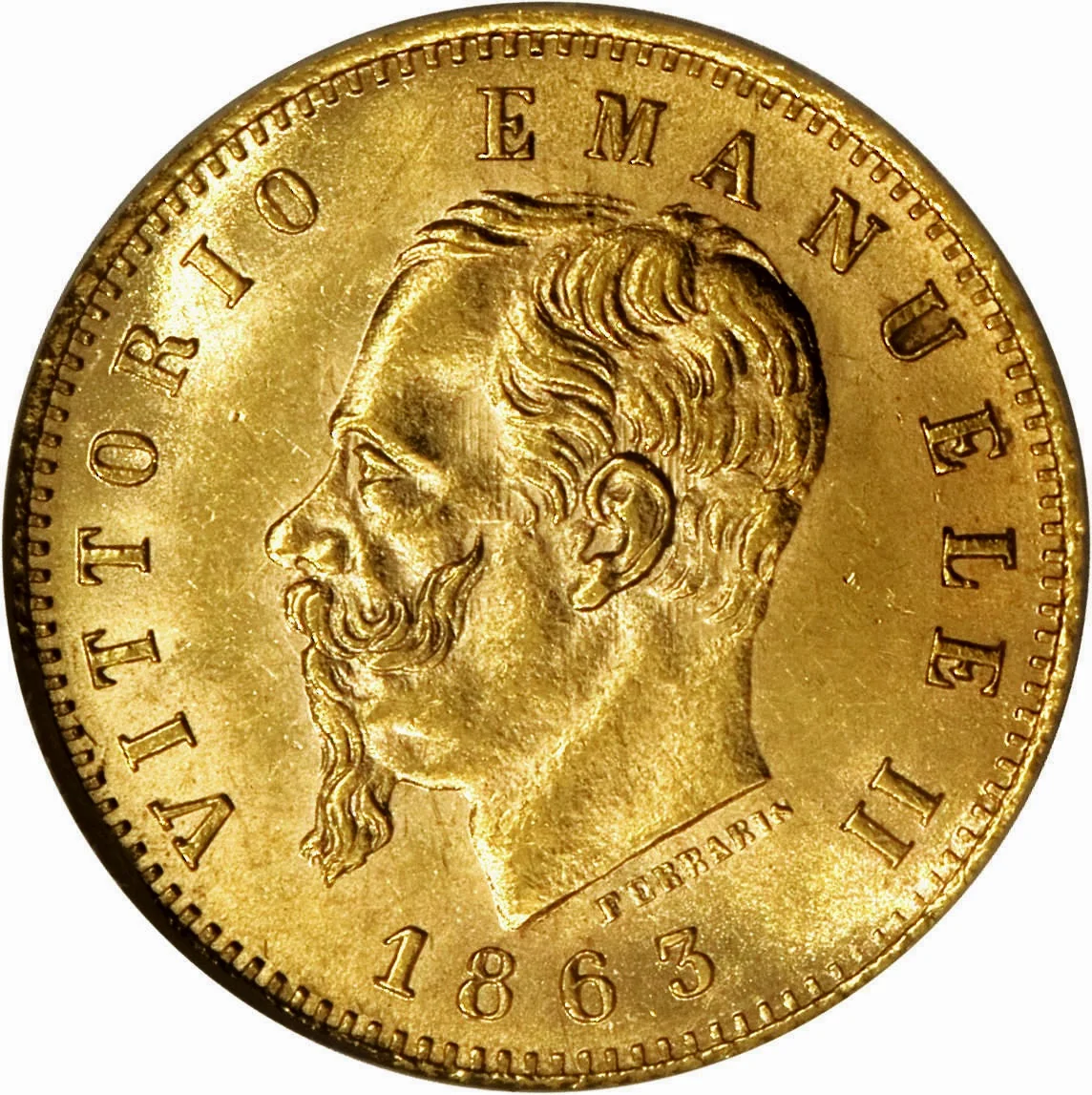
Description:
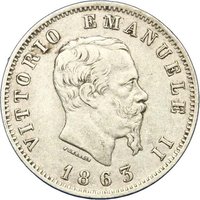
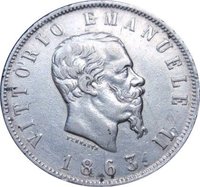
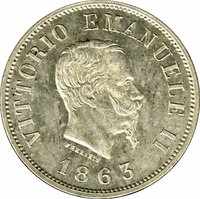
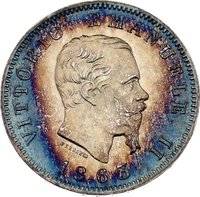
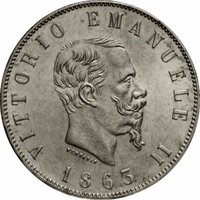
Head of King Vittorio Emanuele II; engraver's name below.
Inscription:
VITTORIO EMANUELE II RE D'ITALIA
FERRARIS
1863
FERRARIS
1863
Translation:
Victor Emmanuel II King of Italy
Ferraris
1863
Ferraris
1863
Script: Latin
Language: Italian
Engraver: Giuseppe Ferraris
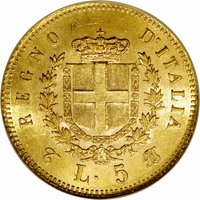
Reverse
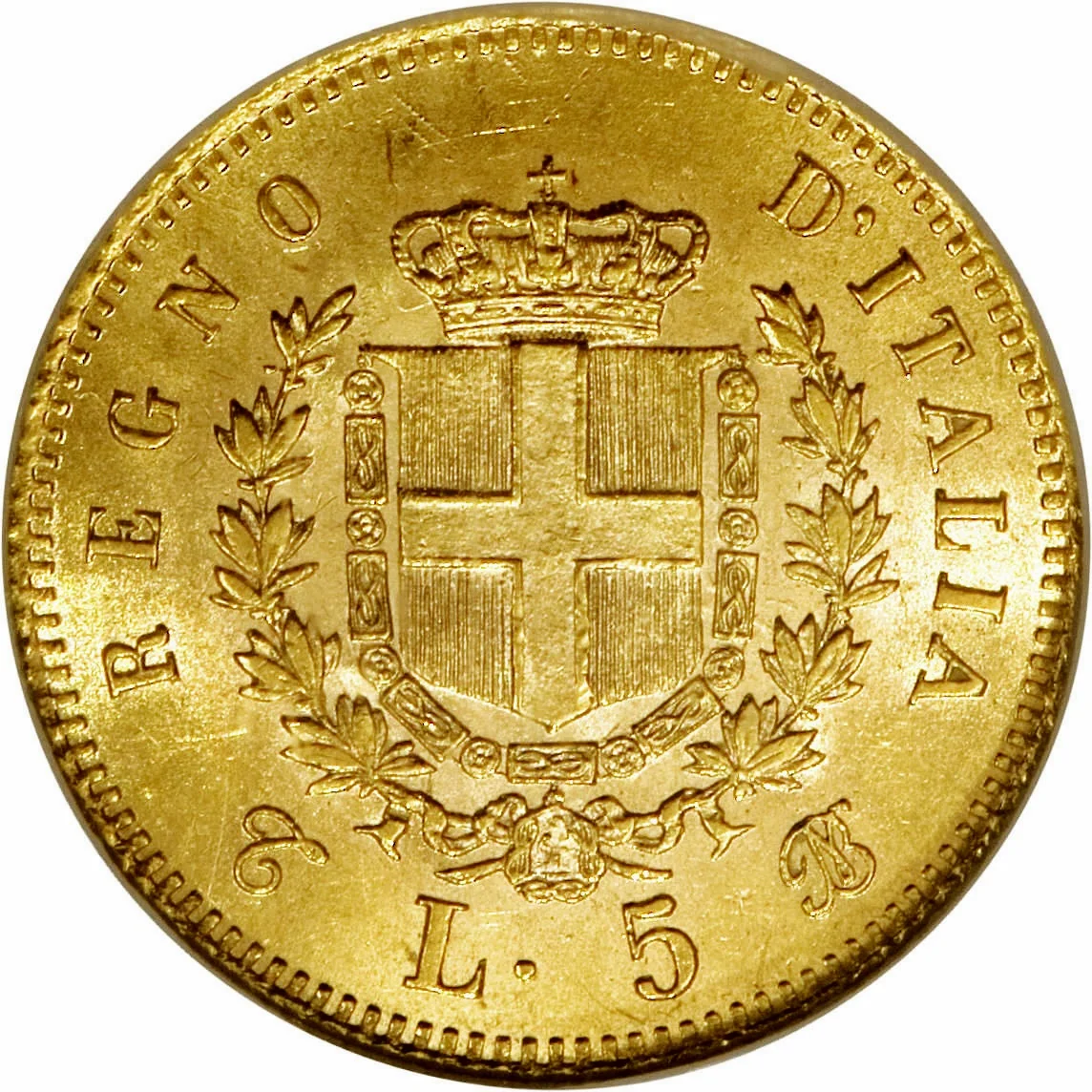
Description:
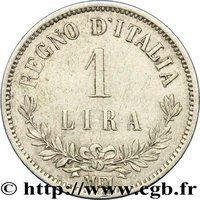
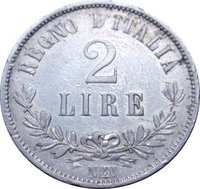
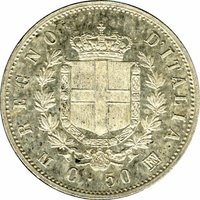
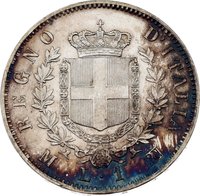
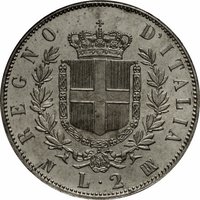
Savoia coat of arms with the Collare dell'Annunziata, within a laurel wreath. Below, the value and Turin Mint mark (T•BN monogram).
Inscription:
REGNO D'ITALIA
L. 5
T BN
L. 5
T BN
Translation:
Kingdom of Italy
Lira 5
T BN
Lira 5
T BN
Script: Latin
Engraver: Giuseppe Ferraris
Edge
Reeded
Mints
| Name | Mark |
|---|---|
| Turin | T BN |
Mintings
| Year | Mint Mark | Mintage | Quality | Collection |
|---|---|---|---|---|
| 1863 | T | 196,830 | ||
| 1865 | T | 407,936 |
Historical background
In 1863, Italy was a newly unified kingdom grappling with the complex task of creating a single, national currency system. The political unification of most of the peninsula in 1861 had left a patchwork of at least nine different pre-unification currencies in circulation, from the Piedmontese lira to the Neapolitan ducat and the Roman scudo. This monetary fragmentation severely hampered internal trade, state accounting, and economic development, making the creation of a uniform currency a critical priority for the young state.
The legal foundation for this change was the Law of 24 August 1862, which established the lira as Italy's sole decimal currency, based on the bimetallic standard of the Latin Monetary Union (effectively tying it to the French franc). However, in 1863, the nation was in the arduous transitional phase of implementing this law. The government, led by Marco Minghetti, was undertaking the massive logistical operation of withdrawing old coins, minting new ones (the famous "lira italiana"), and managing the exchange rates between the old currencies and the new lira. This process was administratively challenging and economically sensitive.
Consequently, the currency situation in 1863 was one of duality and flux. While the new national coins began to enter circulation, the old regional currencies remained legal tender and were still widely used, especially in more remote areas. This period was marked by public adjustment and some confusion, as Italians navigated between old and new monetary units. The successful completion of this transition was vital for cementing Italy's economic unification and integrating the nation into the broader European financial system.
The legal foundation for this change was the Law of 24 August 1862, which established the lira as Italy's sole decimal currency, based on the bimetallic standard of the Latin Monetary Union (effectively tying it to the French franc). However, in 1863, the nation was in the arduous transitional phase of implementing this law. The government, led by Marco Minghetti, was undertaking the massive logistical operation of withdrawing old coins, minting new ones (the famous "lira italiana"), and managing the exchange rates between the old currencies and the new lira. This process was administratively challenging and economically sensitive.
Consequently, the currency situation in 1863 was one of duality and flux. While the new national coins began to enter circulation, the old regional currencies remained legal tender and were still widely used, especially in more remote areas. This period was marked by public adjustment and some confusion, as Italians navigated between old and new monetary units. The successful completion of this transition was vital for cementing Italy's economic unification and integrating the nation into the broader European financial system.
Series: 1863 Italy circulation coins
💎 Very Rare