

8 reales – Republic of South Peru
Add to wishlist
Peru
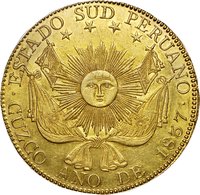
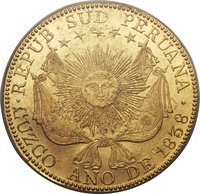
Obverse
Description:
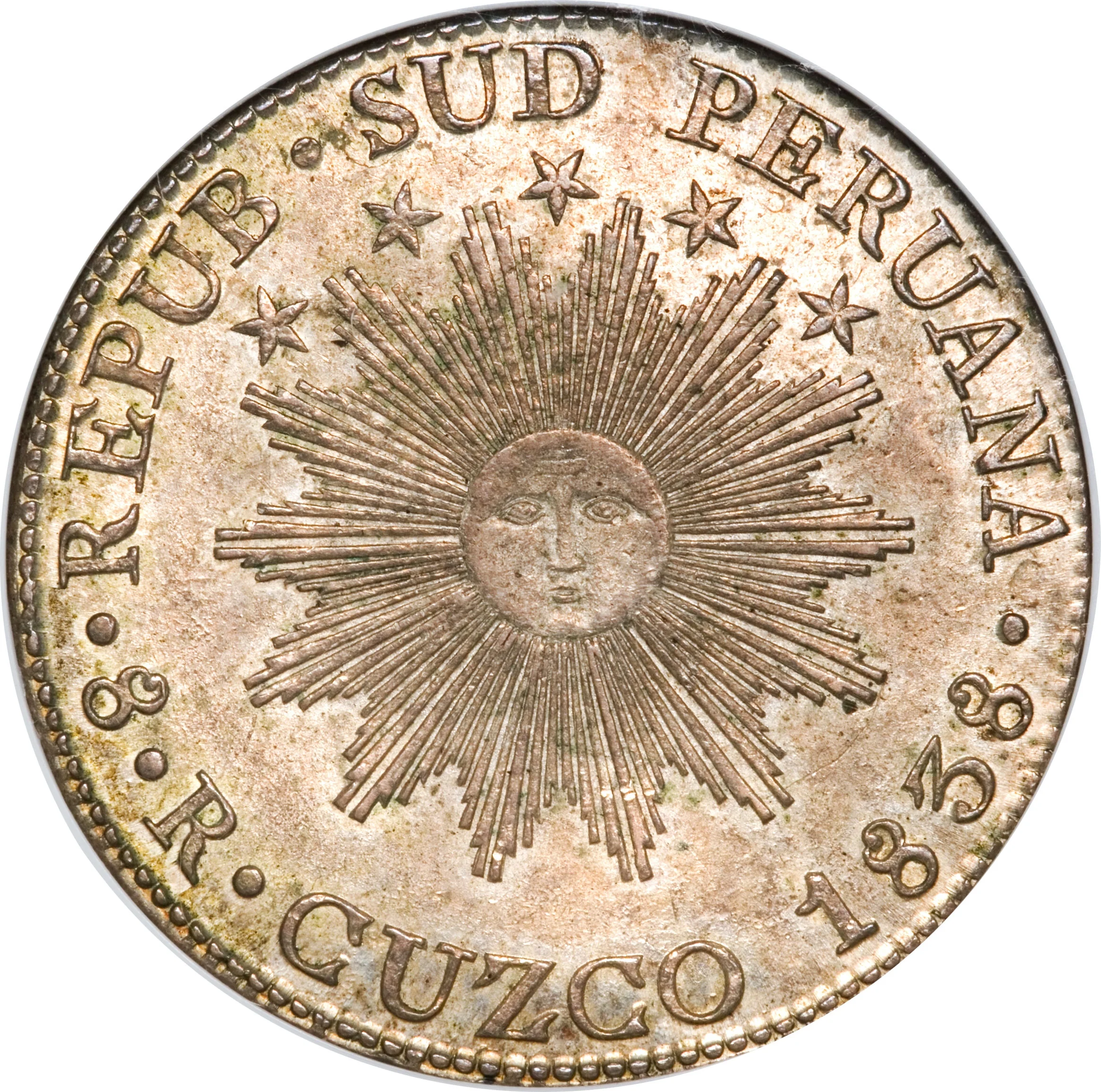
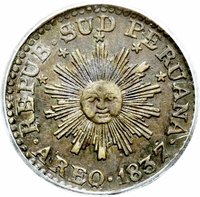
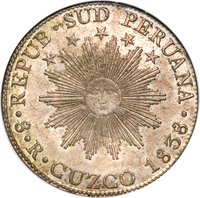
Radiant sunface, five stars above. Value, mint, and date below.
Inscription:
· REPUB · SUD PERUANA ·
8 · R · CUZCO 1838
8 · R · CUZCO 1838
Script: Latin
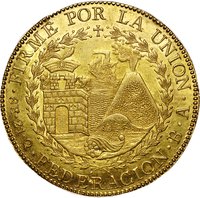
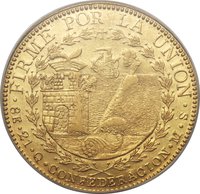
Reverse
Description:
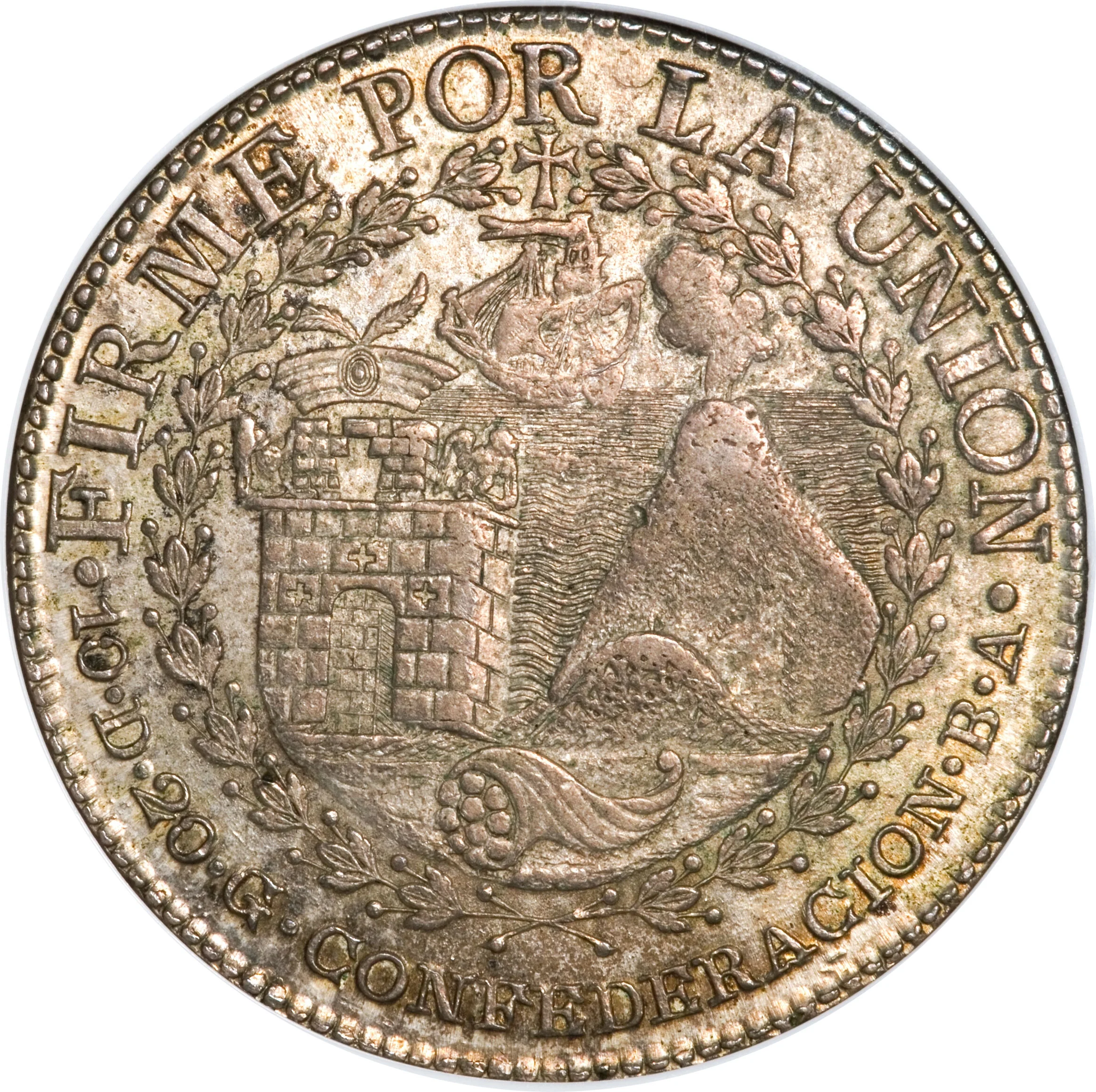
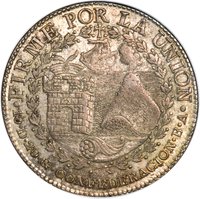
Tower, ship, volcano, and cornucopia encircled by a wreath.
Inscription:
· FIRME POR LA UNION ·
· 10 · D · 20 · G · CONFEDERACION · B · A
· 10 · D · 20 · G · CONFEDERACION · B · A
Script: Latin
Edge
Mintings
| Year | Mint Mark | Mintage | Quality | Collection |
|---|---|---|---|---|
| 1837 | BA | — | ||
| 1837 | MS | — | ||
| 1838 | MS | — | ||
| 1838 | MV | — | ||
| 1838 | BA | — | ||
| 1839 | MS | — | ||
| 1839 | MV | — |
Historical background
The Republic of South Peru, a short-lived state existing from 1836 to 1839, was born from the political ambition of Marshal Andrés de Santa Cruz to create a Peruvian-Bolivian Confederation. Its currency situation was inherently unstable, directly reflecting the confederation's contested legitimacy and fractured economic foundations. Upon its creation, South Peru inherited the monetary chaos of the post-independence era, characterized by a severe shortage of circulating coinage. This scarcity crippled daily commerce and state finances, forcing the government and populace to rely on a jumble of older Spanish colonial coins, Republican mint issues from the 1820s, and even Bolivian and other foreign currencies.
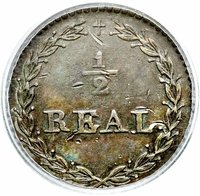
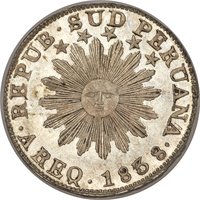
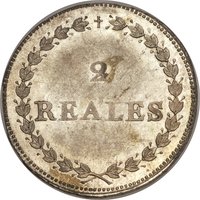
To address this, the government in Tacna authorized the minting of its own provisional currency. The most notable emissions were the pesetas (equivalent to two reales) and medios (one real), struck in silver at the mint in Cuzco in 1837 and 1838. These coins bore the republic's coat of arms and were intended to standardize circulation within its territory. However, production was limited and could not meet the vast demand, leaving the monetary system starved of sufficient legal tender. Furthermore, the confederation's internal trade was hampered by the lack of a unified monetary policy across its three constituent states (North Peru, South Peru, and Bolivia).
Ultimately, the currency of South Peru was a symbol of a state that never achieved stability. Its coins were minted for just two years, becoming artifacts of a failed political project. The monetary disarray was both a cause and a symptom of the confederation's weakness. The financial uncertainty exacerbated public discontent and hindered economic recovery, contributing to the internal opposition and external pressure from Chile and Argentina that led to the confederation's military defeat at the Battle of Yungay in 1839 and the subsequent dissolution of South Peru.
To address this, the government in Tacna authorized the minting of its own provisional currency. The most notable emissions were the pesetas (equivalent to two reales) and medios (one real), struck in silver at the mint in Cuzco in 1837 and 1838. These coins bore the republic's coat of arms and were intended to standardize circulation within its territory. However, production was limited and could not meet the vast demand, leaving the monetary system starved of sufficient legal tender. Furthermore, the confederation's internal trade was hampered by the lack of a unified monetary policy across its three constituent states (North Peru, South Peru, and Bolivia).
Ultimately, the currency of South Peru was a symbol of a state that never achieved stability. Its coins were minted for just two years, becoming artifacts of a failed political project. The monetary disarray was both a cause and a symptom of the confederation's weakness. The financial uncertainty exacerbated public discontent and hindered economic recovery, contributing to the internal opposition and external pressure from Chile and Argentina that led to the confederation's military defeat at the Battle of Yungay in 1839 and the subsequent dissolution of South Peru.
⭐ Rare