

6 pence – New Zealand
Add to wishlist
New Zealand
Context
Years: 1937–1946
Issuer: New Zealand
Ruler: George VI
Currency:
(1840—1967)
Demonetization: 31 October 2006
Total mintage: 9,600,200
Material
References
KM: #
Numista: #10307
Value
Bullion value: $3.62
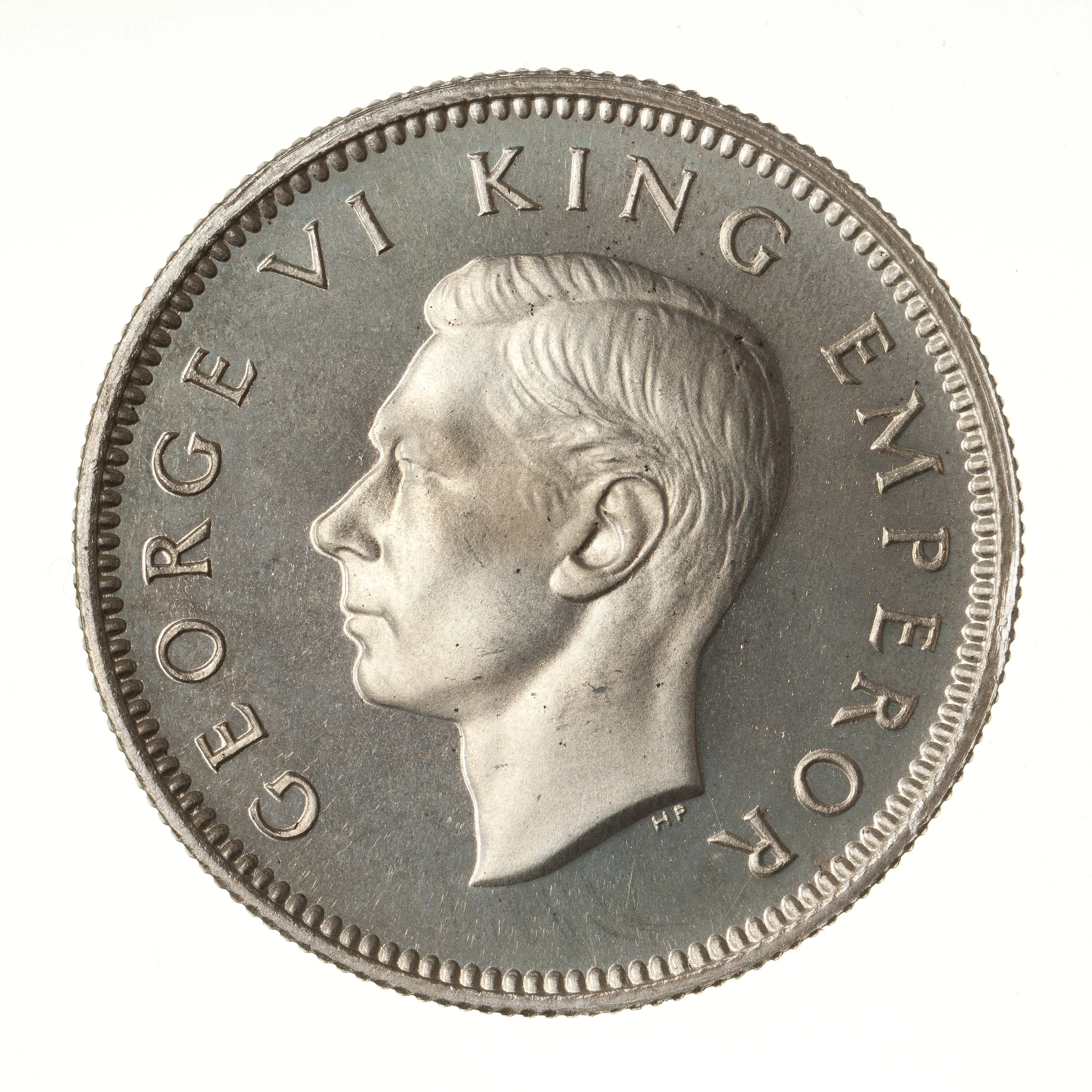
Obverse
Description:
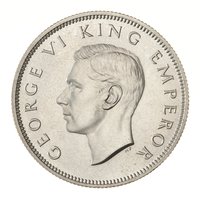
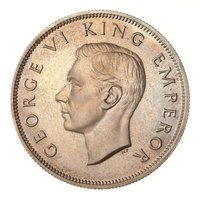
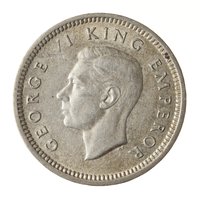
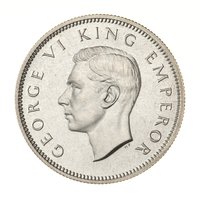
King George VI, uncrowned, left-facing portrait, legend encircling.
Inscription:
GEORGE VI KING EMPEROR
Translation:
GEORGE VI KING EMPEROR
Script: Latin
Language: English
Engraver: Thomas Humphrey Paget
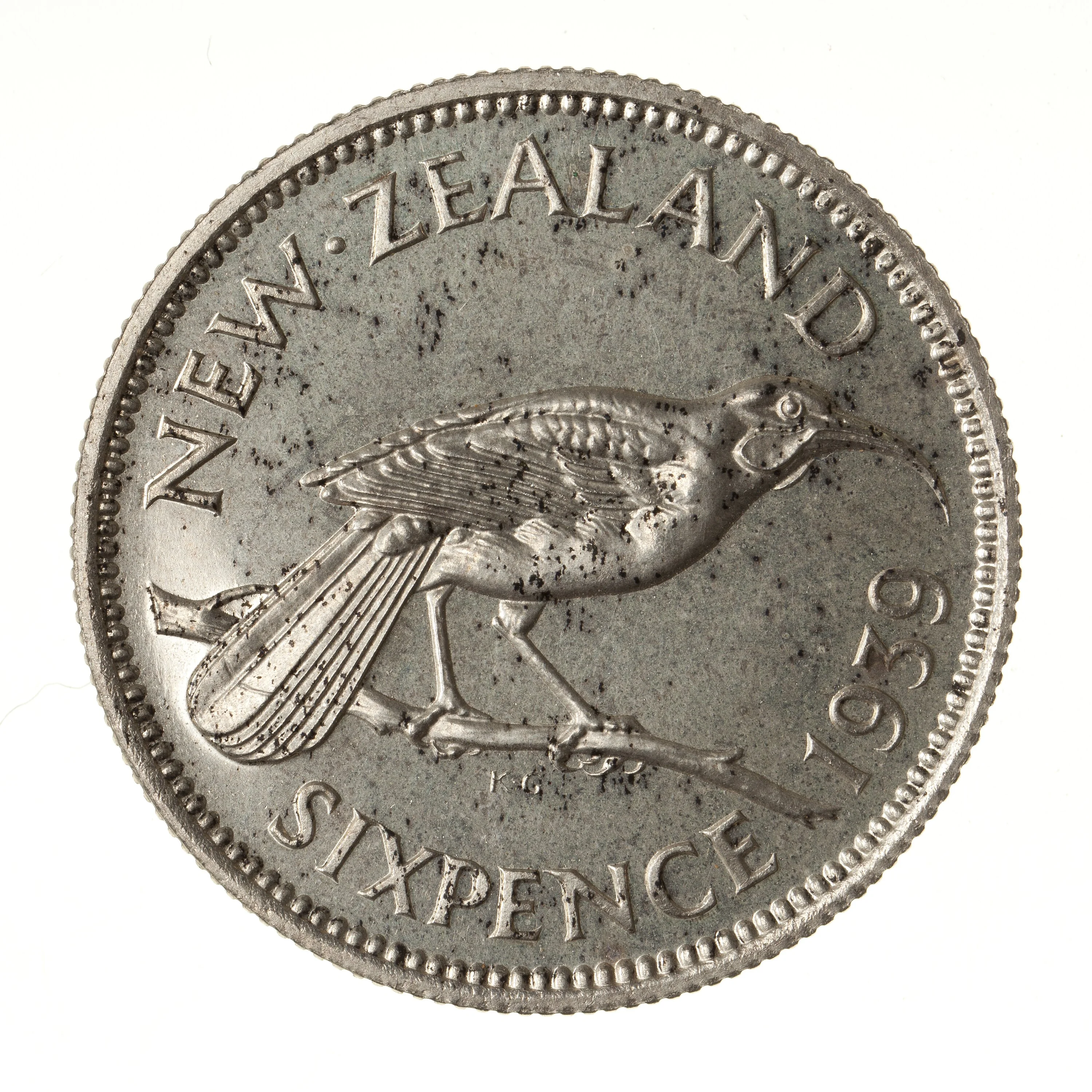
Reverse
Description:
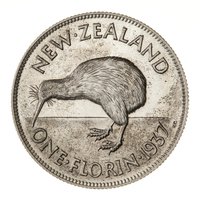
Huia on branch, legend above, name and date below.
Inscription:
NEW·ZEALAND
SIXPENCE 1939
SIXPENCE 1939
Script: Latin
Engraver: George Kruger Gray
Edge
Reeded
Mints
| Name | Mark |
|---|---|
| Royal Mint (Tower Hill) | — |
Mintings
| Year | Mint Mark | Mintage | Quality | Collection |
|---|---|---|---|---|
| 1937 | — | 1,280,000 | ||
| 1937 | — | 200 | Proof | |
| 1939 | — | 700,000 | ||
| 1939 | — | — | Proof | |
| 1940 | — | 800,000 | ||
| 1940 | — | — | Proof | |
| 1941 | — | 440,000 | ||
| 1941 | — | — | Proof | |
| 1942 | — | 360,000 | ||
| 1943 | — | 1,800,000 | ||
| 1944 | — | 1,160,000 | ||
| 1944 | — | — | Proof | |
| 1945 | — | — | Proof | |
| 1945 | — | 940,000 | ||
| 1946 | — | 2,120,000 |
Historical background
In 1937, New Zealand's currency was in a state of transition, firmly embedded within the Sterling Area and operating under the gold exchange standard. The New Zealand pound (NZ£) was pegged to and directly interchangeable with the British pound sterling (GBP) at parity. This meant the country's monetary policy was largely dictated by the Bank of England and the economic conditions in London, with New Zealand's foreign exchange reserves held predominantly in sterling assets. The Reserve Bank of New Zealand, established just three years prior in 1934, held the sole right to issue banknotes, but its primary function was to maintain this fixed exchange rate, ensuring stability for the nation's vital agricultural exports to the British market.
The year itself was marked by economic uncertainty following the recovery from the Great Depression. A sharp decline in dairy and wool prices in 1937 triggered a balance of payments crisis, as export earnings fell while demand for imported manufactured goods remained high. This drained the country's sterling reserves, putting significant pressure on the fixed parity. In response, the government, led by the newly elected Labour Prime Minister Michael Joseph Savage, introduced stringent import and exchange controls in late 1938 to conserve foreign currency. These measures, rather than a devaluation, were the chosen tool to defend the sterling peg.
Thus, the currency situation by the end of 1937 was one of growing strain beneath a surface of formal stability. The institutional framework of the sterling peg was intact, but the economic shocks had exposed its vulnerability. The subsequent imposition of comprehensive controls marked a pivotal shift towards a more managed and insulated economy, setting the stage for the monetary policies that would characterize New Zealand for the next three decades until the decimalisation of the currency in 1967 and the eventual float of the New Zealand dollar in 1985.
The year itself was marked by economic uncertainty following the recovery from the Great Depression. A sharp decline in dairy and wool prices in 1937 triggered a balance of payments crisis, as export earnings fell while demand for imported manufactured goods remained high. This drained the country's sterling reserves, putting significant pressure on the fixed parity. In response, the government, led by the newly elected Labour Prime Minister Michael Joseph Savage, introduced stringent import and exchange controls in late 1938 to conserve foreign currency. These measures, rather than a devaluation, were the chosen tool to defend the sterling peg.
Thus, the currency situation by the end of 1937 was one of growing strain beneath a surface of formal stability. The institutional framework of the sterling peg was intact, but the economic shocks had exposed its vulnerability. The subsequent imposition of comprehensive controls marked a pivotal shift towards a more managed and insulated economy, setting the stage for the monetary policies that would characterize New Zealand for the next three decades until the decimalisation of the currency in 1967 and the eventual float of the New Zealand dollar in 1985.
🌱 Common