

1 Shilling – Southern Rhodesia
Zimbabwe
Context
Years: 1948–1952
Country: Zimbabwe 
Issuer: Southern Rhodesia
Ruler: George VI
Currency:
(1932—1955)
Demonetization: 1 June 1965
Total mintage: 13,100,000
Material
Diameter: 23.5 mm
Weight: 5.66 g
Thickness: 2.2 mm
Shape: Round
Composition: Copper-nickel
Technique: Milled
Alignment: Medal alignment
flip
References
KM: #Click to copy to clipboard22
Numista: #4643
Obverse
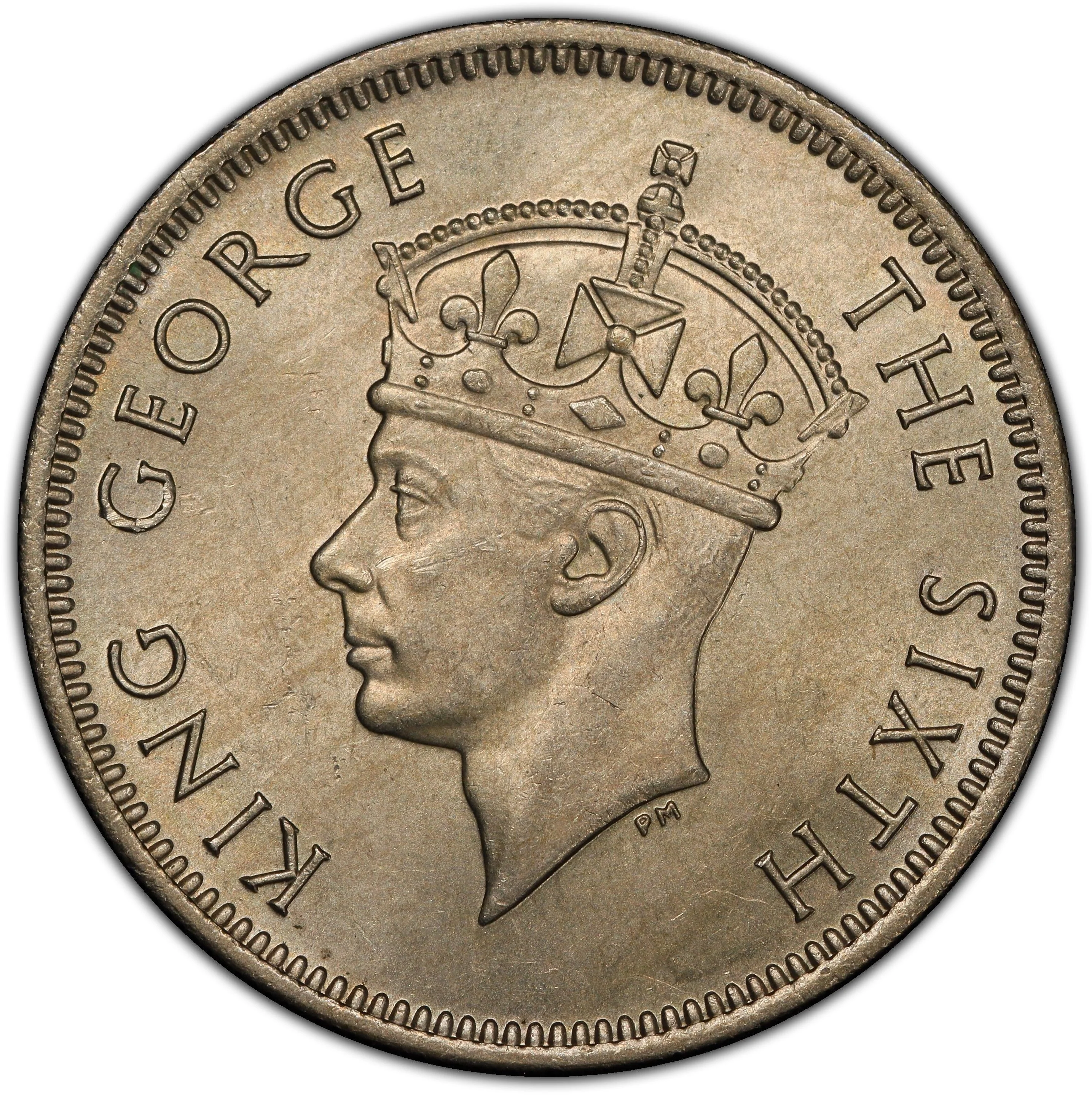
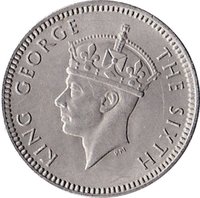
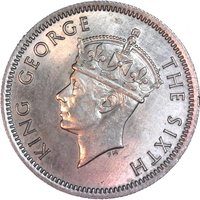
Description:
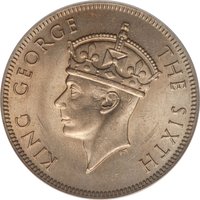
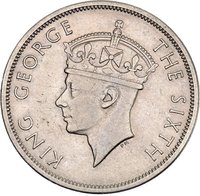
Portrait of George VI, King of the United Kingdom (1936–1952).
Inscription:
KING GEORGE THE SIXTH
PM
PM
Translation:
KING GEORGE THE SIXTH
BY THE GRACE OF GOD, KING OF ALL THE BRITISH DOMINIONS, DEFENDER OF THE FAITH, EMPEROR OF INDIA
BY THE GRACE OF GOD, KING OF ALL THE BRITISH DOMINIONS, DEFENDER OF THE FAITH, EMPEROR OF INDIA
Script: Latin
Language: English
Engraver: Percy Metcalfe
Reverse
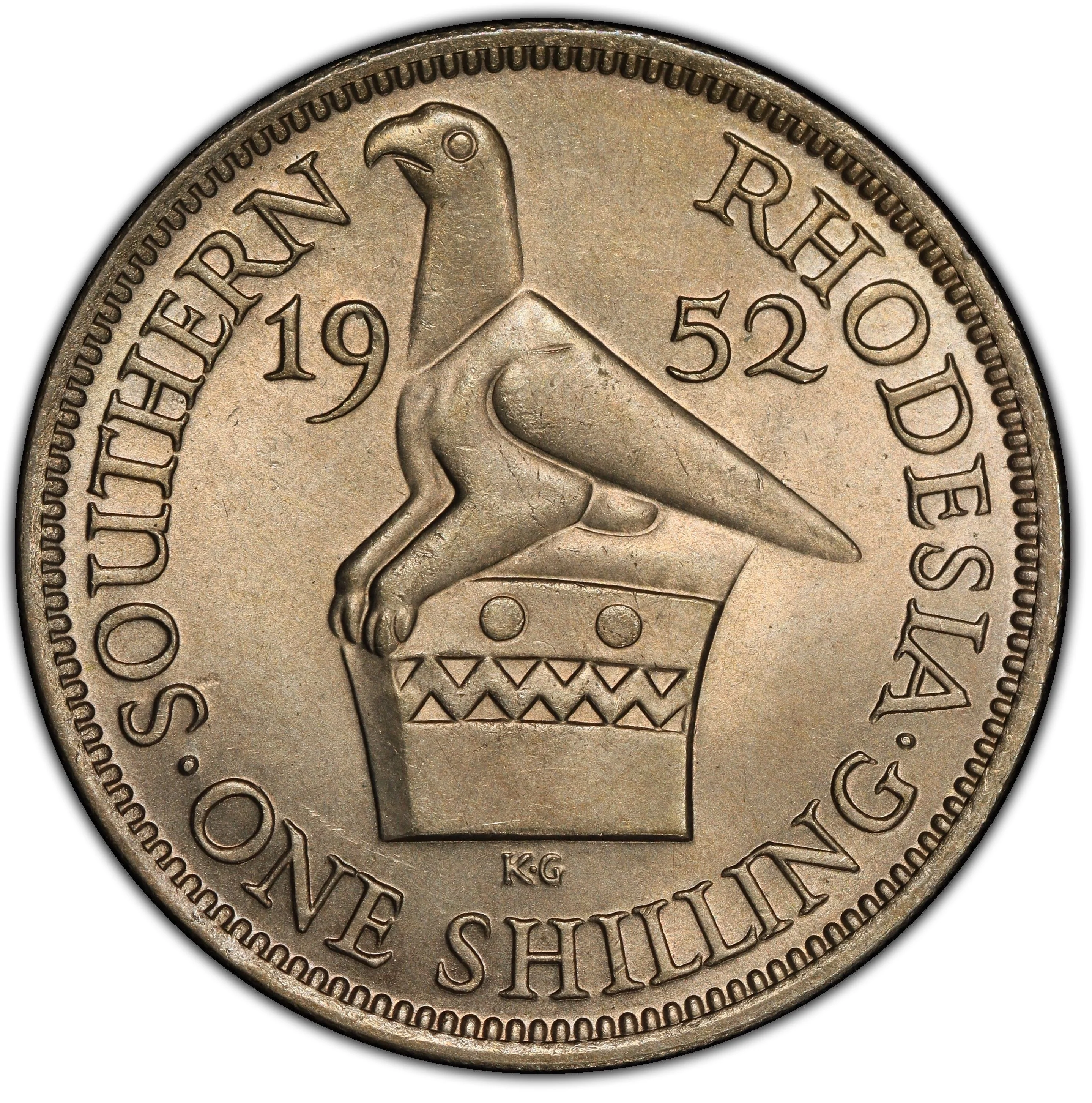
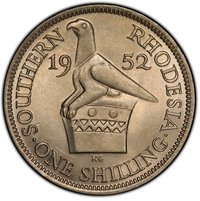
Description:
Great Zimbabwe Bird, date split, denomination below, name above.
Inscription:
SOUTHERN RHODESIA
1952
KG
·ONE SHILLING·
1952
KG
·ONE SHILLING·
Script: Latin
Engraver: George Kruger Gray
Edge
Reeded
Mints
| Name | Mark |
|---|---|
| Royal Mint (Tower Hill) | — |
Mintings
| Year | Mint Mark | Mintage | Quality | Collection |
|---|---|---|---|---|
| 1948 | — | 1,500,000 | ||
| 1948 | — | — | Proof | |
| 1949 | — | 4,000,000 | ||
| 1949 | — | — | Proof | |
| 1950 | — | — | Proof | |
| 1950 | — | 2,000,000 | ||
| 1951 | — | 3,000,000 | ||
| 1951 | — | — | Proof | |
| 1952 | — | 2,600,000 | ||
| 1952 | — | — | Proof |
Historical background
In 1948, Southern Rhodesia operated within the sterling area and its currency was the Southern Rhodesian pound (SR£), which was pegged at par with the British pound sterling. This arrangement provided monetary stability and facilitated trade with the United Kingdom, the colony's dominant economic partner. The currency was issued by the Currency Board based in London, which held sterling reserves to fully back the local currency in circulation, ensuring strict convertibility. This conservative system meant Southern Rhodesia had little independent monetary policy, as its money supply was directly tied to its balance of payments and sterling reserves.
The economy was experiencing a post-war boom, driven by prosperous tobacco and mining sectors, which generated substantial sterling earnings. This influx of capital supported the currency peg and funded imports of capital goods for infrastructure and industrial development. However, the system's rigidity also presented challenges; during periods of trade deficit or capital outflow, the money supply would automatically contract, potentially stifling local economic activity. There was a growing debate among local politicians and some business leaders about the need for a central bank to provide greater monetary flexibility and foster local investment.
Thus, in 1948, the currency situation was one of formal stability underpinned by colonial financial structures, but it existed within a context of increasing political and economic self-awareness. The call for greater autonomy, which would eventually lead to the establishment of the Federation of Rhodesia and Nyasaland in 1953, included early discussions about moving away from the Currency Board system. The year therefore represents a point of calm before a period of significant monetary change, as Southern Rhodesia began to contemplate the financial instruments needed for its developmental ambitions.
The economy was experiencing a post-war boom, driven by prosperous tobacco and mining sectors, which generated substantial sterling earnings. This influx of capital supported the currency peg and funded imports of capital goods for infrastructure and industrial development. However, the system's rigidity also presented challenges; during periods of trade deficit or capital outflow, the money supply would automatically contract, potentially stifling local economic activity. There was a growing debate among local politicians and some business leaders about the need for a central bank to provide greater monetary flexibility and foster local investment.
Thus, in 1948, the currency situation was one of formal stability underpinned by colonial financial structures, but it existed within a context of increasing political and economic self-awareness. The call for greater autonomy, which would eventually lead to the establishment of the Federation of Rhodesia and Nyasaland in 1953, included early discussions about moving away from the Currency Board system. The year therefore represents a point of calm before a period of significant monetary change, as Southern Rhodesia began to contemplate the financial instruments needed for its developmental ambitions.
🌱 Common