

200 francs cfa – Central African States
Add to wishlist
Context
Year: 2024
Issuer: Central African States
Issuing organization: Bank of Central African States
Currency:
(since 1973)
Material
References
Numista: #463971
Value
Exchange value: 200 XAF
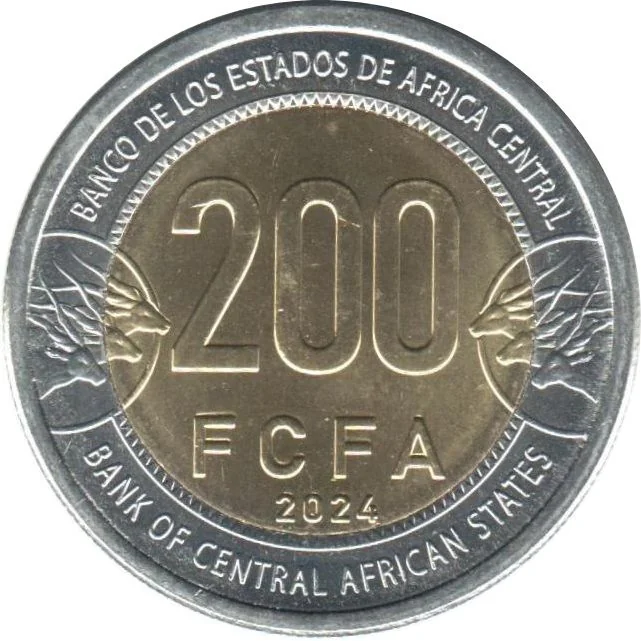
Obverse
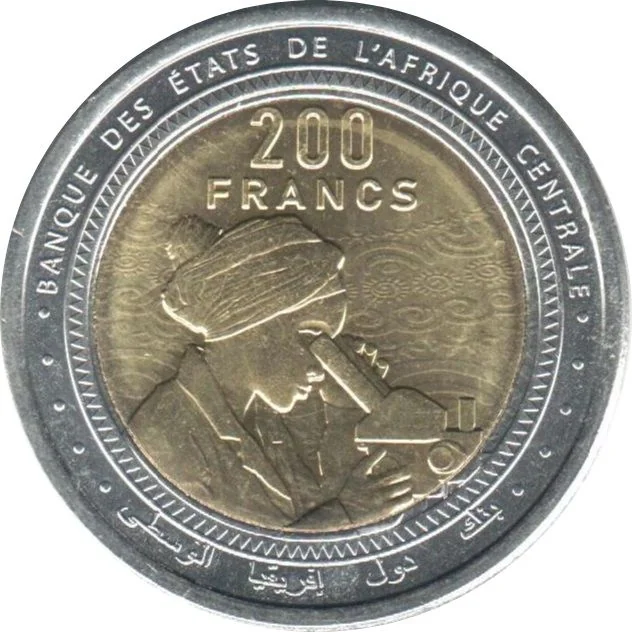
Reverse
Description:
Women in Science: A researcher at a microscope, set against an artistic pattern, symbolizing female contributions to discovery.
Inscription:
BANQUE DES ÉTATS DE L'AFRIQUE CENTRALE
200
FRANCS
· · · · · بنك دول إفريقيا الوسطى · · · · ·
200
FRANCS
· · · · · بنك دول إفريقيا الوسطى · · · · ·
Translation:
BANK OF THE STATES OF CENTRAL AFRICA
200
FRANCS
· · · · · BANK OF THE STATES OF CENTRAL AFRICA · · · · ·
200
FRANCS
· · · · · BANK OF THE STATES OF CENTRAL AFRICA · · · · ·
Edge
Reeded
Mints
| Name | Mark |
|---|---|
| Monnaie de Paris | — |
Mintings
| Year | Mint Mark | Mintage | Quality | Collection |
|---|---|---|---|---|
| 2024 | — | — |
Historical background
In 2024, the currency situation for the six member states of the Central African Economic and Monetary Community (CEMAC) remains defined by the continued use of the CFA franc (XAF), which is pegged to the euro and guaranteed by the French Treasury. This long-standing arrangement, recently reformed and rebranded as the "eco" for the region (though distinct from the West African version), provides monetary stability and low inflation but is frequently criticized for limiting monetary sovereignty and policy flexibility. The key economic challenge is the persistent divergence between the region's foreign exchange reserves, managed by the Bank of Central African States (BEAC), and the money supply, which has led to recurrent liquidity squeezes and strict limits on access to foreign currency for businesses and individuals.
The BEAC maintains a restrictive monetary policy to rebuild international reserves, which were depleted following the 2014 oil price crash and the COVID-19 pandemic. Consequently, commercial banks face mandatory reserve requirements and are often unable to fulfill requests for dollars or euros, hampering import-dependent economies and creating a thriving parallel currency market where the XAF trades at a significant discount. This liquidity crisis is compounded by structural issues, including weak regional economic integration, low tax revenues, and a heavy reliance on volatile commodity exports like oil, timber, and diamonds.
Looking forward, regional authorities are navigating a path between maintaining the crucial peg for stability and fostering conditions for growth. Efforts are focused on implementing reforms agreed with the International Monetary Fund (IMF), improving tax collection, and diversifying economies to reduce external vulnerabilities. While the currency peg itself is not in question for 2024, the ongoing tension between necessary fiscal discipline and the urgent need for economic expansion and improved access to foreign exchange continues to define the monetary landscape for Central African states.
The BEAC maintains a restrictive monetary policy to rebuild international reserves, which were depleted following the 2014 oil price crash and the COVID-19 pandemic. Consequently, commercial banks face mandatory reserve requirements and are often unable to fulfill requests for dollars or euros, hampering import-dependent economies and creating a thriving parallel currency market where the XAF trades at a significant discount. This liquidity crisis is compounded by structural issues, including weak regional economic integration, low tax revenues, and a heavy reliance on volatile commodity exports like oil, timber, and diamonds.
Looking forward, regional authorities are navigating a path between maintaining the crucial peg for stability and fostering conditions for growth. Efforts are focused on implementing reforms agreed with the International Monetary Fund (IMF), improving tax collection, and diversifying economies to reduce external vulnerabilities. While the currency peg itself is not in question for 2024, the ongoing tension between necessary fiscal discipline and the urgent need for economic expansion and improved access to foreign exchange continues to define the monetary landscape for Central African states.
Series: 2024 series
💎 Very Rare