

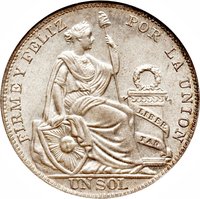
Obverse
Description:
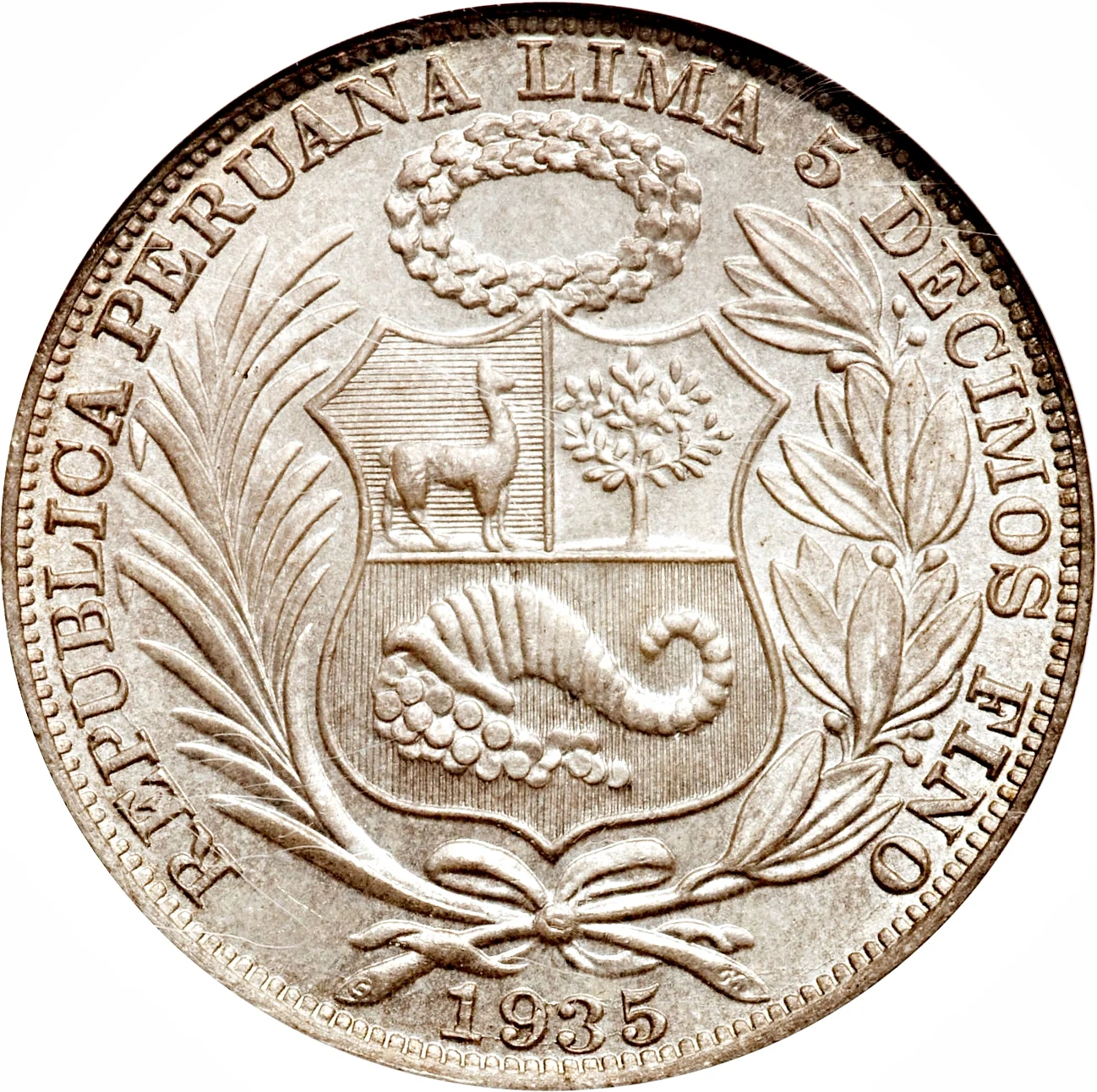
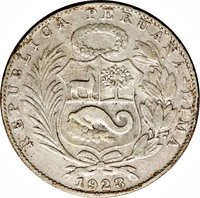
National arms note: Philadelphia and Lima strikings differ in legend letter size, with Philadelphia's being smaller. All coins bear the Lima Mint name.
Inscription:
REPUBLICA PERUANA LIMA 5 DECIMOS FINO
1924
1924
Translation:
Peruvian Republic Lima 5 Tenths Fine
1924
1924
Script: Latin
Reverse
Edge
Reeded
Categories
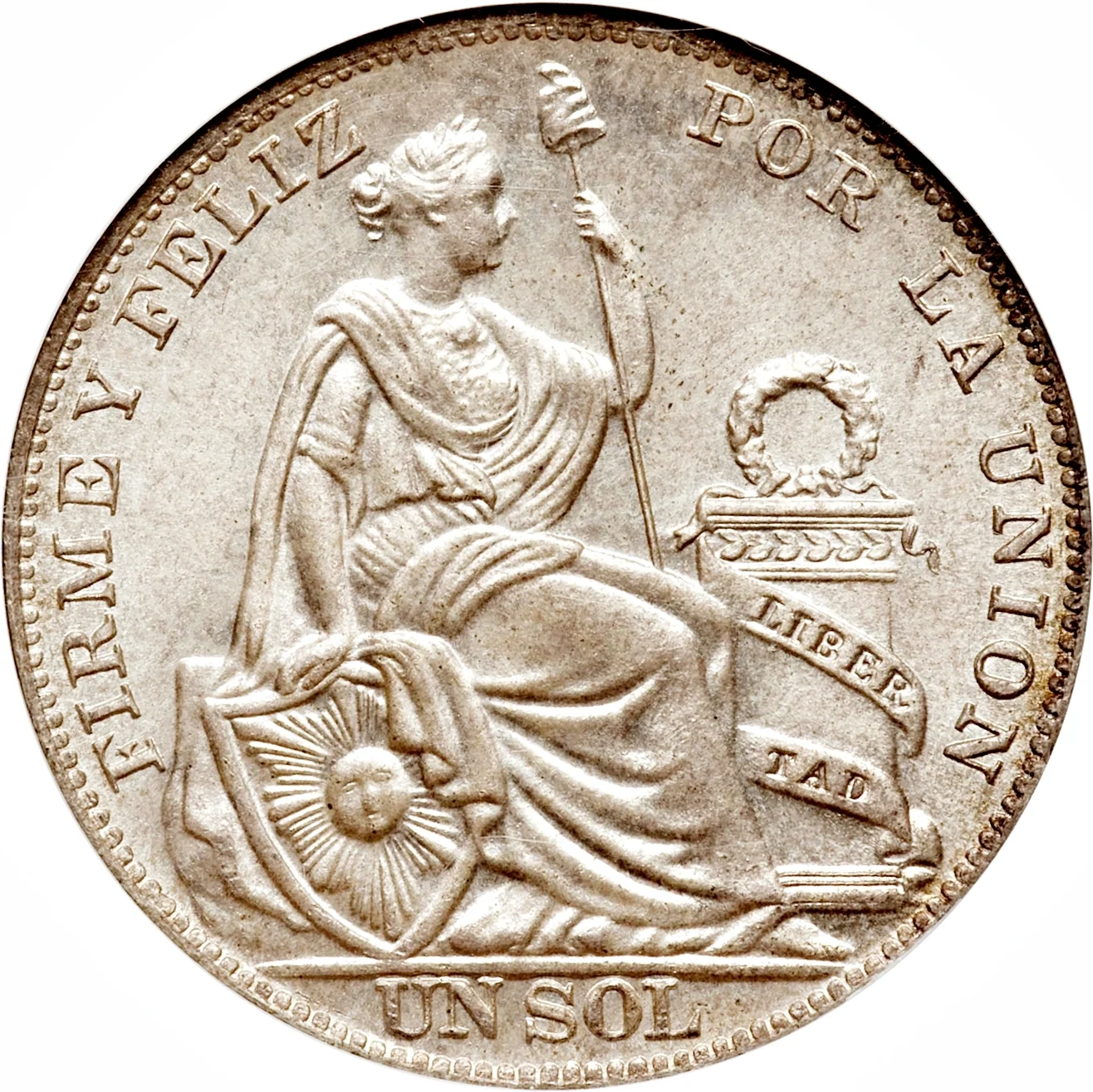
| Symbol> Allegory |
| Symbols> Coat of Arms |
| Symbol> Phrygian cap |
| Symbol> Wreath |
Mints
| Name | Mark |
|---|---|
| Lima | — |
| United States Mint of Philadelphia | — |
Mintings
| Year | Mint Mark | Mintage | Quality | Collection |
|---|---|---|---|---|
| 1923 | — | 2,369,000 | ||
| 1924 | — | 3,113,196 | ||
| 1925 | — | 1,291,000 | ||
| 1926 | — | 2,157,000 | ||
| 1930 | — | 76,000 | ||
| 1931 | — | 24,000 | ||
| 1933 | — | 5,000 | ||
| 1934 | — | 2,855,000 | ||
| 1935 | — | 695,000 |
Historical background
In 1923, Peru's currency situation was characterized by the continued dominance of the libra peruana (Peruvian pound), a gold-backed currency that had been introduced in 1898. This system aimed to provide stability and integrate Peru into the global financial order, with the currency pegged to the British pound sterling. However, the reality was one of a dual circulation system, where the gold-based libra coexisted with the older silver sol, which remained the everyday currency for most of the population. This created practical complexities, but the gold standard itself provided a period of relative external stability and was supported by the country's booming export economy, particularly in commodities like copper, cotton, and sugar.
Beneath this surface stability, significant pressures were building. The global economic landscape after World War I was volatile, and Peru's dependence on raw material exports made its currency vulnerable to international price shocks. Furthermore, the government of President Augusto B. Leguía (in his second term known as the Oncenio) was engaged in massive public works and modernization projects, financed heavily by external borrowing. This increased the national debt and raised concerns about the long-term sustainability of the gold peg, as maintaining it required careful management of fiscal reserves.
Consequently, 1923 stands as the final full year of the classic gold standard in Peru. The policies of the Leguía administration, while promoting infrastructure growth, were laying the groundwork for a fiscal crisis. The strain of foreign debt, combined with a looming downturn in export prices, would soon prove overwhelming. Within a few years, these pressures would force Peru to abandon the gold standard, leading to the devaluation of the libra and a major monetary reform in 1931 that reintroduced the sol as the sole national currency. Thus, 1923 represents the calm before the storm in Peru's monetary history.
Beneath this surface stability, significant pressures were building. The global economic landscape after World War I was volatile, and Peru's dependence on raw material exports made its currency vulnerable to international price shocks. Furthermore, the government of President Augusto B. Leguía (in his second term known as the Oncenio) was engaged in massive public works and modernization projects, financed heavily by external borrowing. This increased the national debt and raised concerns about the long-term sustainability of the gold peg, as maintaining it required careful management of fiscal reserves.
Consequently, 1923 stands as the final full year of the classic gold standard in Peru. The policies of the Leguía administration, while promoting infrastructure growth, were laying the groundwork for a fiscal crisis. The strain of foreign debt, combined with a looming downturn in export prices, would soon prove overwhelming. Within a few years, these pressures would force Peru to abandon the gold standard, leading to the devaluation of the libra and a major monetary reform in 1931 that reintroduced the sol as the sole national currency. Thus, 1923 represents the calm before the storm in Peru's monetary history.
🌱 Common