

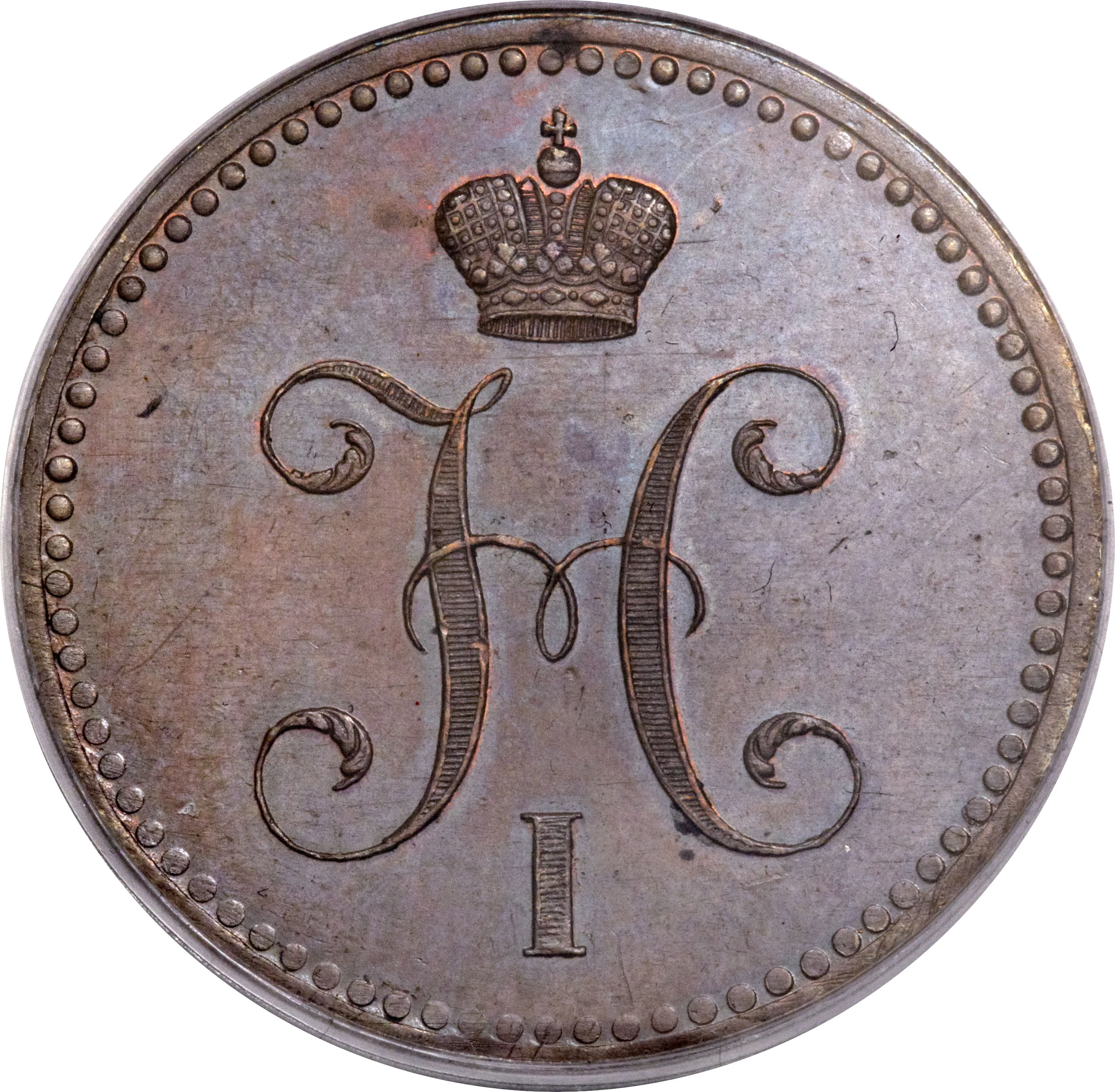
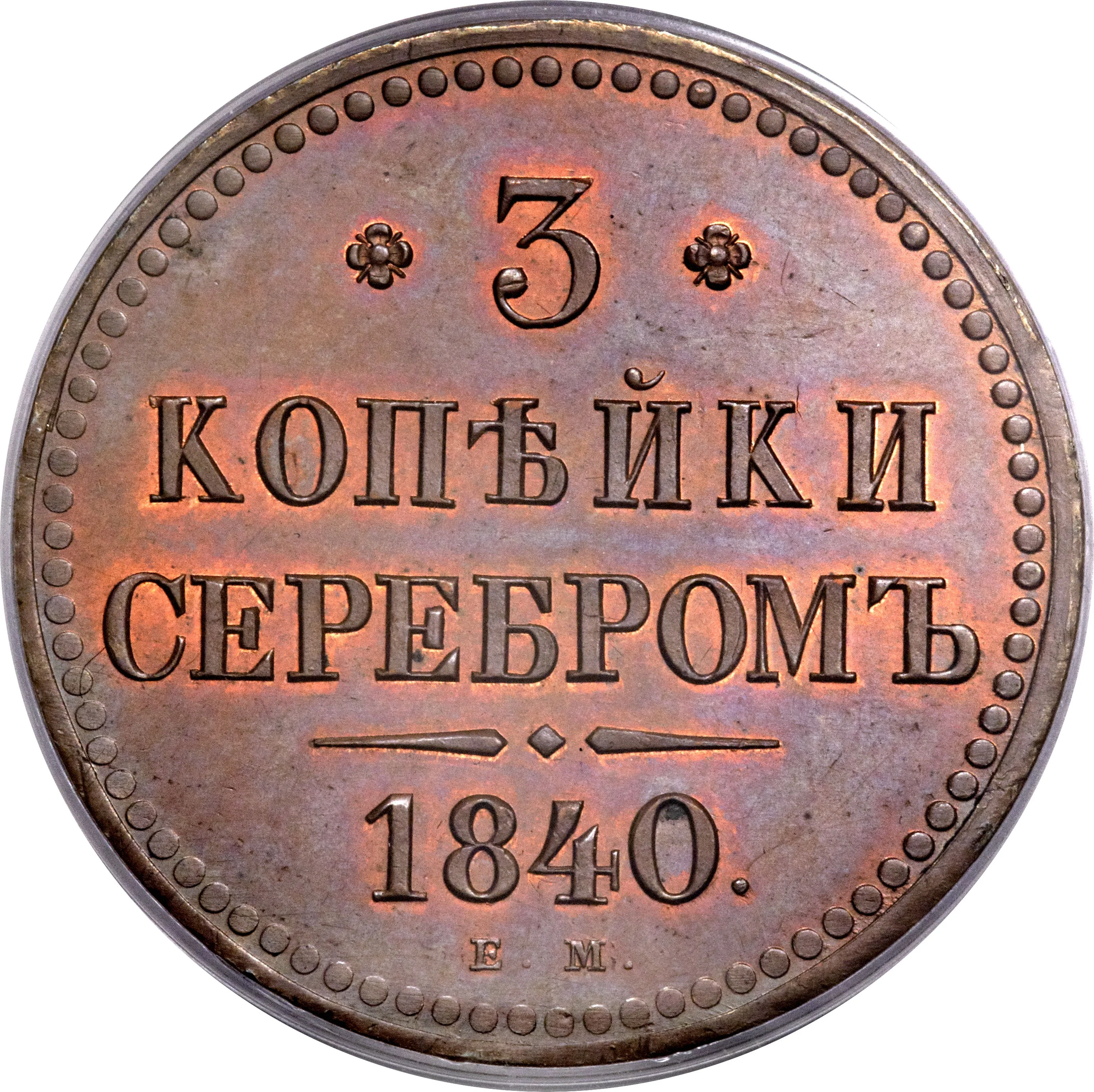
3 Kopecks – Russian Empire
Russia
Context
Years: 1839–1847
Country: Russia 
Issuer: Russian Empire
Ruler: Nicholas I
Currency:
(1700—1917)
Demonetized: Yes
Total mintage: 62,891,361
Material
Diameter: 39 mm
Weight: 30.72 g
Thickness: 3 mm
Shape: Round
Composition: Copper
Standard: Silver ounce
Magnetic: No
Technique: Milled
Alignment: Medal alignment
flip
References
Numista: #4626
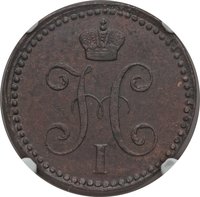
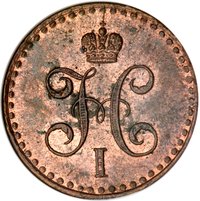
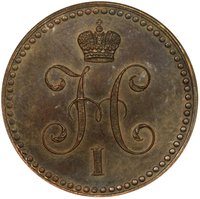
Obverse
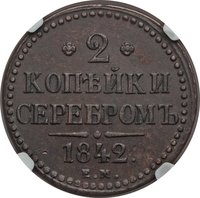
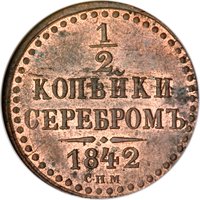
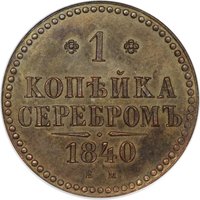
Reverse
Edge
Plain
Mints
| Name | Mark |
|---|---|
| Ekaterinburg Mint | ЕМ |
| Suzun Mint | СМ |
| Saint Petersburg | СПБ |
| Saint Petersburg | СПМ |
Mintings
| Year | Mint Mark | Mintage | Quality | Collection |
|---|---|---|---|---|
| 1839 | СМ | 151,429 | ||
| 1840 | ЕМ | — | BU | |
| 1840 | СМ | 857,200 | ||
| 1840 | СПМ | 2,133,333 | ||
| 1840 | СПБ | — | BU | |
| 1841 | СПМ | 2,133,333 | ||
| 1841 | ЕМ | 13,417,000 | BU | |
| 1841 | СМ | 1,171,600 | ||
| 1842 | СПМ | 2,133,333 | ||
| 1842 | ЕМ | 13,700,000 | BU | |
| 1842 | СМ | 1,336,000 | ||
| 1843 | СПМ | 2,133,333 | ||
| 1843 | ЕМ | 14,578,000 | BU | |
| 1843 | СМ | 666,800 | ||
| 1844 | ЕМ | 4,480,000 | BU | |
| 1844 | СМ | 1,000,000 | ||
| 1845 | СМ | 1,000,000 | ||
| 1846 | СМ | 1,000,000 | ||
| 1847 | СМ | 1,000,000 |
Historical background
In 1839, the Russian Empire stood at a pivotal moment in its monetary history, culminating in the landmark Currency Reform of 1839-1843 spearheaded by Finance Minister Yegor Kankrin. For decades, the Russian financial system had been in disarray, operating on a dual system of silver rubles and depreciated paper assignats (assignation rubles). The over-issuance of assignats to finance wars, most notably against Napoleon, had led to severe inflation and a fluctuating exchange rate, where the paper ruble was worth only about a quarter of its silver counterpart. This unstable environment hampered trade, state finances, and economic development, creating an urgent need for stabilization.
The core of Kankrin's reform was the establishment of a stable silver standard and the elimination of the discredited assignats. The manifesto of July 1, 1839, declared the silver ruble the principal monetary unit and fixed the value of the assignat ruble permanently at 3.50 silver kopeks (or 35 kopeks per silver ruble). To facilitate the transition, a new credit instrument, "deposit notes” (depozitnye bilety), was introduced. These notes were fully backed by silver and could be exchanged on demand, restoring public confidence in paper currency as they were perceived as direct representatives of metallic coin.
This reform laid the essential groundwork for the final phase completed in 1843, when all remaining assignats were withdrawn and replaced with a unified issue of state credit notes (kreditnye bilety). The 1839 measures successfully ended the era of the assignat, stabilized the exchange rate, and integrated Russia more firmly into the European monetary system based on precious metals. While long-term challenges remained, the reform marked a crucial step toward modernizing the empire's finances and fostering commercial growth.
The core of Kankrin's reform was the establishment of a stable silver standard and the elimination of the discredited assignats. The manifesto of July 1, 1839, declared the silver ruble the principal monetary unit and fixed the value of the assignat ruble permanently at 3.50 silver kopeks (or 35 kopeks per silver ruble). To facilitate the transition, a new credit instrument, "deposit notes” (depozitnye bilety), was introduced. These notes were fully backed by silver and could be exchanged on demand, restoring public confidence in paper currency as they were perceived as direct representatives of metallic coin.
This reform laid the essential groundwork for the final phase completed in 1843, when all remaining assignats were withdrawn and replaced with a unified issue of state credit notes (kreditnye bilety). The 1839 measures successfully ended the era of the assignat, stabilized the exchange rate, and integrated Russia more firmly into the European monetary system based on precious metals. While long-term challenges remained, the reform marked a crucial step toward modernizing the empire's finances and fostering commercial growth.
🌱 Common