

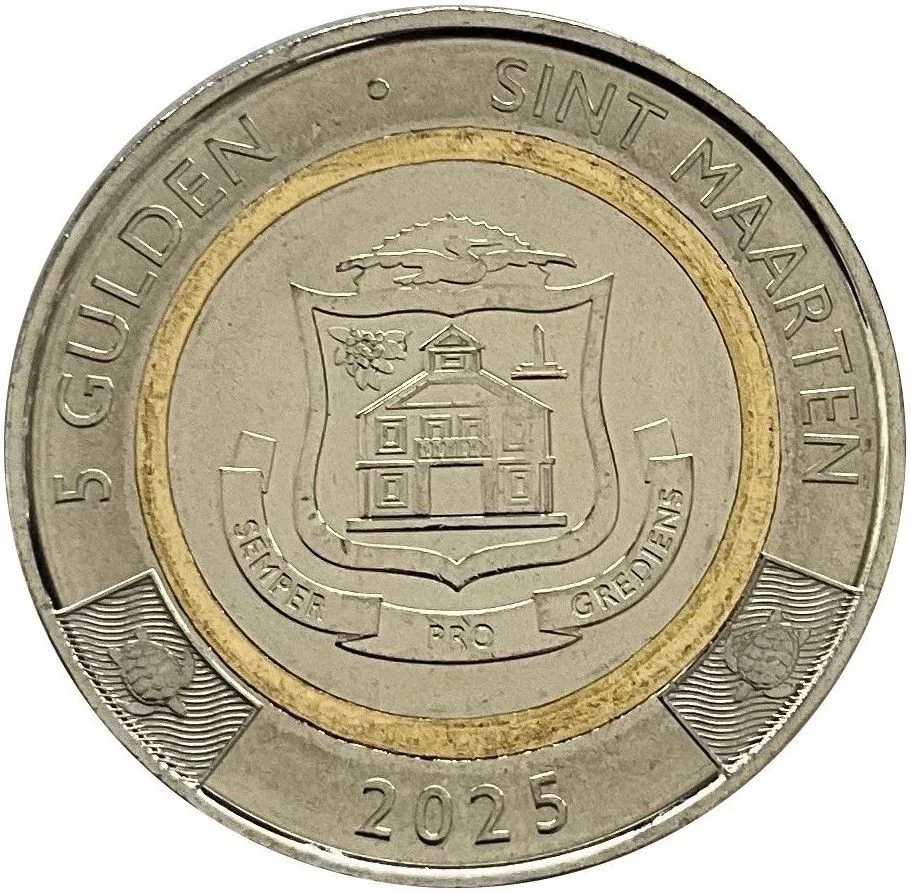
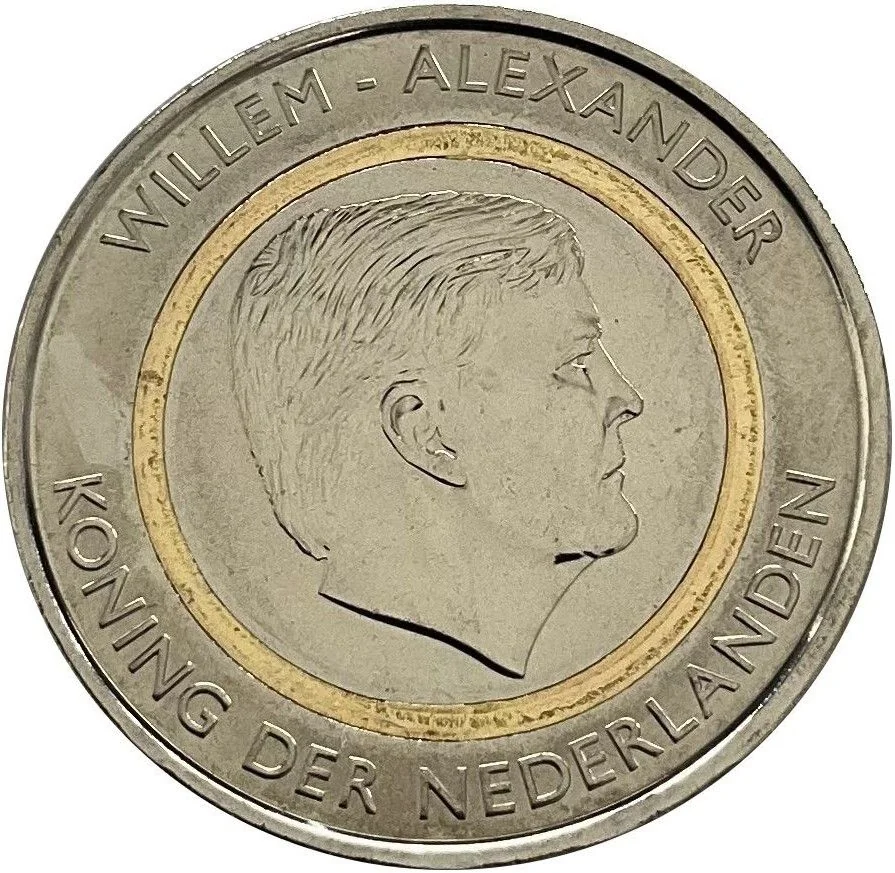
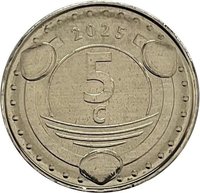
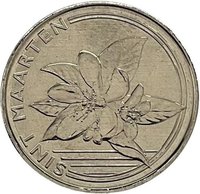
5 guilder – Sint Maarten
Add to wishlist
Netherlands
Context
Year: 2025
Country: Netherlands
Issuer: Sint Maarten
Issuing organization: Central Bank of Curaçao and Sint Maarten
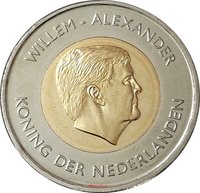
Ruler: Willem-Alexander
Currency:
Material
References
Numista: #462597
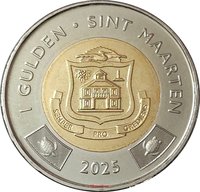
Obverse
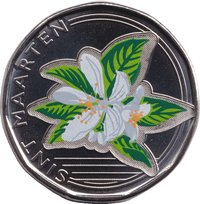
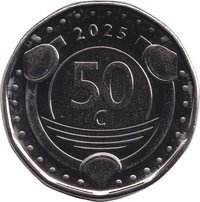
Reverse
Edge
Categories
| Symbols> Coat of Arms |
| Animal> Reptile |
| Animal> Turtle or tortoise |
Mints
| Name | Mark |
|---|---|
| Royal Canadian Mint of Ottawa | — |
Mintings
| Year | Mint Mark | Mintage | Quality | Collection |
|---|---|---|---|---|
| 2025 | — | — |
Historical background
As of 2025, Sint Maarten continues to operate within the long-established currency framework of the Netherlands Antilles guilder (ANG), pegged at a fixed rate of 1.79 to the US dollar. This arrangement, managed by the Centrale Bank van Curaçao en Sint Maarten (CBCS), provides critical monetary stability for the island's tourism-dependent economy. The US dollar is also legal tender and circulates widely, used interchangeably in most transactions, especially within the hospitality and retail sectors that cater to the majority of American visitors. This dual-currency reality simplifies transactions for tourists but creates occasional complexities in pricing and accounting for local businesses.
The primary monetary policy discussion in 2025 revolves around the potential introduction of a new, unified digital currency for the entire Caribbean region, a topic of ongoing deliberation within the Caribbean Community (CARICOM). Sint Maarten, given its unique political status as an autonomous country within the Kingdom of the Netherlands, observes these regional developments closely but its immediate monetary sovereignty remains tied to the CBCS and the existing peg. Domestically, there is little political appetite to unilaterally abandon the proven stability of the ANG peg, which shields the economy from volatile exchange rate fluctuations.
Looking ahead, the currency situation remains stable but not static. The key pressures are external, stemming from regional digital currency initiatives and the broader global shift away from physical cash. For Sint Maarten, any future change would require navigating a complex web of dependencies: consensus with Curaçao within the CBCS, approval from the Kingdom of the Netherlands due to treaty obligations, and a careful assessment of impacts on the vital tourism industry. Therefore, while 2025 does not mark a year of radical change, it is a period of strategic observation and preparation for potential evolutions in the regional financial architecture.
The primary monetary policy discussion in 2025 revolves around the potential introduction of a new, unified digital currency for the entire Caribbean region, a topic of ongoing deliberation within the Caribbean Community (CARICOM). Sint Maarten, given its unique political status as an autonomous country within the Kingdom of the Netherlands, observes these regional developments closely but its immediate monetary sovereignty remains tied to the CBCS and the existing peg. Domestically, there is little political appetite to unilaterally abandon the proven stability of the ANG peg, which shields the economy from volatile exchange rate fluctuations.
Looking ahead, the currency situation remains stable but not static. The key pressures are external, stemming from regional digital currency initiatives and the broader global shift away from physical cash. For Sint Maarten, any future change would require navigating a complex web of dependencies: consensus with Curaçao within the CBCS, approval from the Kingdom of the Netherlands due to treaty obligations, and a careful assessment of impacts on the vital tourism industry. Therefore, while 2025 does not mark a year of radical change, it is a period of strategic observation and preparation for potential evolutions in the regional financial architecture.
🌟 Uncommon