

1 Sovereign – United Kingdom
United Kingdom
Context

Material
References
Numista: #46001
Value
Bullion value: $1221.21
Obverse
Description:
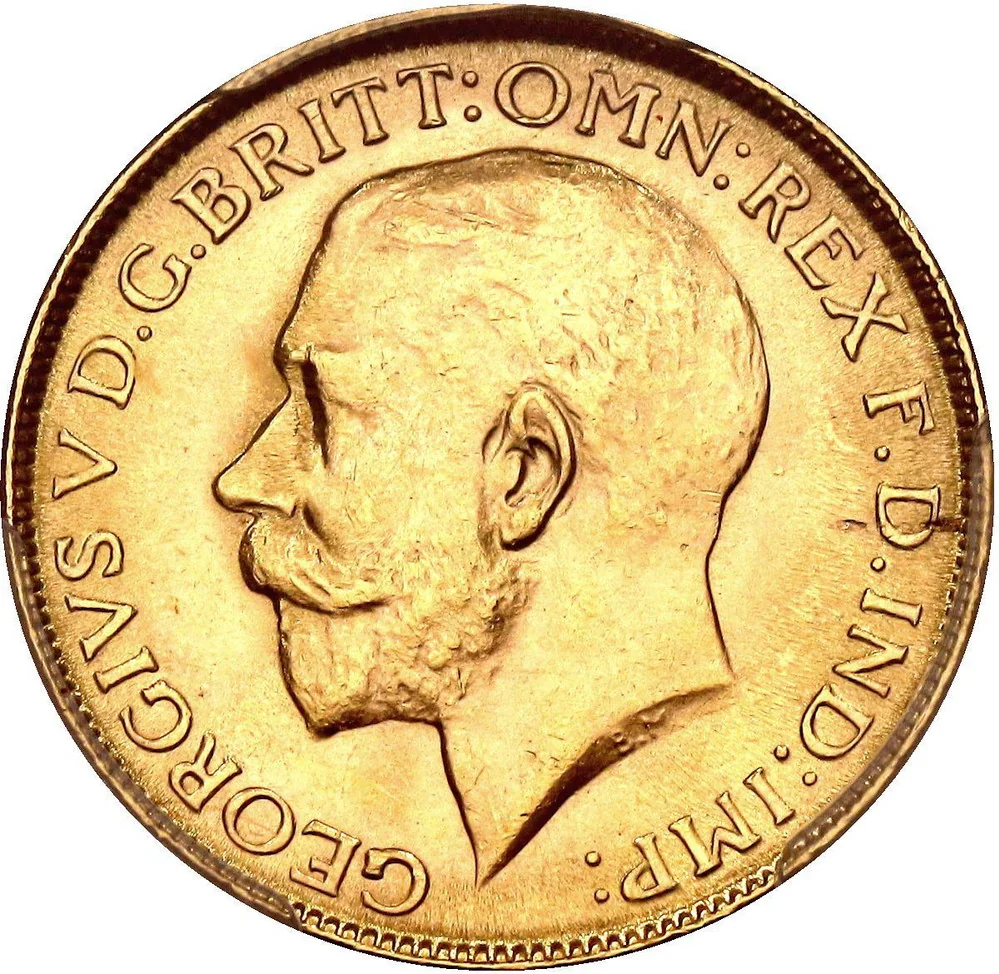
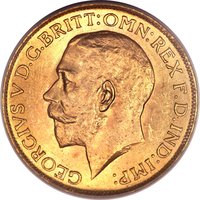
Uncrowned portrait of King George V left, circular legend.
Inscription:
GEORGIVS V D.G.BRITT:OMN:REX F.D.IND:IMP:
Translation:
George V, by the Grace of God, King of all the Britains, Defender of the Faith, Emperor of India.
Script: Latin
Language: Latin
Engraver: Edgar Bertram MacKennal
Reverse
Description:
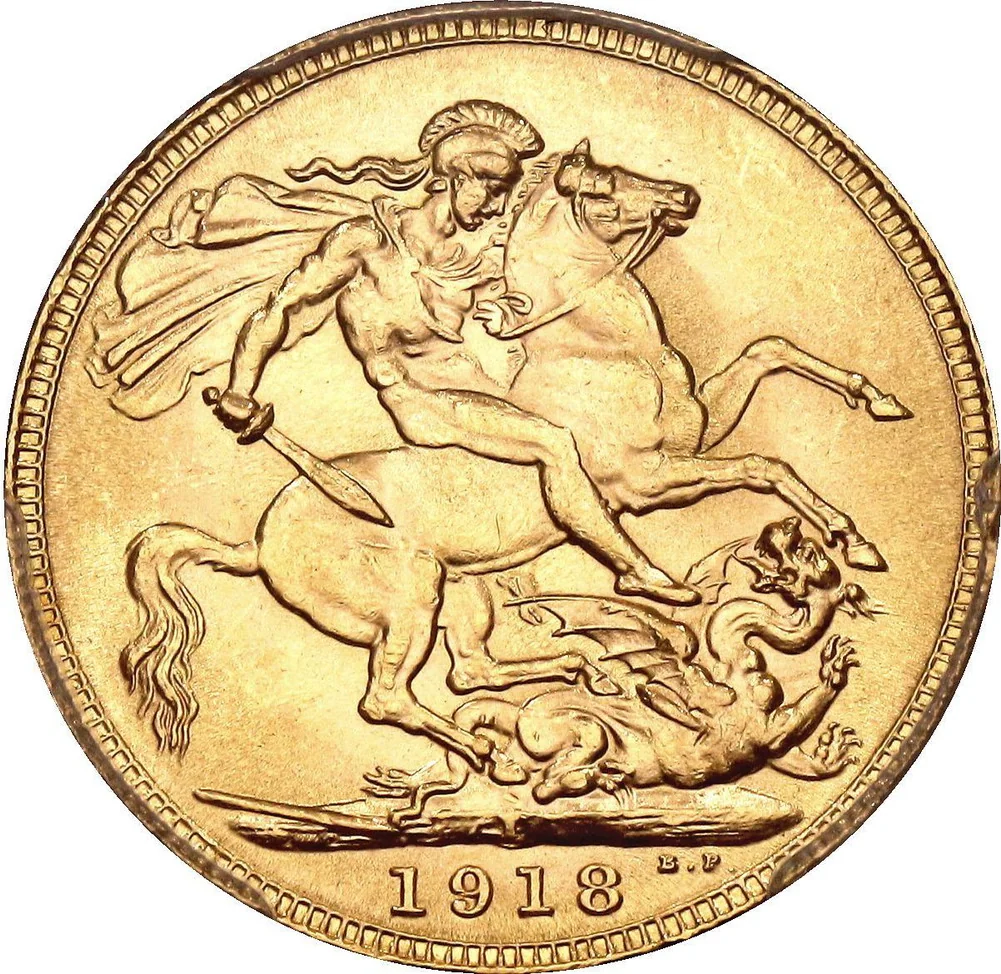
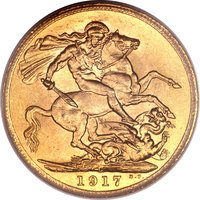
St. George slaying the dragon. Date and engraver's initials in exergue; mintmark under the horse's rear hoof.
Inscription:
I
1918 B.P.
1918 B.P.
Script: Latin
Engraver: Benedetto Pistrucci
Edge
Reeded
Categories
| Mythology> Fantastic animal |
| Animal> Horse |
Mints
| Name | Mark |
|---|---|
| Mumbai / Bombay | I |
Mintings
| Year | Mint Mark | Mintage | Quality | Collection |
|---|---|---|---|---|
| 1918 | I | 1,296,033 |
Historical background
In 1918, the United Kingdom’s currency situation was defined by the immense fiscal and monetary strains of the First World War. The government had suspended the gold convertibility of sterling in 1914, abandoning the classical gold standard that had underpinned global finance. To fund the war effort, the Treasury issued vast amounts of debt and the Bank of England expanded the money supply, leading to significant inflation. By 1918, prices had roughly doubled from their 1914 levels, and the pound sterling’s external value was being managed artificially through borrowing and controls rather than by market convertibility.
Internally, the currency in circulation was a mixture of gold sovereigns, Treasury notes, and commercial banknotes. Gold coins had largely disappeared from everyday use, hoarded by the public or held by the Bank. Their place was taken by "Bradburys" – Treasury notes for £1 and 10 shillings, first issued in 1914. These were effectively government-issued paper money, a major departure from the pre-war norm, and their convertibility into gold was suspended. The banking system operated under a moratorium, with the government guaranteeing deposits to prevent panic, but credit was tight and directed toward wartime needs.
Externally, the pound was under severe pressure. The UK had borrowed heavily from the United States, becoming a net debtor, and had liquidated a substantial portion of its foreign investments. Sterling’s exchange rate, particularly against the US dollar, was pegged at $4.76 through official intervention and borrowing, a rate that was unsustainable without these supports. As the war ended in November 1918, the fundamental question loomed: whether and how to return to the gold standard at the pre-war parity—a goal pursued by the financial establishment but one that would require painful deflation and pose severe challenges for the post-war economy. The currency regime of 1918 was thus a fragile, managed system, setting the stage for the turbulent monetary debates of the 1920s.
Internally, the currency in circulation was a mixture of gold sovereigns, Treasury notes, and commercial banknotes. Gold coins had largely disappeared from everyday use, hoarded by the public or held by the Bank. Their place was taken by "Bradburys" – Treasury notes for £1 and 10 shillings, first issued in 1914. These were effectively government-issued paper money, a major departure from the pre-war norm, and their convertibility into gold was suspended. The banking system operated under a moratorium, with the government guaranteeing deposits to prevent panic, but credit was tight and directed toward wartime needs.
Externally, the pound was under severe pressure. The UK had borrowed heavily from the United States, becoming a net debtor, and had liquidated a substantial portion of its foreign investments. Sterling’s exchange rate, particularly against the US dollar, was pegged at $4.76 through official intervention and borrowing, a rate that was unsustainable without these supports. As the war ended in November 1918, the fundamental question loomed: whether and how to return to the gold standard at the pre-war parity—a goal pursued by the financial establishment but one that would require painful deflation and pose severe challenges for the post-war economy. The currency regime of 1918 was thus a fragile, managed system, setting the stage for the turbulent monetary debates of the 1920s.
🌟 Limited