

50 sene – Samoa
Add to wishlist
Samoa
Material
Diameter: 32.3 mm
Weight: 14.14 g
Thickness: 2.35 mm
Shape: Round
Composition: Copper-nickel
Technique: Milled
Alignment: Medal alignment
flip
References
KM: #
Numista: #1482
Value
Exchange value: 0.50 WST
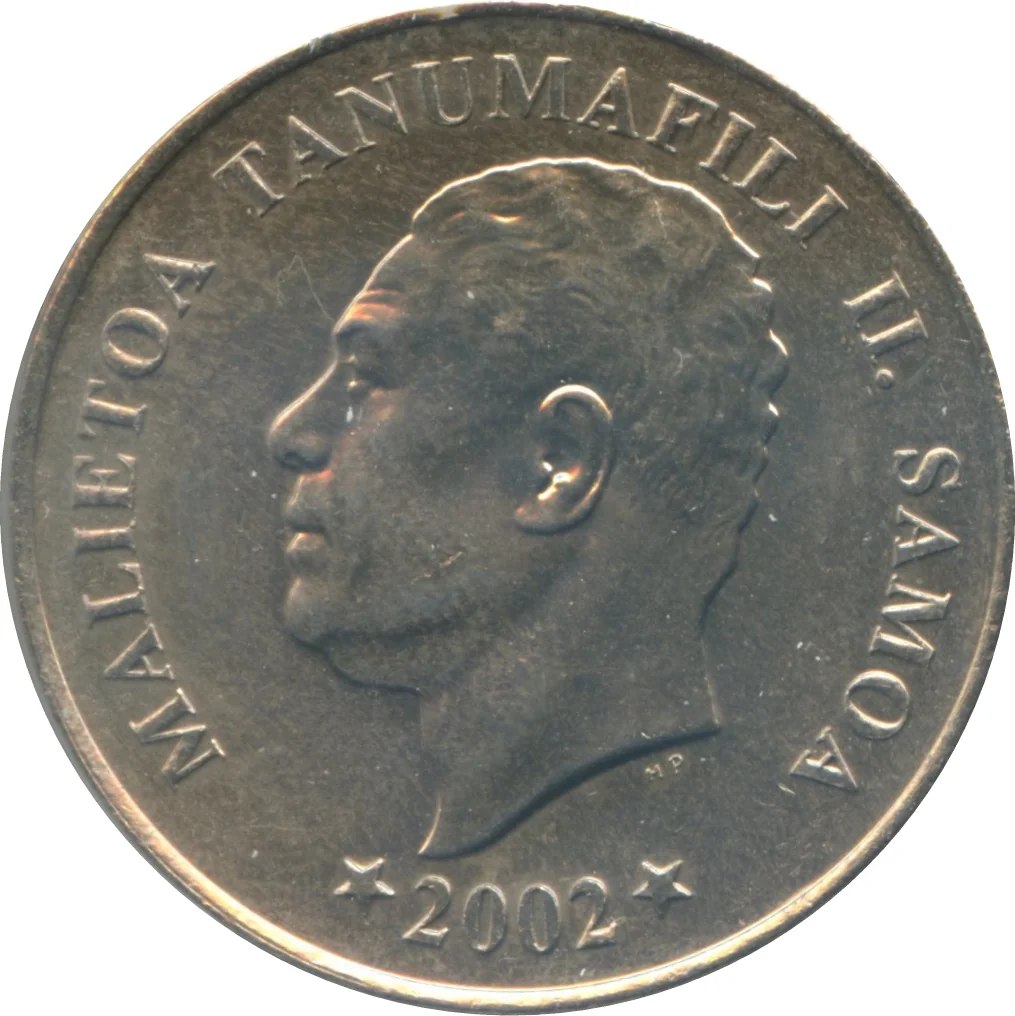
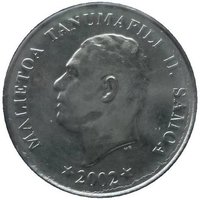
Obverse
Description:
SAMOA was called Western Samoa until 1997, which appears on its earlier coins. All coins minted from 1997 onward simply say SAMOA.
Inscription:
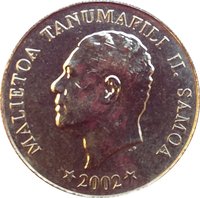
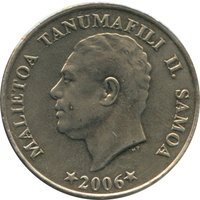
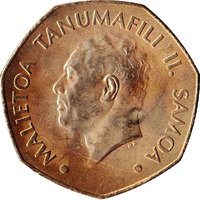
MALIETOA TANUMAFILI II
SAMOA
*2002*
SAMOA
*2002*
Translation:
Malietoa Tanumafili II
Samoa
*2002*
Samoa
*2002*
Script: Latin
Engraver: Thomas Humphrey Paget
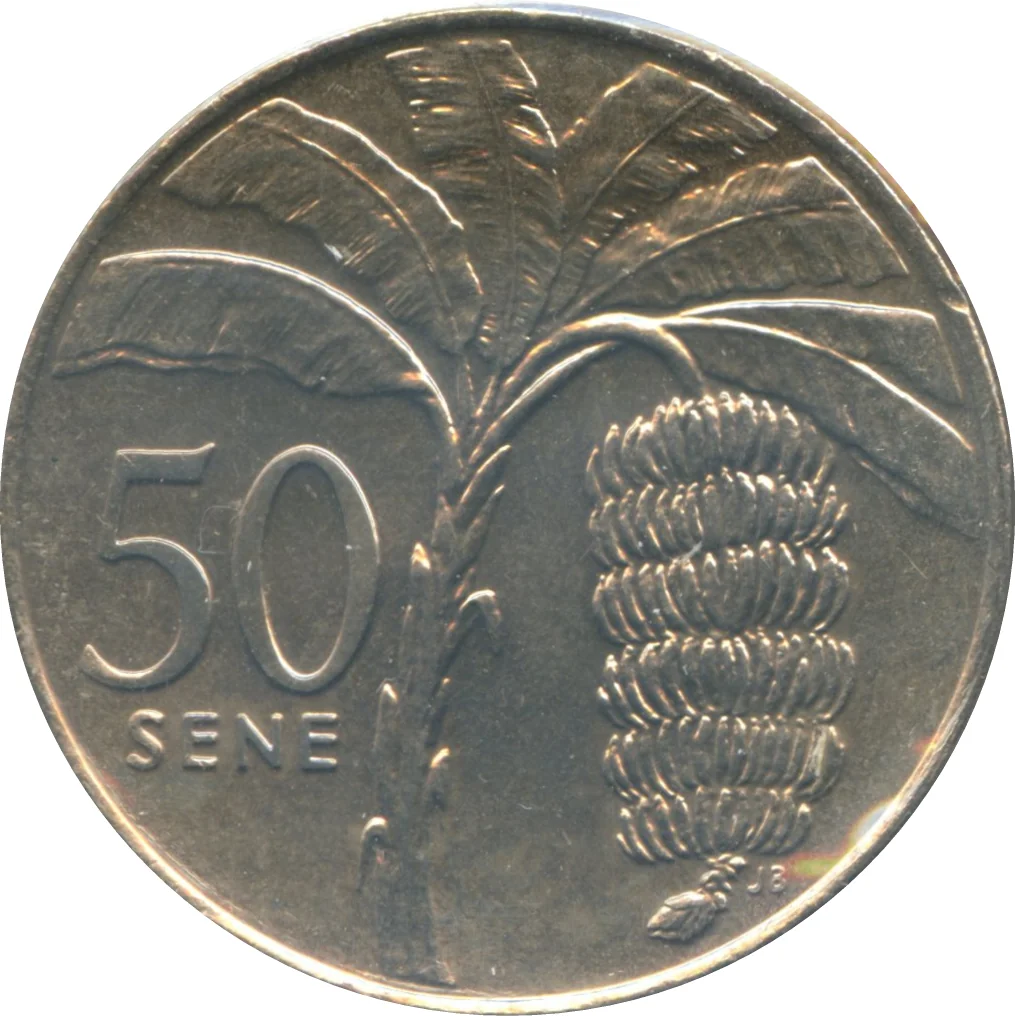
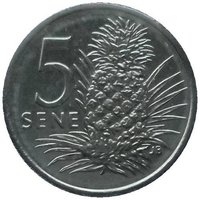
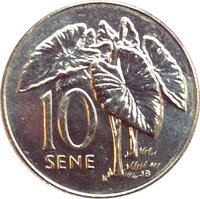
Reverse
Edge
Reeded
Categories
| Person> Politician |
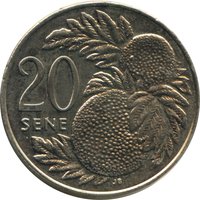
| Plant> Fruit |
Mintings
| Year | Mint Mark | Mintage | Quality | Collection |
|---|---|---|---|---|
| 2002 | — | — | ||
| 2006 | — | — | ||
| 2010 | — | — |
Historical background
In 2002, Samoa's currency situation was defined by a significant and symbolic transition: the replacement of the Samoan tala (WST) banknotes and coins with a new series. This change was not driven by economic crisis or hyperinflation, but was a deliberate government initiative to modernize the currency's security features and reflect Samoa's evolving national identity. The older notes, which had been in circulation since the 1990s, were considered vulnerable to counterfeiting. The new series, released progressively from 2001, incorporated advanced security elements such as holographic strips and watermarks, bringing Samoa's currency in line with international anti-forgery standards.
The redesign also carried deep cultural and political significance. The new notes prominently featured Malietoa Tanumafili II, Samoa's revered Head of State, on the front of all denominations—a move that reinforced national unity and respect for tradition. The reverse sides celebrated Samoa's natural environment, historical figures, and traditional va'a (canoe) voyages, visually distancing the currency from its previous colonial-era imagery and asserting a stronger, independent Samoan character. This re-imagining of the currency was part of a broader post-independence nation-building project.
Economically, the transition in 2002 was smooth and stable. The tala remained pegged to a basket of currencies, heavily weighted towards the Australian, New Zealand, and US dollars, which provided exchange rate stability. There was no redenomination or change in the tala's value; the old notes were simply withdrawn from circulation as the new ones were issued. Therefore, the currency situation in 2002 was marked by technical modernization and cultural reaffirmation rather than monetary upheaval, solidifying the tala as a robust symbol of Samoan sovereignty.
The redesign also carried deep cultural and political significance. The new notes prominently featured Malietoa Tanumafili II, Samoa's revered Head of State, on the front of all denominations—a move that reinforced national unity and respect for tradition. The reverse sides celebrated Samoa's natural environment, historical figures, and traditional va'a (canoe) voyages, visually distancing the currency from its previous colonial-era imagery and asserting a stronger, independent Samoan character. This re-imagining of the currency was part of a broader post-independence nation-building project.
Economically, the transition in 2002 was smooth and stable. The tala remained pegged to a basket of currencies, heavily weighted towards the Australian, New Zealand, and US dollars, which provided exchange rate stability. There was no redenomination or change in the tala's value; the old notes were simply withdrawn from circulation as the new ones were issued. Therefore, the currency situation in 2002 was marked by technical modernization and cultural reaffirmation rather than monetary upheaval, solidifying the tala as a robust symbol of Samoan sovereignty.
Series: 2002 Samoa circulation coins
🌱 Common