

1 Ruble (Great October Revolution) – Soviet Union
Circulating commemorative coins
Commemoration: 60th Anniversary of the Great October Revolution
Russia
Context
Years: 1977–1988
Country: Russia 
Issuer: Soviet Union 
Period:
(1922—1991)
Currency:
(1961—1991)
Demonetization: 1991
Total mintage: 55,000
Material
Diameter: 31 mm
Weight: 12.8 g
Thickness: 2.3 mm
Shape: Round
Composition: Nickel brass
Magnetic: No
Technique: Milled
Alignment: Medal alignment
flip
References
Y: #Click to copy to clipboard143.1
Numista: #4593
Value
Exchange value: 1 SUR
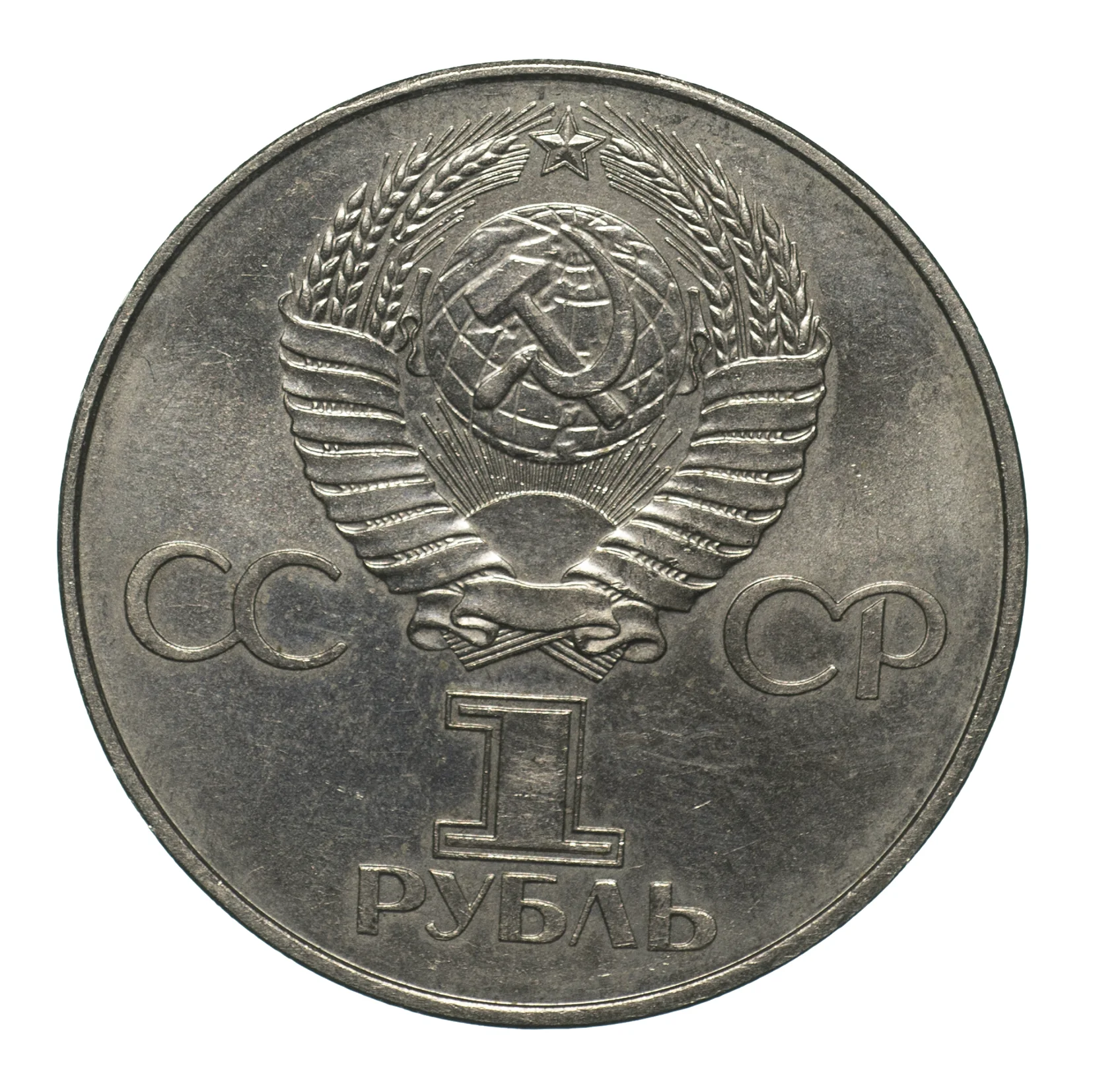
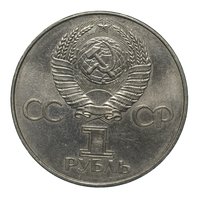
Obverse
Description:
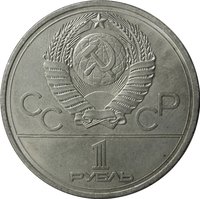
The State Emblem of the Soviet Union.
Inscription:
СС СР
1
РУБЛЬ
1
РУБЛЬ
Translation:
ONE RUBLE USSR
Script: Cyrillic
Language: Russian
Engraver: V. Ermokov
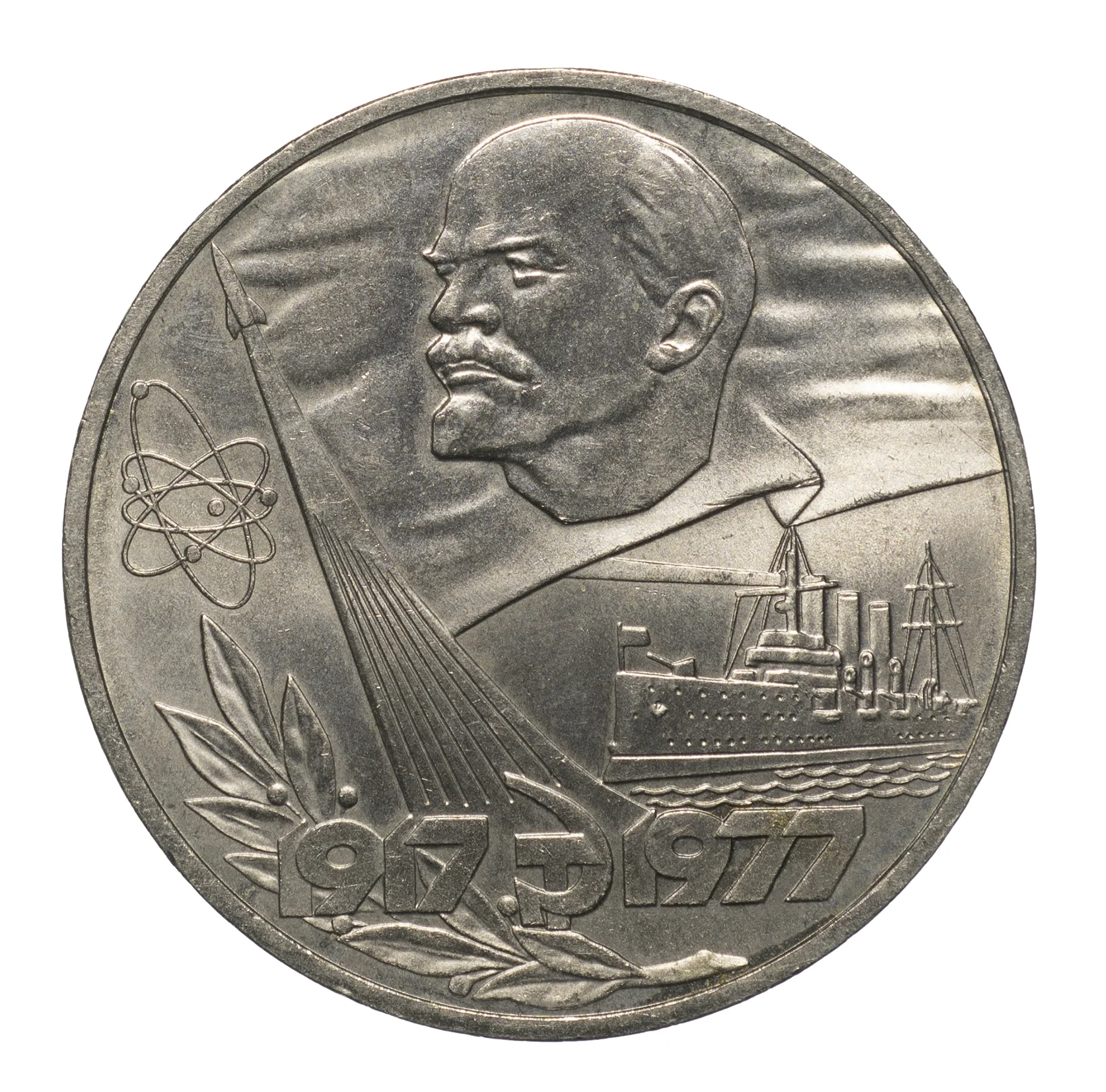
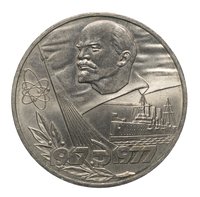
Reverse
Description:
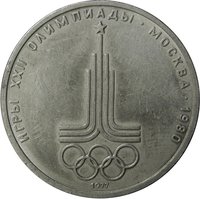
Lenin’s head on a flag above the ship Aurora, with the space monument behind it. An atom model before his head symbolizes Soviet scientific progress. Dates are below.
Inscription:
1917 1977
Script: Cyrillic
Engraver: V.P. Zaitsev
Edge
Smooth with inscription.
Legend:
ОДИН РУБЛЬ • ОДИН РУБЛЬ •
Translation:
ONE RUBLE • ONE RUBLE •
Language: Russian
Categories
| Symbol> Flag |
| Transportation> Watercraft |
| Event> Revolution |
| Person> Politician |
| Space |
Mints
| Name | Mark |
|---|---|
| Saint Petersburg | — |
Mintings
| Year | Mint Mark | Mintage | Quality | Collection |
|---|---|---|---|---|
| 1977 | — | — | ||
| 1977 | — | — | Proof | |
| 1977 | — | — | Prooflike | |
| 1988 | — | 55,000 | Proof |
Historical background
In 1977, the Soviet Union’s currency situation was characterized by a stark duality between the domestic ruble and foreign exchange. Internally, the State Bank (Gosbank) maintained a strictly controlled and non-convertible ruble. Its official exchange rate was artificially set at approximately 0.66 rubles to the US dollar, a figure used for statistical purposes and in limited state-planned foreign trade, but which bore no relation to its real economic value. Within the closed Soviet economy, money functioned primarily as an accounting unit and a means for limited consumer purchases, as the state set prices and the allocation of key goods and resources was dictated by the plan, not currency strength.
The reality for foreign trade and citizens was far more complex. For international transactions, a separate "transferable ruble" was used within the Comecon bloc, but for trade with Western nations, hard currency (US dollars, British pounds, etc.) was paramount. The USSR desperately sought these currencies to purchase vital grain, technology, and consumer goods it could not produce efficiently. This need created a vast black market where the ruble traded at a fraction of its official value, often at 4 to 10 rubles per dollar. The government itself operated a network of "Beryozka" shops, where Soviet citizens with access to foreign currency (e.g., from relatives abroad or work overseas) and privileged foreigners could purchase high-quality deficit goods unavailable for rubles.
This bifurcated system highlighted the fundamental weaknesses of the late Soviet economy. The strong official ruble was a facade, masking growing stagnation, technological lag, and consumer goods shortages. The reliance on hard currency imports and the thriving black market underscored the ruble's lack of genuine purchasing power on the global stage. While the currency situation appeared stable on the surface in 1977, it was symptomatic of a deeper structural crisis, as the planned economy increasingly depended on external capitalist markets and illicit exchanges to mitigate its own inefficiencies.
The reality for foreign trade and citizens was far more complex. For international transactions, a separate "transferable ruble" was used within the Comecon bloc, but for trade with Western nations, hard currency (US dollars, British pounds, etc.) was paramount. The USSR desperately sought these currencies to purchase vital grain, technology, and consumer goods it could not produce efficiently. This need created a vast black market where the ruble traded at a fraction of its official value, often at 4 to 10 rubles per dollar. The government itself operated a network of "Beryozka" shops, where Soviet citizens with access to foreign currency (e.g., from relatives abroad or work overseas) and privileged foreigners could purchase high-quality deficit goods unavailable for rubles.
This bifurcated system highlighted the fundamental weaknesses of the late Soviet economy. The strong official ruble was a facade, masking growing stagnation, technological lag, and consumer goods shortages. The reliance on hard currency imports and the thriving black market underscored the ruble's lack of genuine purchasing power on the global stage. While the currency situation appeared stable on the surface in 1977, it was symptomatic of a deeper structural crisis, as the planned economy increasingly depended on external capitalist markets and illicit exchanges to mitigate its own inefficiencies.
🌱 Very Common