

50 Cents – Laos
Laos
Context
Year: 1952
Issuer: Laos 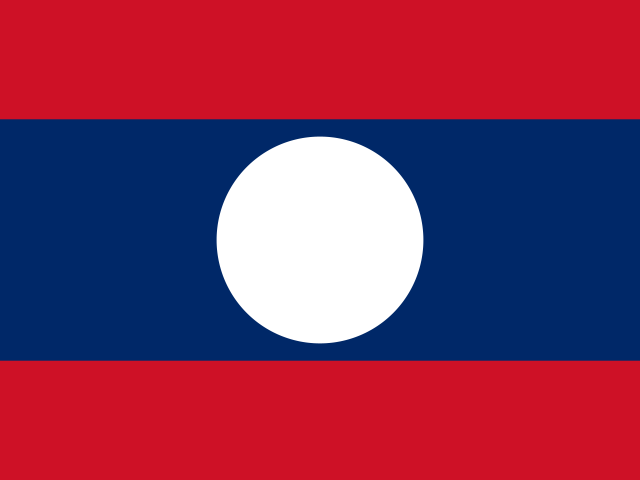
Ruler: Sisavang Vong
Currency:
(since 1952)
Demonetized: Yes
Total mintage: 1,400,000
Material
Diameter: 31 mm
Weight: 3.84 g
Thickness: 2.6 mm
Shape: Round with a round hole
Composition: Aluminium
Magnetic: No
Technique: Milled
Alignment: Coin alignment
flip
References
KM: #Click to copy to clipboard6
Numista: #4586
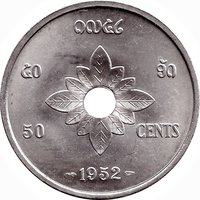
Obverse
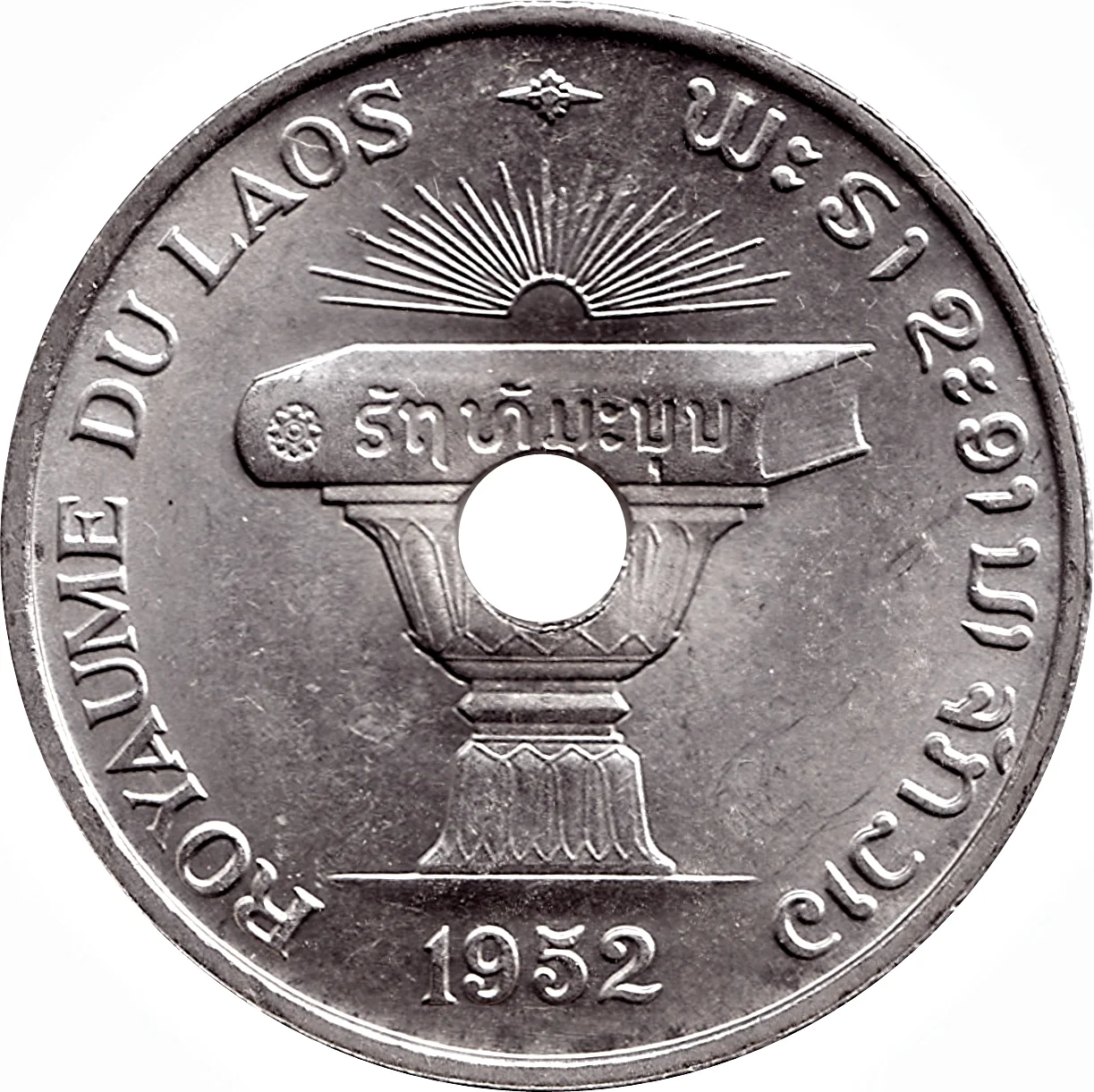
Description:
Enlightenment symbol.
Constitution Book (1949) atop a Buddhist alms bowl.
Date below, legend around.
Constitution Book (1949) atop a Buddhist alms bowl.
Date below, legend around.
Inscription:
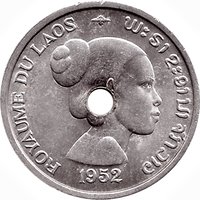
ROYAUME DU LAOS
ພະຣາຊະອານາຈັກລາວ
ຮັຖທັນະນູນ
1952
ພະຣາຊະອານາຈັກລາວ
ຮັຖທັນະນູນ
1952
Translation:
Kingdom of Laos
Constitutional Monarchy
1952
Constitutional Monarchy
1952
Engraver: Lucien Georges Bazor
Reverse
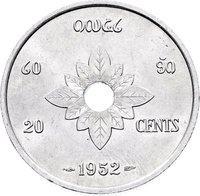
Inscription:
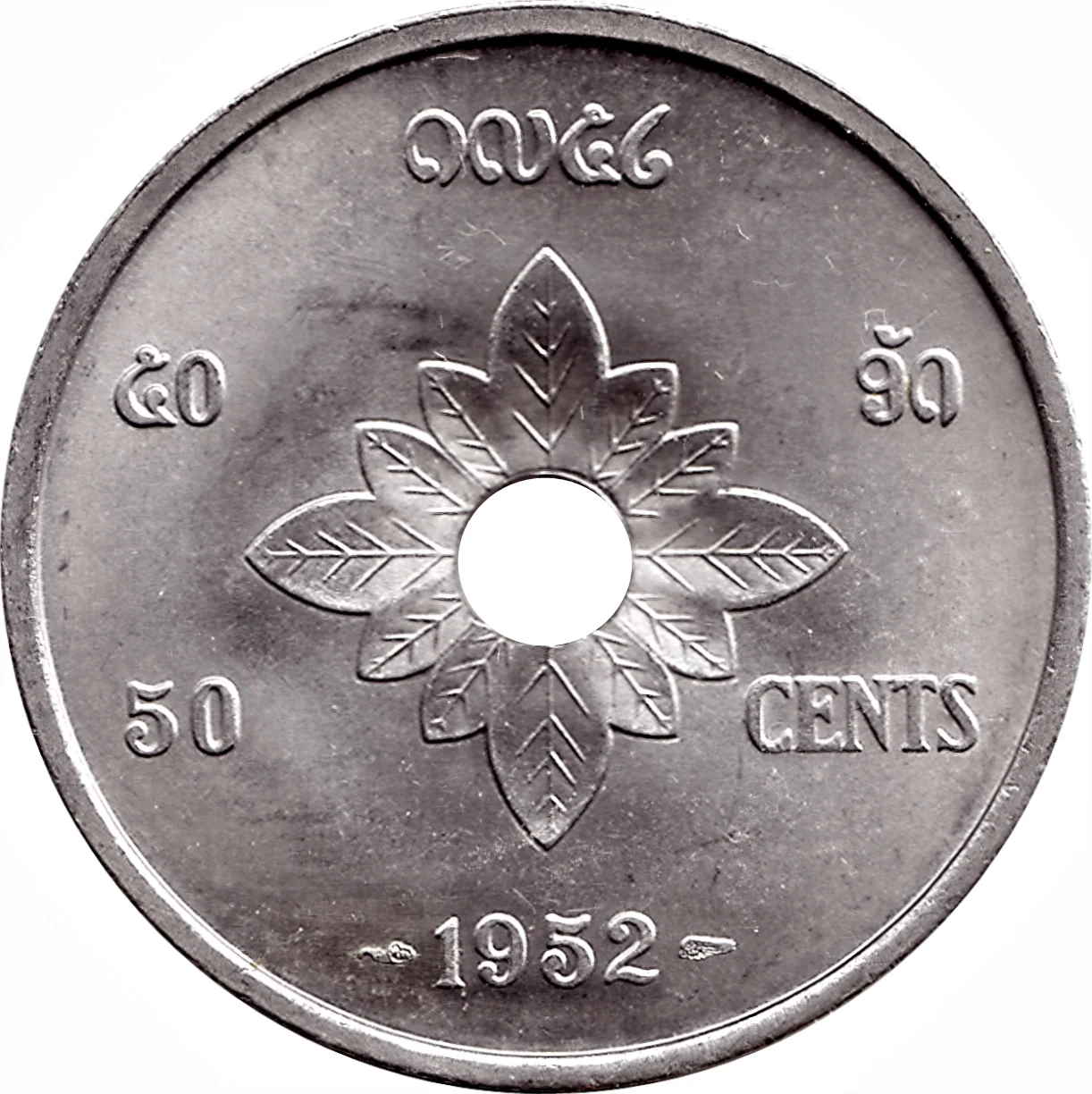
໑໙໕໒
໕0 ງັດ
50 CENTS
1952
໕0 ງັດ
50 CENTS
1952
Translation:
1952
50 Cents
50 Cents
1952
50 Cents
50 Cents
1952
Engraver: Lucien Georges Bazor
Edge
Plain
Mints
| Name | Mark |
|---|---|
| Monnaie de Paris | — |
Mintings
| Year | Mint Mark | Mintage | Quality | Collection |
|---|---|---|---|---|
| 1952 | — | 1,400,000 |
Historical background
In 1952, Laos was navigating a complex monetary landscape as part of the French Union, following its status as a "protectorate" within French Indochina. The official currency was the Indochinese Piastre (IC), issued by the Institut d’Emission des Etats du Cambodge, du Laos et du Vietnam. This currency was pegged to the French franc at a fixed rate, tying Laos's economy directly to French monetary policy and the franc's stability. However, this system was increasingly strained. The First Indochina War (1946-1954) was raging, creating economic disruption, inflationary pressures, and physical insecurity that undermined confidence in the formal banking system.
Alongside the official piastre, a multi-currency reality existed on the ground, particularly in rural areas. The Thai Baht and, to a lesser extent, silver bars and ancient coins remained in common use for local trade, especially in regions bordering Thailand. This reflected historical trade patterns, a lack of penetration by colonial banking, and a degree of local distrust in the paper currency issued by a distant colonial authority. Furthermore, the political-military situation fragmented the territory, with the communist Pathet Lao, supported by the Viet Minh, controlling zones in the north and east, where their own scrip or barter economies likely operated.
Thus, 1952 represents a period of monetary duality and transition. While the colonial piastre was the legal tender for official transactions and international trade, its authority was not absolute. The coexistence of multiple currencies highlighted the weak integration of the national economy and the ongoing struggle for political control. This unstable foundation would set the stage for the creation of a separate national currency, the Laotian Kip, which was first introduced by the Royal Lao Government in 1955, shortly after gaining full independence from France in 1953.
Alongside the official piastre, a multi-currency reality existed on the ground, particularly in rural areas. The Thai Baht and, to a lesser extent, silver bars and ancient coins remained in common use for local trade, especially in regions bordering Thailand. This reflected historical trade patterns, a lack of penetration by colonial banking, and a degree of local distrust in the paper currency issued by a distant colonial authority. Furthermore, the political-military situation fragmented the territory, with the communist Pathet Lao, supported by the Viet Minh, controlling zones in the north and east, where their own scrip or barter economies likely operated.
Thus, 1952 represents a period of monetary duality and transition. While the colonial piastre was the legal tender for official transactions and international trade, its authority was not absolute. The coexistence of multiple currencies highlighted the weak integration of the national economy and the ongoing struggle for political control. This unstable foundation would set the stage for the creation of a separate national currency, the Laotian Kip, which was first introduced by the Royal Lao Government in 1955, shortly after gaining full independence from France in 1953.
🌱 Very Common