

½ Penny – United Kingdom
United Kingdom
Context
Years: 1895–1901
Issuer: United Kingdom 
Ruler: Victoria
Currency:
(1158—1970)
Demonetization: 1 August 1969
Total mintage: 66,500,000
Material
References
KM: #Click to copy to clipboard789
Numista: #4576
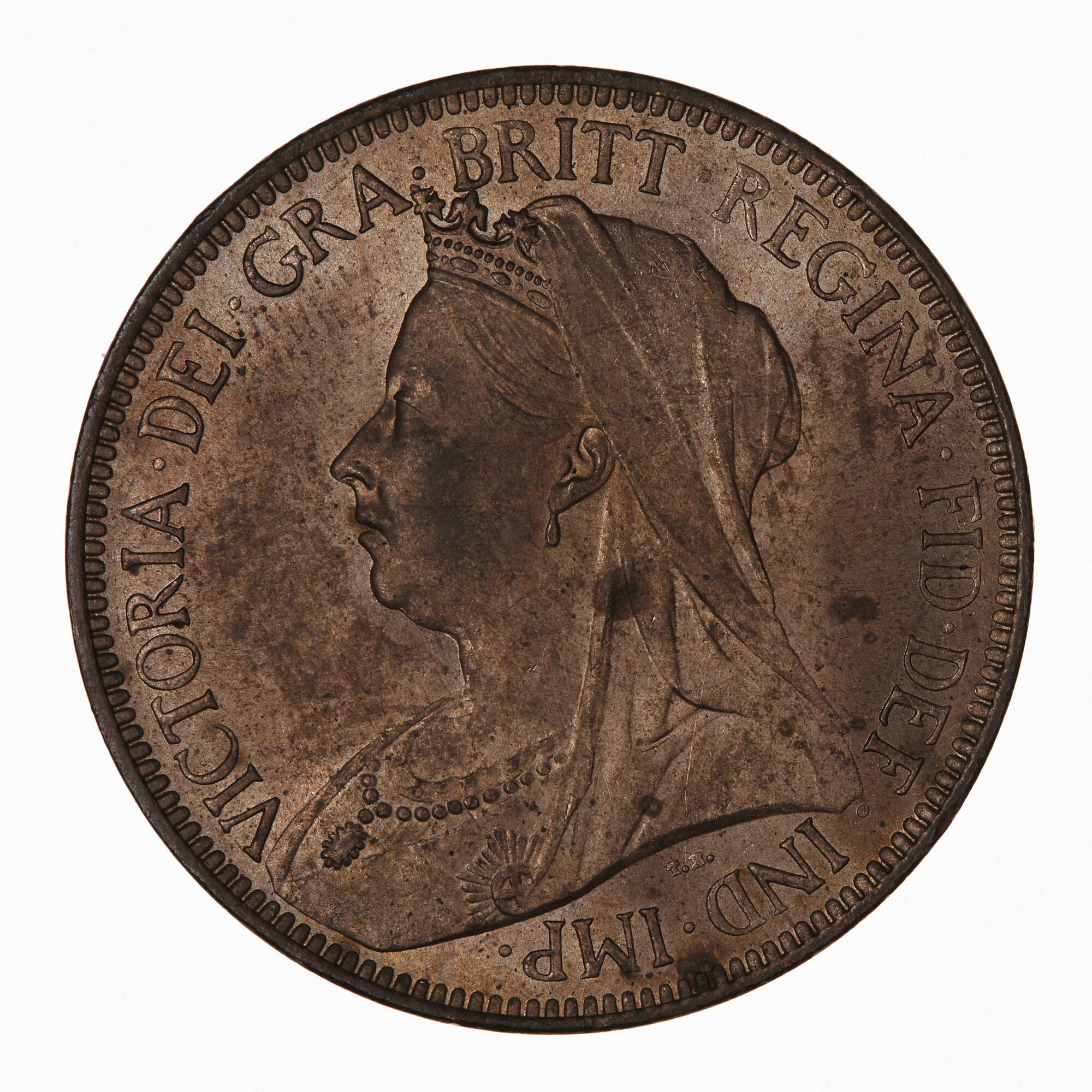
Obverse
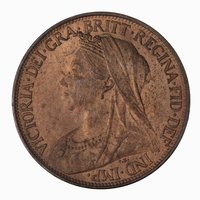
Description:
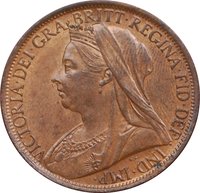
Veiled crowned portrait of Queen Victoria facing left, surrounded by legend.
Inscription:
VICTORIA·DEI·GRA·BRITT·REGINA·FID· DEF·IND·IMP·
T.B.
T.B.
Translation:
Victoria by the Grace of God, Queen of the Britains, Defender of the Faith, Empress of India.
T.B.
T.B.
Script: Latin
Language: Latin
Engraver: Thomas Brock
Reverse
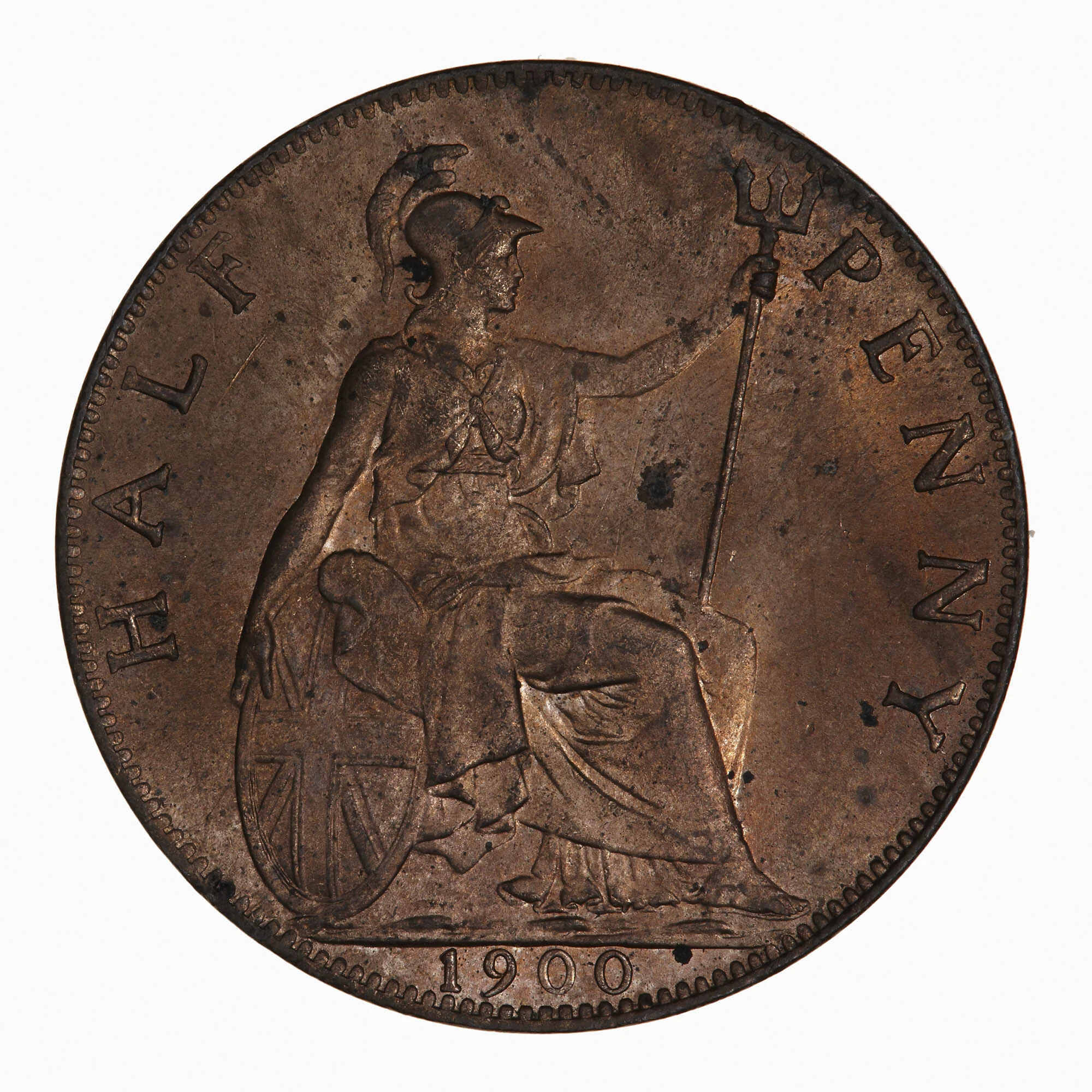
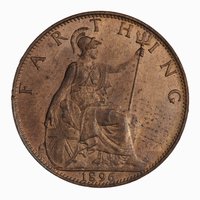
Description:
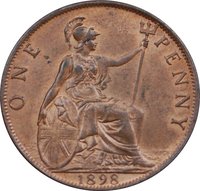
Britannia seated right, holding trident and Union Jack shield, sea background, denomination around, date below.
Inscription:
HALF PENNY
1896
1896
Script: Latin
Engraver: Leonard Charles Wyon
Edge
Plain
Mints
| Name | Mark |
|---|---|
| Royal Mint (Tower Hill) | — |
Mintings
| Year | Mint Mark | Mintage | Quality | Collection |
|---|---|---|---|---|
| 1895 | — | 3,032,000 | ||
| 1895 | — | — | Proof | |
| 1896 | — | 9,143,000 | ||
| 1896 | — | — | Proof | |
| 1897 | — | 8,690,000 | ||
| 1898 | — | 8,595,000 | ||
| 1899 | — | 12,108,000 | ||
| 1900 | — | 13,805,000 | ||
| 1901 | — | — | Proof | |
| 1901 | — | 11,127,000 |
Historical background
In 1895, the United Kingdom operated under the classical gold standard, a system it had effectively pioneered and which underpinned its global financial dominance. The pound sterling was legally defined as a specific weight of gold (123.274 grains of standard gold), and Bank of England notes were freely convertible into gold coin upon demand. This system ensured long-term price stability and minimal exchange rate fluctuations with other major gold-standard nations, fostering immense confidence in London as the centre of world trade and finance. The gold sovereign and half-sovereign were the everyday circulating coins, while paper currency, issued primarily by the Bank of England and some private Scottish and Irish banks, was essentially a convenient promise for gold.
However, this period was not without its monetary tensions. The late 19th century saw a persistent debate between proponents of "monometallism" (gold only) and "bimetallism" (gold and silver). A prolonged global deflationary trend, which increased the burden of debt, led to significant political pressure, particularly from agricultural and industrial interests, for the reintroduction of silver to expand the money supply. While the United Kingdom itself remained firmly committed to gold, the question dominated international monetary conferences, as the decline in the price of silver disrupted trade with India and other silver-based economies in the Empire.
Domestically, the system functioned smoothly on the surface, but its management relied heavily on the discretion of the Bank of England. The Bank used its bank rate and open market operations to protect its gold reserves, a process later formalised as the "rules of the game." In 1895, the financial landscape was stable, yet attentive observers were mindful of the strains caused by international silver instability and the social pressures of deflation. The system's ultimate vulnerability—its dependence on sufficient gold reserves to maintain convertibility during a crisis—would not be severely tested until the outbreak of the First World War nearly two decades later.
However, this period was not without its monetary tensions. The late 19th century saw a persistent debate between proponents of "monometallism" (gold only) and "bimetallism" (gold and silver). A prolonged global deflationary trend, which increased the burden of debt, led to significant political pressure, particularly from agricultural and industrial interests, for the reintroduction of silver to expand the money supply. While the United Kingdom itself remained firmly committed to gold, the question dominated international monetary conferences, as the decline in the price of silver disrupted trade with India and other silver-based economies in the Empire.
Domestically, the system functioned smoothly on the surface, but its management relied heavily on the discretion of the Bank of England. The Bank used its bank rate and open market operations to protect its gold reserves, a process later formalised as the "rules of the game." In 1895, the financial landscape was stable, yet attentive observers were mindful of the strains caused by international silver instability and the social pressures of deflation. The system's ultimate vulnerability—its dependence on sufficient gold reserves to maintain convertibility during a crisis—would not be severely tested until the outbreak of the First World War nearly two decades later.
🌱 Very Common