

½ Penny – United Kingdom
United Kingdom
Context
Years: 1874–1894
Issuer: United Kingdom 
Ruler: Victoria
Currency:
(1158—1970)
Demonetization: 1 August 1969
Total mintage: 124,794,708
Material
References
KM: #Click to copy to clipboard754
Numista: #4575
Obverse
Description:
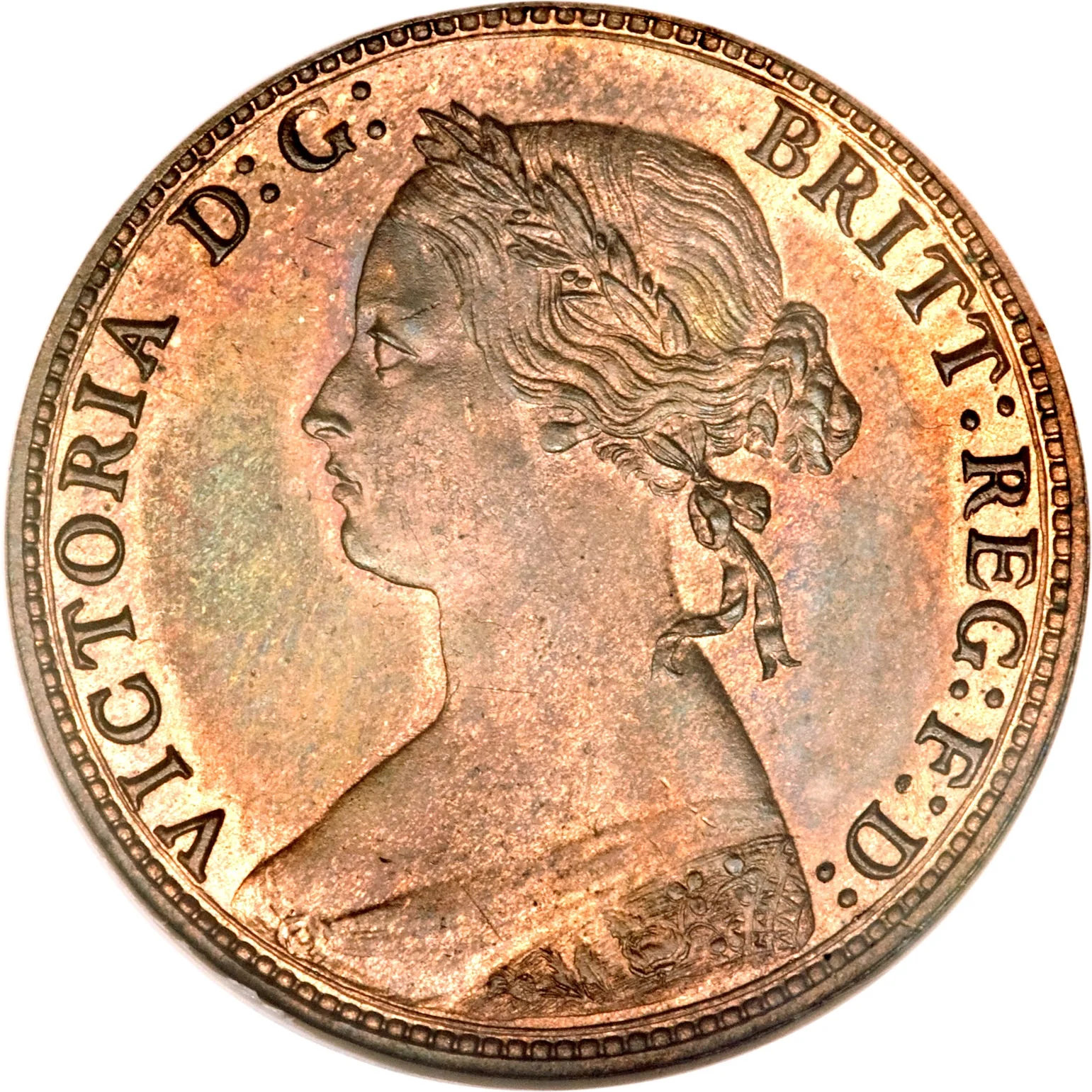
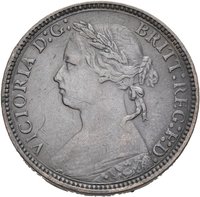
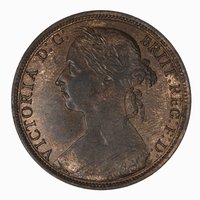
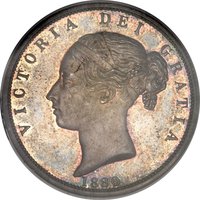
Queen Victoria left-facing "Bun Head" portrait, encircled by legend.
Inscription:
VICTORIA D:G: BRITT:REG:F:D:
Translation:
Victoria by the Grace of God, Queen of Britain, Defender of the Faith.
Script: Latin
Language: Latin
Engraver: Leonard Charles Wyon
Reverse
Description:
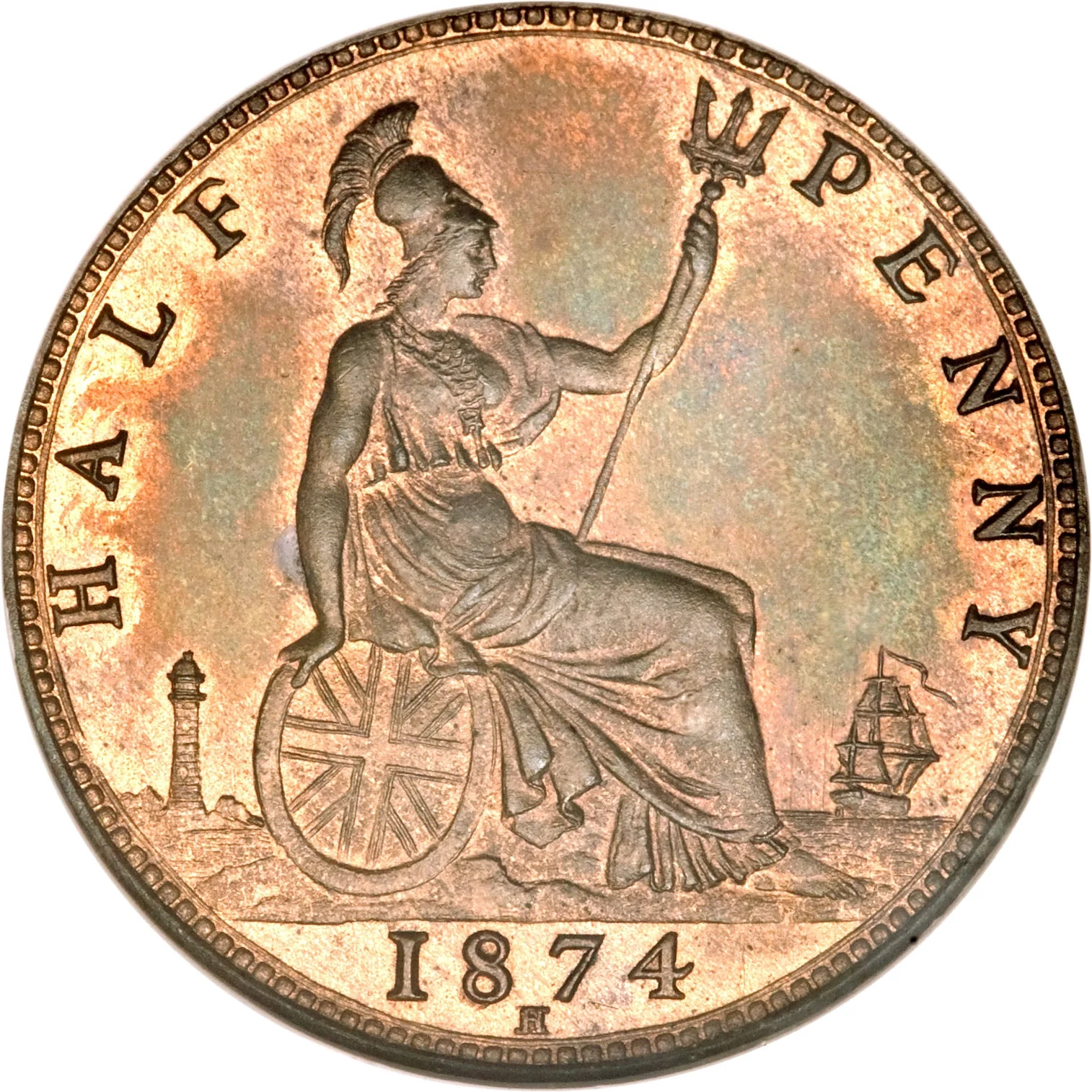
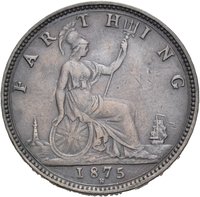
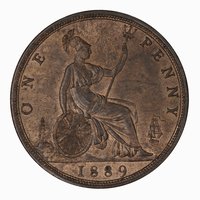
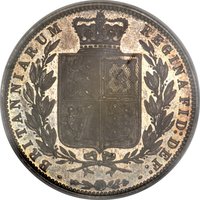
Britannia seated right, holding trident and Union Jack shield, with a lighthouse and ship in the background. Denomination and date below.
Inscription:
HALF PENNY
1874
H
1874
H
Script: Latin
Engraver: Leonard Charles Wyon
Edge
Plain
Categories
| Object> Armour |
| Building> Lighthouse |
| Geography> Sea |
| Transportation> Watercraft |
Mints
| Name | Mark |
|---|---|
| Heaton and Sons / The Mint Birmingham | — |
| Royal Mint (Tower Hill) | — |
Mintings
| Year | Mint Mark | Mintage | Quality | Collection |
|---|---|---|---|---|
| 1874 | — | — | ||
| 1874 | H | — | Proof | |
| 1874 | H | 5,017,600 | ||
| 1875 | — | 5,430,815 | ||
| 1875 | H | 1,254,400 | ||
| 1875 | H | — | Proof | |
| 1876 | H | 6,809,600 | ||
| 1876 | H | — | Proof | |
| 1877 | — | 5,209,505 | ||
| 1877 | — | — | Proof | |
| 1878 | — | 1,425,535 | ||
| 1878 | — | — | Proof | |
| 1879 | — | 3,582,545 | ||
| 1880 | — | 2,423,465 | ||
| 1880 | — | — | Proof | |
| 1881 | — | 2,007,515 | ||
| 1881 | H | 1,792,000 | ||
| 1882 | H | 4,480,000 | ||
| 1882 | H | — | Proof | |
| 1883 | — | — | ||
| 1883 | — | — | Proof | |
| 1884 | — | 6,989,580 | ||
| 1884 | — | — | Proof | |
| 1885 | — | — | Proof | |
| 1885 | — | 8,600,574 | ||
| 1886 | — | — | Proof | |
| 1886 | — | 8,586,156 | ||
| 1887 | — | 10,701,305 | ||
| 1888 | — | 6,814,070 | ||
| 1889 | — | 7,748,234 | ||
| 1889 | — | — | Proof | |
| 1890 | — | — | Proof | |
| 1890 | — | 11,254,235 | ||
| 1891 | — | 13,192,260 | ||
| 1891 | — | — | Proof | |
| 1892 | — | 2,478,335 | ||
| 1892 | — | — | Proof | |
| 1893 | — | 7,229,344 | ||
| 1894 | — | 1,767,635 |
Historical background
In 1874, the United Kingdom operated under a robust and well-established gold standard, a system it had effectively maintained since 1821. The pound sterling was defined as a specific weight of gold (0.2354 troy ounces), and Bank of England notes were freely convertible into gold coin upon demand. This monetary discipline provided long-term price stability and immense confidence in London as the world's premier financial centre, facilitating vast international trade and investment. The currency in circulation was a mix of gold sovereigns and half-sovereigns, Bank of England notes (primarily for larger transactions), and a variety of private banknotes issued by commercial banks in Scotland and Ireland, which were also redeemable for gold.
However, the period was not without its monetary debates. The "Long Depression," beginning in 1873, had ushered in a period of falling prices (deflation) and economic uncertainty. While not a crisis of convertibility, this deflationary environment sparked discussion among economists, bankers, and politicians about the adequacy of the money supply and the social hardships caused by falling prices. Some, notably proponents of the "bimetallist" movement, argued that tying the currency solely to gold was too restrictive and that adopting a dual standard with silver would increase liquidity and ease economic pressures.
Consequently, the currency situation in 1874 was one of institutional strength masking underlying economic strain. The gold standard was sacrosanct and unchallenged in official policy, ensuring the pound's integrity. Yet, the economic climate of the early 1870s had begun to foster a significant, though still minority, intellectual challenge to the monetary orthodoxy. This set the stage for the heated bimetallism debates that would intensify over the next two decades, even as Britain continued to exemplify the classical gold standard in practice.
However, the period was not without its monetary debates. The "Long Depression," beginning in 1873, had ushered in a period of falling prices (deflation) and economic uncertainty. While not a crisis of convertibility, this deflationary environment sparked discussion among economists, bankers, and politicians about the adequacy of the money supply and the social hardships caused by falling prices. Some, notably proponents of the "bimetallist" movement, argued that tying the currency solely to gold was too restrictive and that adopting a dual standard with silver would increase liquidity and ease economic pressures.
Consequently, the currency situation in 1874 was one of institutional strength masking underlying economic strain. The gold standard was sacrosanct and unchallenged in official policy, ensuring the pound's integrity. Yet, the economic climate of the early 1870s had begun to foster a significant, though still minority, intellectual challenge to the monetary orthodoxy. This set the stage for the heated bimetallism debates that would intensify over the next two decades, even as Britain continued to exemplify the classical gold standard in practice.
🌱 Very Common