

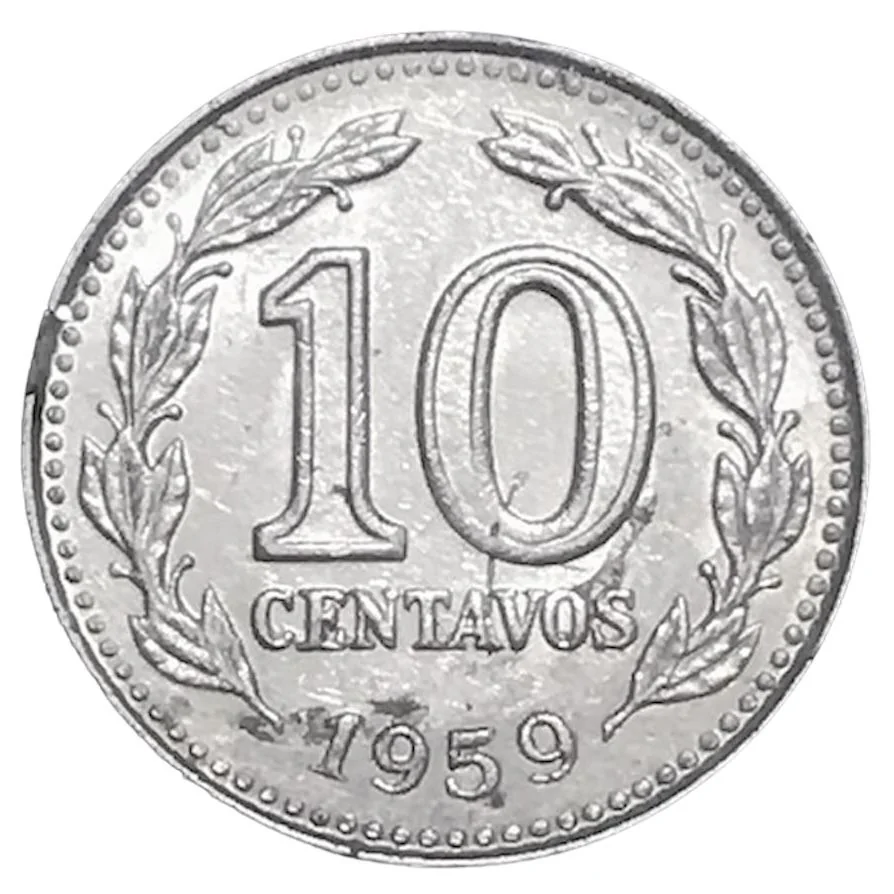
10 Centavos – Argentina
Argentina
Obverse
Description:
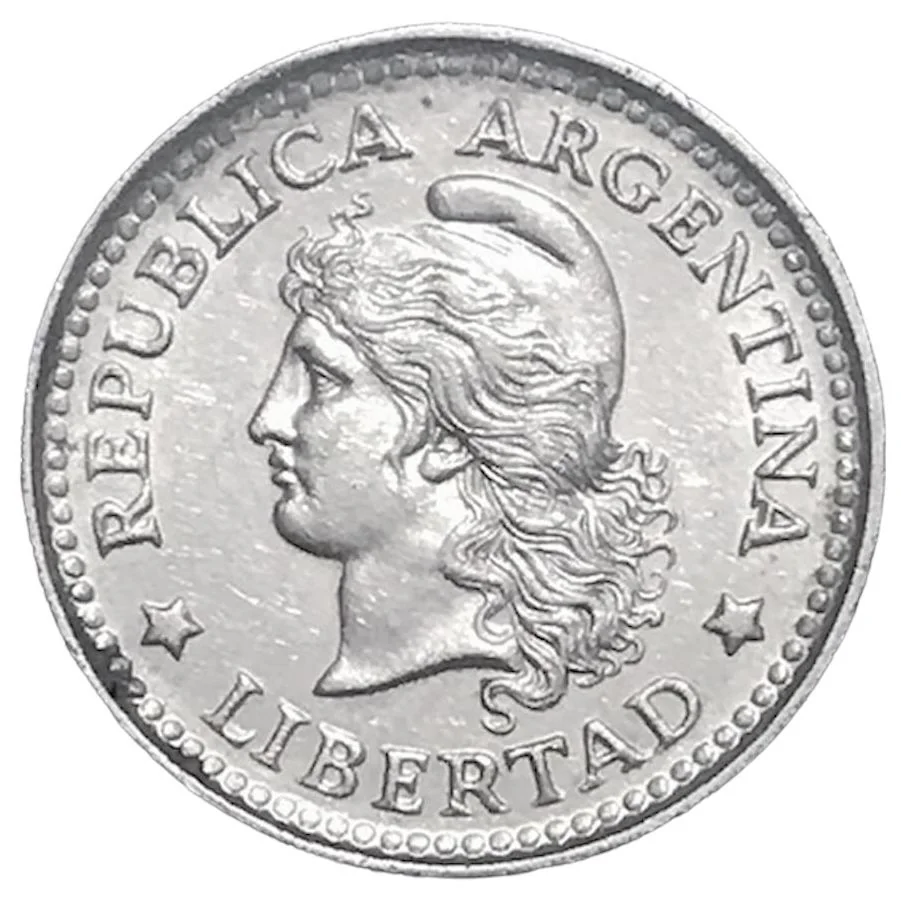
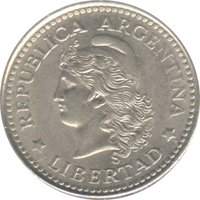
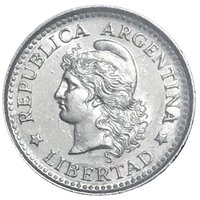
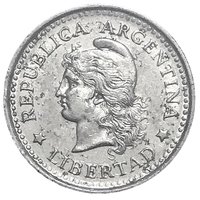
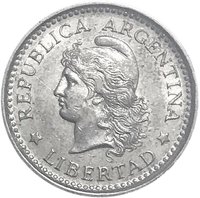
A Phrygian-capped woman facing left, symbolizing freedom, encircled by the country's name.
Inscription:
REPÚBLICA ARGENTINA
* LIBERTAD *
* LIBERTAD *
Translation:
Argentine Republic
* Liberty *
* Liberty *
Script: Latin
Language: Spanish
Engraver: Eugène-André Oudiné
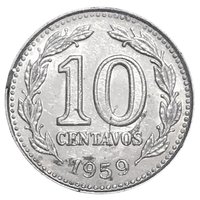
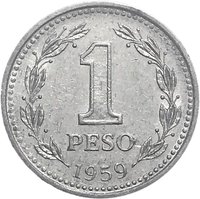
Reverse
Edge
Plain
Categories
| Symbol> Allegory |
| Symbol> Phrygian cap |
Mints
| Name | Mark |
|---|---|
| Buenos Aires | — |
Mintings
| Year | Mint Mark | Mintage | Quality | Collection |
|---|---|---|---|---|
| 1957 | — | 52,810,000 | ||
| 1958 | — | 41,916,000 | ||
| 1959 | — | 29,183,000 |
Historical background
In 1957, Argentina was grappling with the severe economic and political consequences of the populist Perón era, which had ended with his overthrow in 1955. The country was under the military-led "Revolución Libertadora" government, which inherited an economy plagued by rampant inflation, a massive external debt, and a critically depleted foreign exchange reserve. The peso was under immense pressure, with multiple exchange rates creating a complex and distorted system. An official overvalued rate existed alongside a thriving black market ("blue" market), where the peso traded at a significant discount, reflecting a lack of confidence in the currency and government policy.
Economically, the situation was a direct result of years of fiscal profligacy, state-led industrialization funded by printing money, and the neglect of the agricultural export sector, which was Argentina's traditional source of dollar earnings. The government faced a persistent balance of payments crisis, struggling to earn enough foreign currency to service its debts and pay for essential imports. Attempts at stabilization, including agreements with the International Monetary Fund (IMF) in late 1956, led to austerity measures like reducing public spending and freezing wages, but these policies were socially painful and politically destabilizing, doing little to immediately restore monetary stability.
Thus, the currency situation in 1957 was characterized by a vicious cycle of inflation and devaluation, with the government caught between the IMF's demands for orthodox adjustment and intense domestic opposition from Peronist unions and industrialists. The instability of the peso was both a symptom and a cause of deeper economic malaise, setting the stage for the continued political volatility and economic stagnation that would define Argentina in the following decades. The failure to achieve lasting monetary stability in this period underscored the profound structural challenges facing the Argentine economy.
Economically, the situation was a direct result of years of fiscal profligacy, state-led industrialization funded by printing money, and the neglect of the agricultural export sector, which was Argentina's traditional source of dollar earnings. The government faced a persistent balance of payments crisis, struggling to earn enough foreign currency to service its debts and pay for essential imports. Attempts at stabilization, including agreements with the International Monetary Fund (IMF) in late 1956, led to austerity measures like reducing public spending and freezing wages, but these policies were socially painful and politically destabilizing, doing little to immediately restore monetary stability.
Thus, the currency situation in 1957 was characterized by a vicious cycle of inflation and devaluation, with the government caught between the IMF's demands for orthodox adjustment and intense domestic opposition from Peronist unions and industrialists. The instability of the peso was both a symptom and a cause of deeper economic malaise, setting the stage for the continued political volatility and economic stagnation that would define Argentina in the following decades. The failure to achieve lasting monetary stability in this period underscored the profound structural challenges facing the Argentine economy.
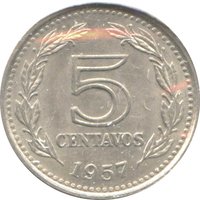
Series: 1957 Argentina circulation coins
🌱 Very Common