

10 centavos – Angola
Add to wishlist
Angola
Context
Years: 1927–1928
Issuer: Angola
Period:
(1910—1951)
Currency:
(1914—1928)
Demonetized: Yes
Total mintage: 3,003,000
Material
Diameter: 19.5 mm
Weight: 2.4 g
Thickness: 1.5 mm
Shape: Round
Composition: Copper-nickel
Technique: Milled
Alignment: Medal alignment
flip
References
KM: #
Numista: #4560
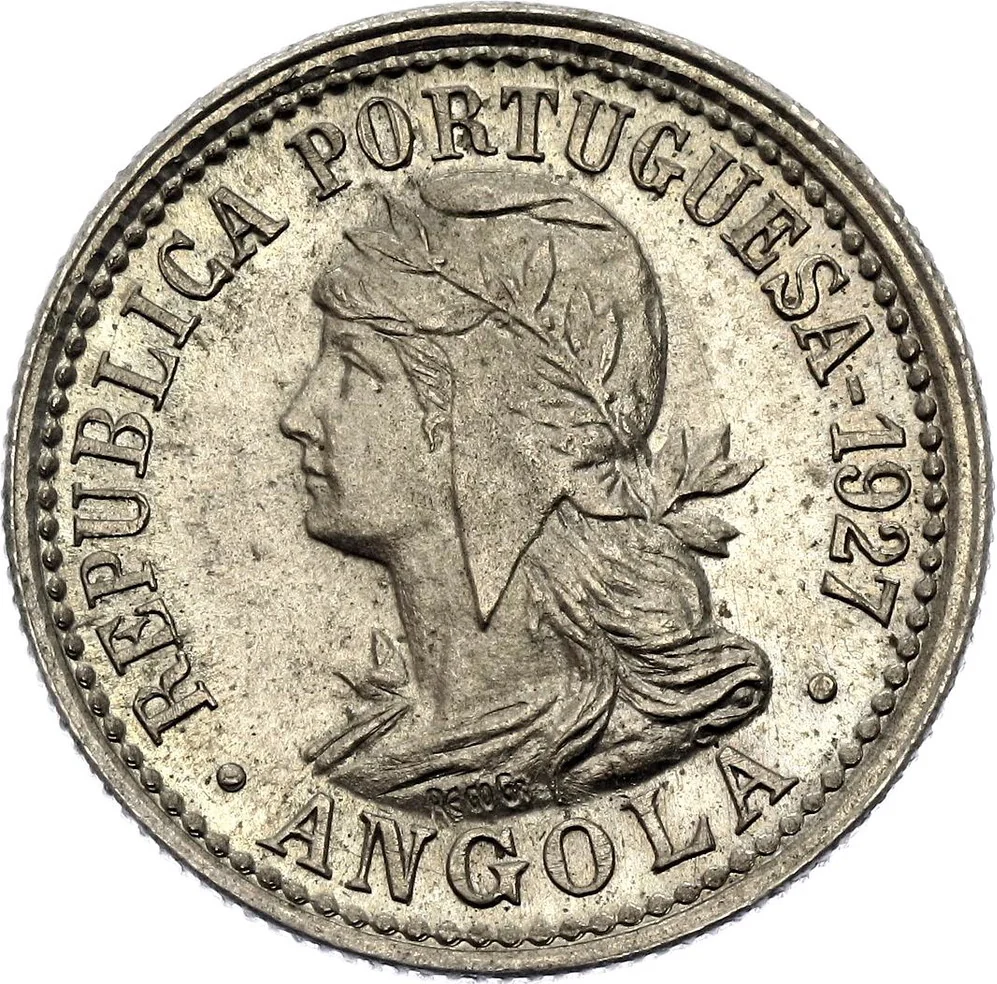
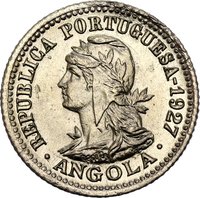
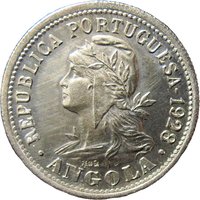
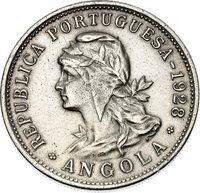
Obverse
Description:
Left portrait
Inscription:
REPUBLICA PORTUGUESA - 1927
ANGOLA
ANGOLA
Translation:
Portuguese Republic - 1927
Angola
Angola
Script: Latin
Languages: Latin, Portuguese
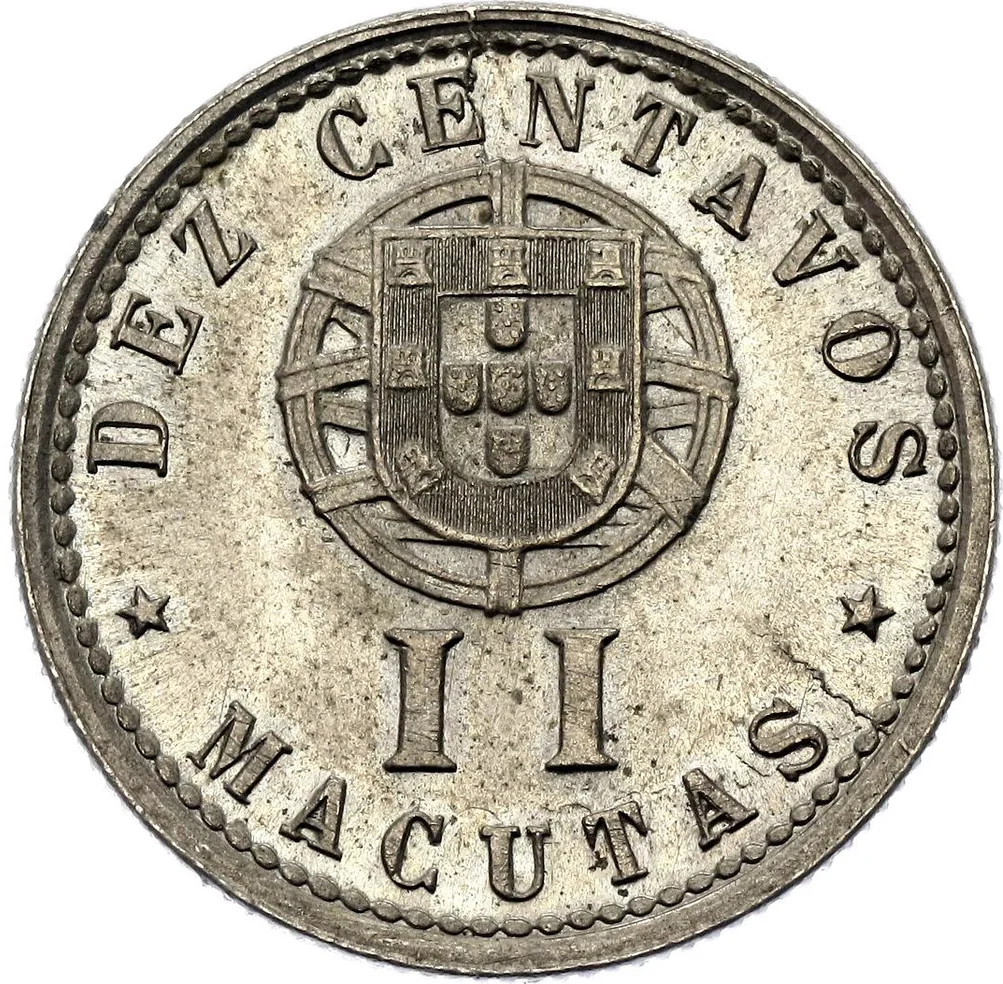
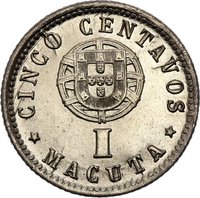
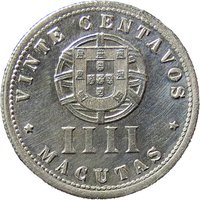
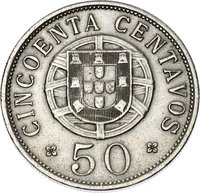
Reverse
Description:
Underpriced arms
Inscription:
DEZ CENTAVOS
II
MACUTAS
II
MACUTAS
Translation:
TEN CENTAVOS
II
MACUTAS
II
MACUTAS
Script: Latin
Languages: Latin, Portuguese
Edge
Reeded
Categories
| Symbol> Allegory |
| Symbols> Coat of Arms |
| Symbol> Phrygian cap |
Mintings
| Year | Mint Mark | Mintage | Quality | Collection |
|---|---|---|---|---|
| 1927 | — | 2,003,000 | ||
| 1928 | — | 1,000,000 |
Historical background
In 1927, Angola's currency situation was intrinsically tied to its status as a Portuguese colony, operating within a complex framework of metropolitan control and local economic realities. The official currency was the Angolan escudo, which had replaced the Angolan real in 1914 at a rate of 1,000 réis to 1 escudo. Crucially, it was pegged at par to the Portuguese escudo, meaning monetary policy was dictated entirely by Lisbon. This peg aimed to facilitate trade and financial integration with the metropole but often failed to reflect Angola's distinct economic conditions, which were heavily based on agricultural exports like coffee and diamonds, and a growing reliance on forced labour.
The period was marked by significant instability and a shortage of physical currency in circulation, particularly outside major coastal cities like Luanda and Benguela. This scarcity hampered commercial transactions and led to the continued use of older coins and even barter in remote areas. Furthermore, the Portuguese escudo itself was undergoing a period of weakness and fluctuation following World War I, which indirectly affected the Angolan economy. The colony's financial system was rudimentary, dominated by a few Portuguese banks, notably the Banco Nacional Ultramarino, which held the exclusive right to issue banknotes for Angola.
Ultimately, the 1927 currency situation underscored Angola's dependent colonial economy. The fixed parity with an unstable metropolitan currency, combined with internal cash shortages, created a restrictive environment for local commerce and development. This framework would persist until the mid-20th century, serving Portuguese imperial interests by channelling Angolan resources and trade through Lisbon, while limiting the colony's financial autonomy and exacerbating regional economic disparities within Angola itself.
The period was marked by significant instability and a shortage of physical currency in circulation, particularly outside major coastal cities like Luanda and Benguela. This scarcity hampered commercial transactions and led to the continued use of older coins and even barter in remote areas. Furthermore, the Portuguese escudo itself was undergoing a period of weakness and fluctuation following World War I, which indirectly affected the Angolan economy. The colony's financial system was rudimentary, dominated by a few Portuguese banks, notably the Banco Nacional Ultramarino, which held the exclusive right to issue banknotes for Angola.
Ultimately, the 1927 currency situation underscored Angola's dependent colonial economy. The fixed parity with an unstable metropolitan currency, combined with internal cash shortages, created a restrictive environment for local commerce and development. This framework would persist until the mid-20th century, serving Portuguese imperial interests by channelling Angolan resources and trade through Lisbon, while limiting the colony's financial autonomy and exacerbating regional economic disparities within Angola itself.
Series: 1927 Angola circulation coins
🌱 Common