

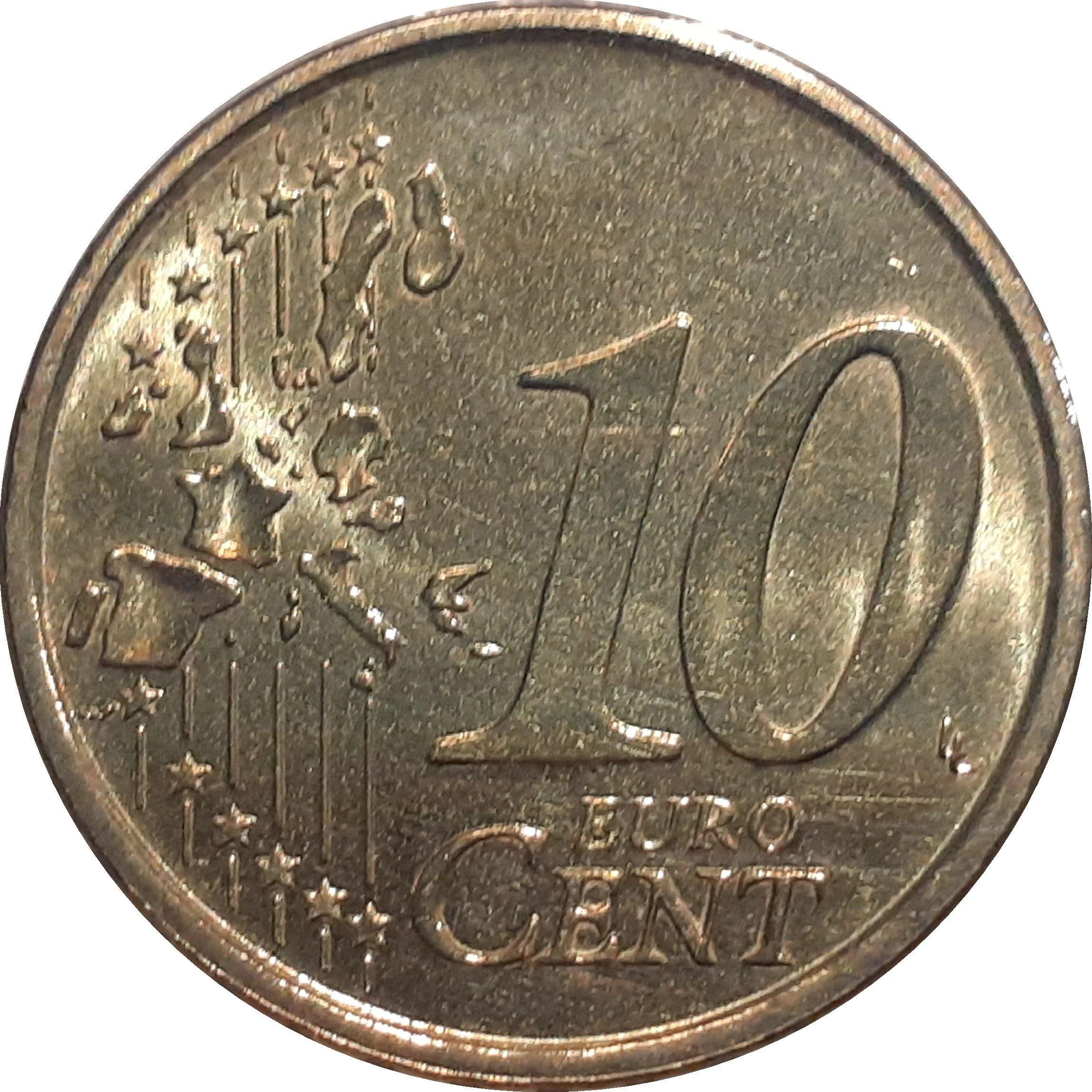
10 Euro Cents – Netherlands
Netherlands
Context
Years: 1999–2006
Issuer: Netherlands 
Ruler: Beatrix
Currency:
(since 2002)
Total mintage: 502,846,506
Material
References
KM: #Click to copy to clipboard237
Numista: #148
Value
Exchange value: 0.10 EUR = $0.12
Inflation-adjusted value: 0.18 EUR
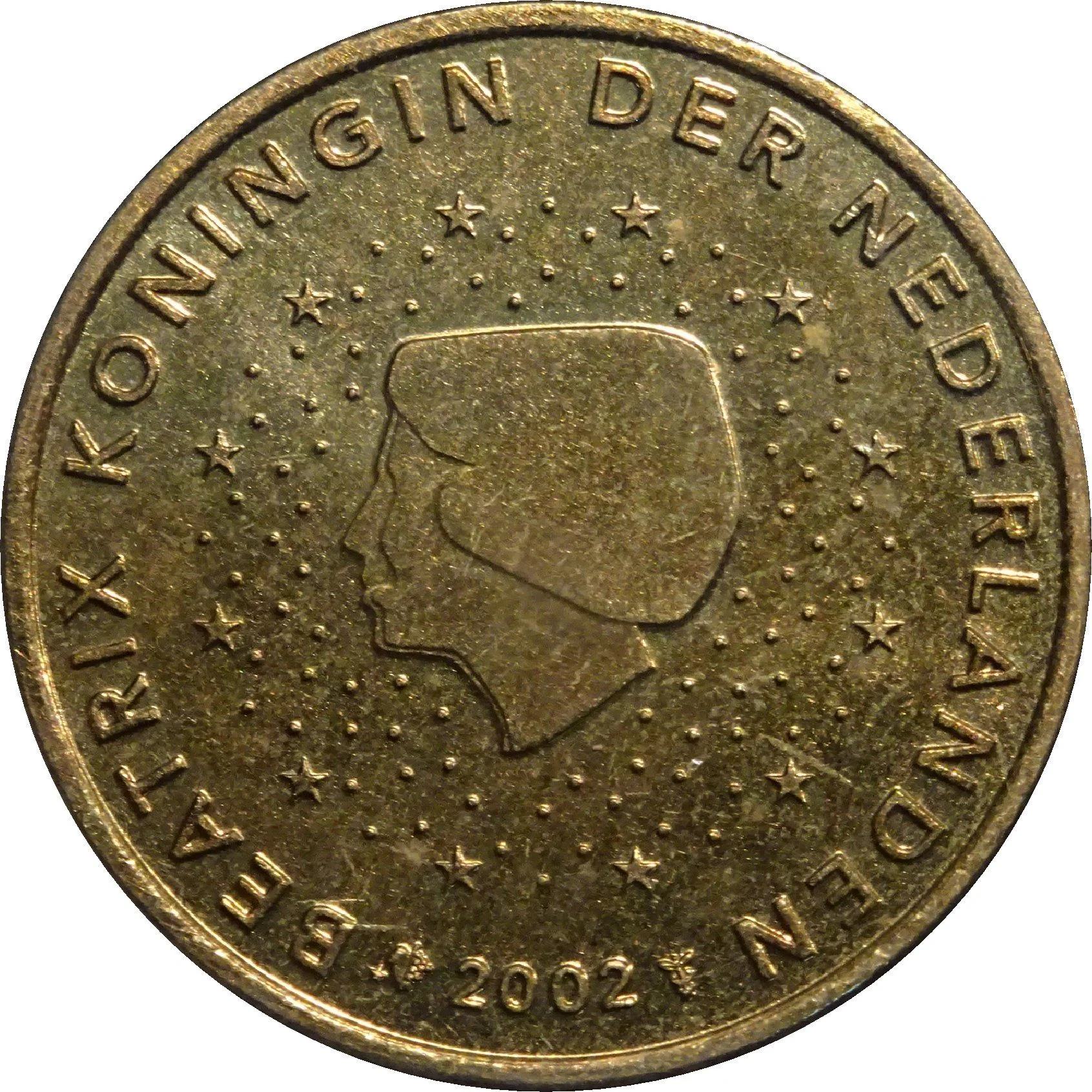
Obverse
Description:
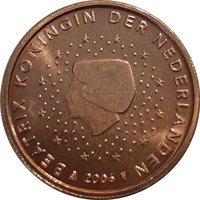
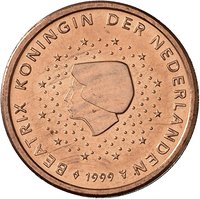
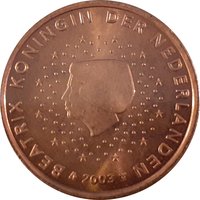
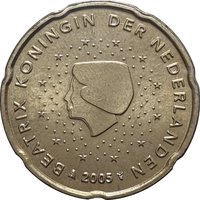
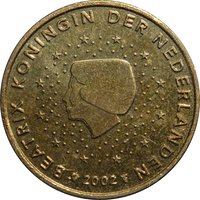
Queen Beatrix's portrait surrounded by twelve European stars.
Inscription:
BEATRIX KONINGIN DER NEDERLANDEN 2002
Translation:
Beatrix Queen of the Netherlands 2002
Script: Latin
Language: Dutch
Engraver: Bruno Ninaber van Eyben
Reverse
Edge
Indented
Mints
| Name | Mark |
|---|---|
| Royal Dutch Mint | — |
Mintings
| Year | Mint Mark | Mintage | Quality | Collection |
|---|---|---|---|---|
| 1999 | — | 149,700,000 | ||
| 1999 | — | 16,500 | Proof | |
| 2000 | — | 156,700,000 | ||
| 2000 | — | 16,500 | Proof | |
| 2001 | — | 193,500,000 | ||
| 2001 | — | 16,500 | Proof | |
| 2002 | — | 800,000 | ||
| 2002 | — | 16,500 | Proof | |
| 2003 | — | 1,200,000 | ||
| 2003 | — | 13,000 | Proof | |
| 2004 | — | 400,000 | ||
| 2004 | — | 5,000 | Proof | |
| 2005 | — | 300,000 | ||
| 2005 | — | 5,000 | Proof | |
| 2006 | — | 100,000 | ||
| 2006 | — | 54,006 | BU | |
| 2006 | — | 3,500 | Proof |
Historical background
The Netherlands entered the eurozone on 1 January 1999 with a strong and stable economic foundation, having pegged its national currency, the guilder (NLG), to the Deutsche Mark for decades through the European Monetary System. This long-standing policy, known as the "German anchor," had effectively imported the credibility of the Bundesbank's anti-inflationary stance, making the guilder one of Europe's most stable currencies. Consequently, the transition to the euro was viewed by both the government and the Dutch public not as a leap into the unknown, but as a logical next step in European integration and a continuation of established monetary stability.
Domestically, the changeover was meticulously planned under the banner "De euro, ons geld" (The euro, our money). While the euro became the official accounting currency for financial markets and electronic payments in 1999, the familiar guilder coins and banknotes remained in daily circulation for a three-year transition period. This dual-currency phase allowed businesses and citizens to gradually adapt, with prices often displayed in both guilders and euros to build familiarity. Public sentiment was broadly pragmatic, though a nostalgic minority lamented the loss of a national symbol.
The conversion rate was irrevocably set at 2.20371 Dutch guilders to one euro, a rate perceived as slightly strong but fair, reflecting the guilder's robust value. Economically, the immediate impact was minimal due to the prior de facto alignment with German monetary policy. The primary significance of 1999 was thus institutional and psychological, firmly embedding the Netherlands within the new European single currency framework while setting the stage for the physical introduction of euro banknotes and coins, which would finally replace the guilder in 2002.
Domestically, the changeover was meticulously planned under the banner "De euro, ons geld" (The euro, our money). While the euro became the official accounting currency for financial markets and electronic payments in 1999, the familiar guilder coins and banknotes remained in daily circulation for a three-year transition period. This dual-currency phase allowed businesses and citizens to gradually adapt, with prices often displayed in both guilders and euros to build familiarity. Public sentiment was broadly pragmatic, though a nostalgic minority lamented the loss of a national symbol.
The conversion rate was irrevocably set at 2.20371 Dutch guilders to one euro, a rate perceived as slightly strong but fair, reflecting the guilder's robust value. Economically, the immediate impact was minimal due to the prior de facto alignment with German monetary policy. The primary significance of 1999 was thus institutional and psychological, firmly embedding the Netherlands within the new European single currency framework while setting the stage for the physical introduction of euro banknotes and coins, which would finally replace the guilder in 2002.
🌱 Very Common