

100 euro – Croatia
Add to wishlist
Non-circulating coins
Commemoration: Halubje Bell Ringers
Croatia
Context
Material
Diameter: 32 mm
Weight: 31.1 g
Gold Weight:: 31.10 g
Shape: Round
Composition: 99.99% Gold
Standard: Silver ounce
Magnetic: No
Alignment: Medal alignment
flip
References
KM: #
Numista: #455696
Value
Exchange value: 100 EUR
Bullion value: $4740.89
Obverse
Description:
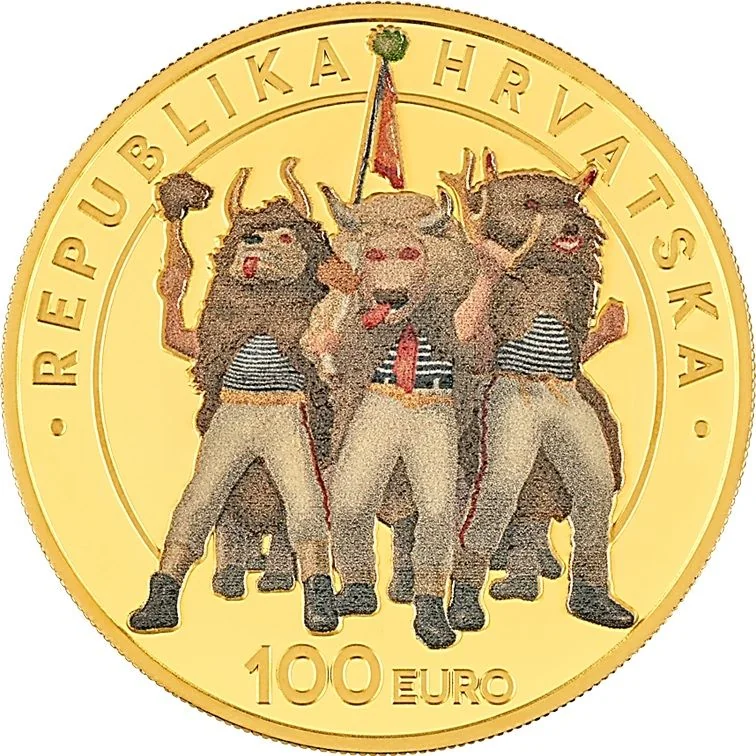
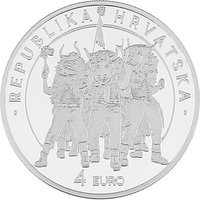
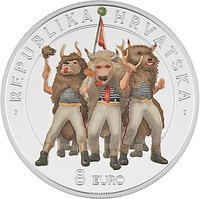
Kastav carnival's disguised bell ringers.
Inscription:
REPUBLIKA HRVATSKA
100 EURO
100 EURO
Translation:
Republic of Croatia
100 Euro
100 Euro
Script: Latin
Language: Croatian
Designer: Chiara Principe
Reverse
Inscription:
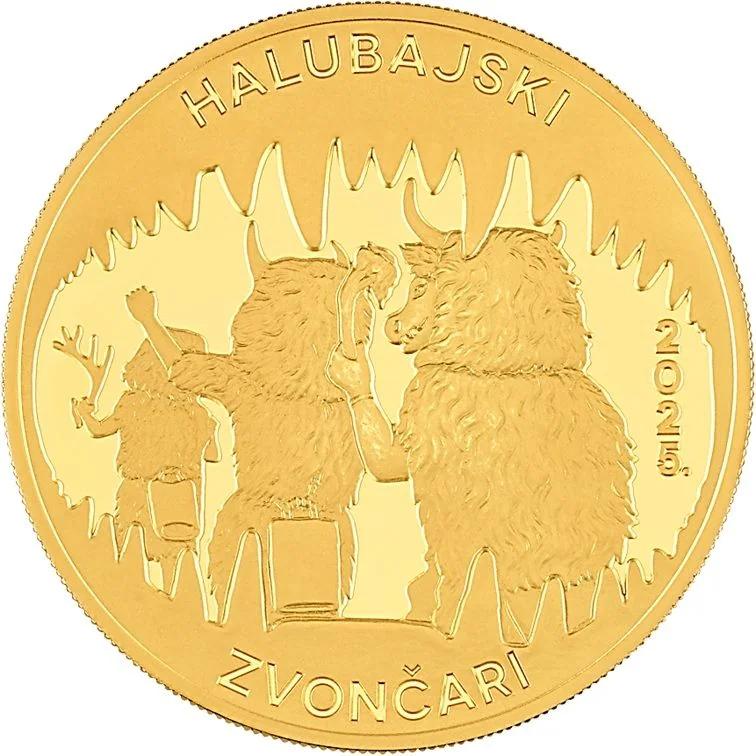
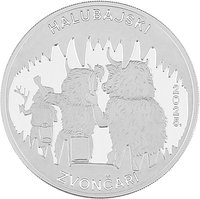
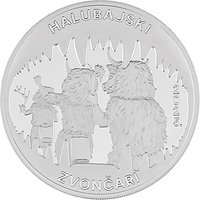
HALUBAJSKI
2
0
2
5.
ZVONČARI
2
0
2
5.
ZVONČARI
Translation:
Bell ringers of Halubje 2025.
Script: Latin
Language: Croatian
Designer: Chiara Principe
Edge
Reeded
Categories
| Event> Festival |
| Organization> UNESCO |
Mints
| Name | Mark |
|---|---|
| Croatian Mint | — |
Mintings
| Year | Mint Mark | Mintage | Quality | Collection |
|---|---|---|---|---|
| 2025 | — | 200 | BU |
Historical background
As of 2025, Croatia operates firmly within the Eurozone, having successfully adopted the euro as its official currency on January 1, 2023. This transition marked the culmination of a long-term strategic goal to deepen integration with the core of the European Union and provide monetary stability. The replacement of the Croatian kuna (HRK) was executed smoothly, with a fixed conversion rate of 1 euro = 7.53450 kuna, and the dual circulation period concluded without significant disruption. The primary macroeconomic benefits, including the elimination of exchange rate risk, reduced transaction costs, and enhanced investor confidence, are now being realized, though the full long-term effects on price convergence and economic resilience continue to unfold.
The contemporary currency situation is characterized by Croatia navigating the common monetary policy of the European Central Bank (ECB), which sets interest rates for the entire bloc. In 2025, Croatian fiscal and economic policies are therefore closely aligned with Eurozone priorities, particularly managing inflation in the wake of previous global shocks and maintaining fiscal discipline under the EU's revised Stability and Growth Pact. While the country enjoys the advantages of a strong, stable currency, it has also relinquished the ability to use independent monetary tools, such as devaluation, to boost competitiveness—a trade-off that requires heightened focus on structural reforms and productivity growth.
Looking ahead, the key challenges and discussions in 2025 revolve around leveraging euro membership for sustainable economic advancement. This includes ensuring that Croatian businesses, particularly in the vital tourism sector, maximize the benefits of being in a single currency area while managing the persistent issue of price level convergence, where some domestic prices have edged closer to the Eurozone average. Furthermore, the government is focused on utilizing improved credit ratings and lower borrowing costs to finance strategic investments in green energy, digital infrastructure, and addressing demographic challenges, all within the strict fiscal frameworks of the Eurozone.
The contemporary currency situation is characterized by Croatia navigating the common monetary policy of the European Central Bank (ECB), which sets interest rates for the entire bloc. In 2025, Croatian fiscal and economic policies are therefore closely aligned with Eurozone priorities, particularly managing inflation in the wake of previous global shocks and maintaining fiscal discipline under the EU's revised Stability and Growth Pact. While the country enjoys the advantages of a strong, stable currency, it has also relinquished the ability to use independent monetary tools, such as devaluation, to boost competitiveness—a trade-off that requires heightened focus on structural reforms and productivity growth.
Looking ahead, the key challenges and discussions in 2025 revolve around leveraging euro membership for sustainable economic advancement. This includes ensuring that Croatian businesses, particularly in the vital tourism sector, maximize the benefits of being in a single currency area while managing the persistent issue of price level convergence, where some domestic prices have edged closer to the Eurozone average. Furthermore, the government is focused on utilizing improved credit ratings and lower borrowing costs to finance strategic investments in green energy, digital infrastructure, and addressing demographic challenges, all within the strict fiscal frameworks of the Eurozone.
✨ Legendary