

Obverse
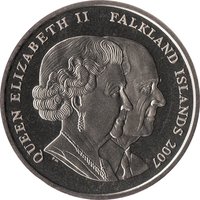
Description:
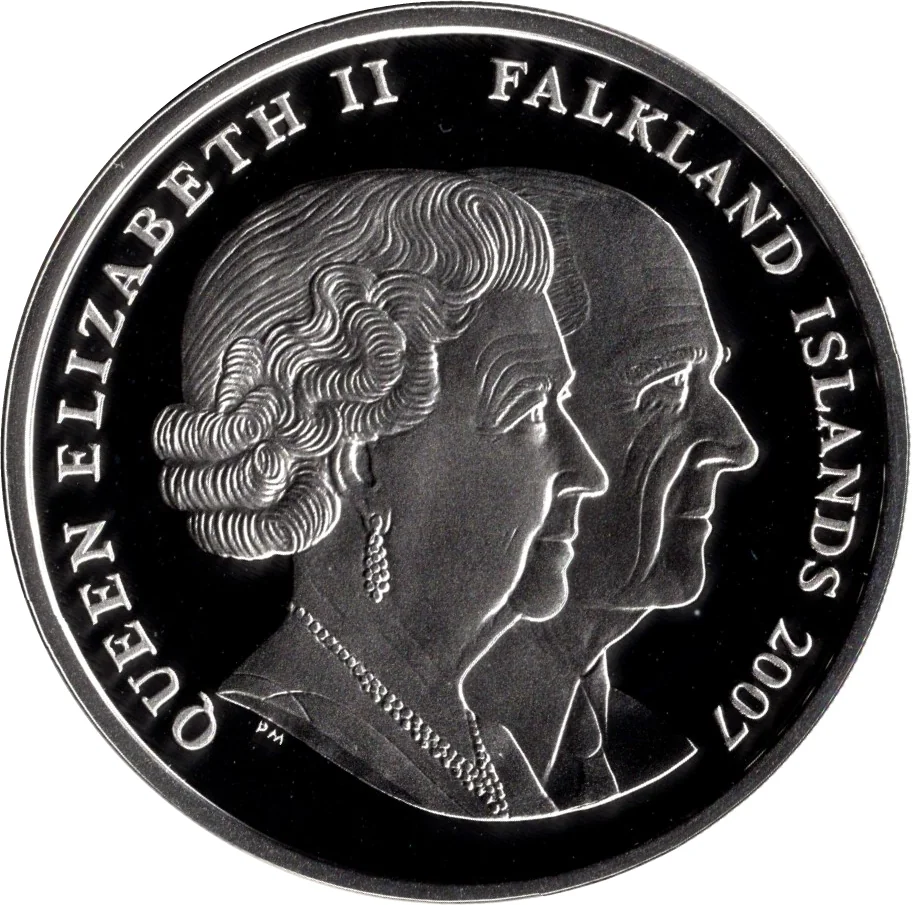
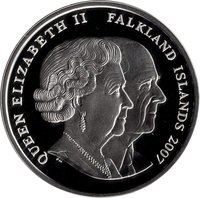
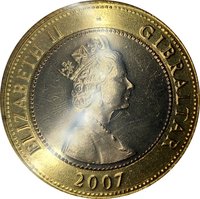
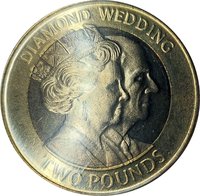
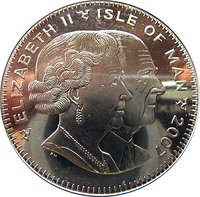
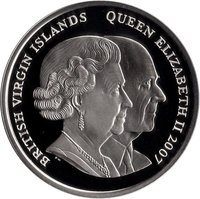
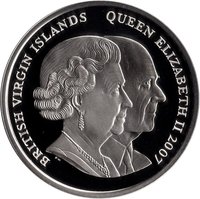
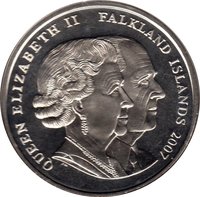
Dual bust of Queen Elizabeth II and Prince Philip
Inscription:
QUEEN ELIZABETH II FALKLAND ISLANDS 2007
PM
PM
Script: Latin
Reverse
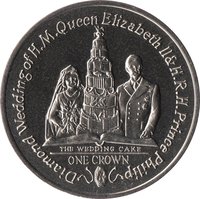
Description:
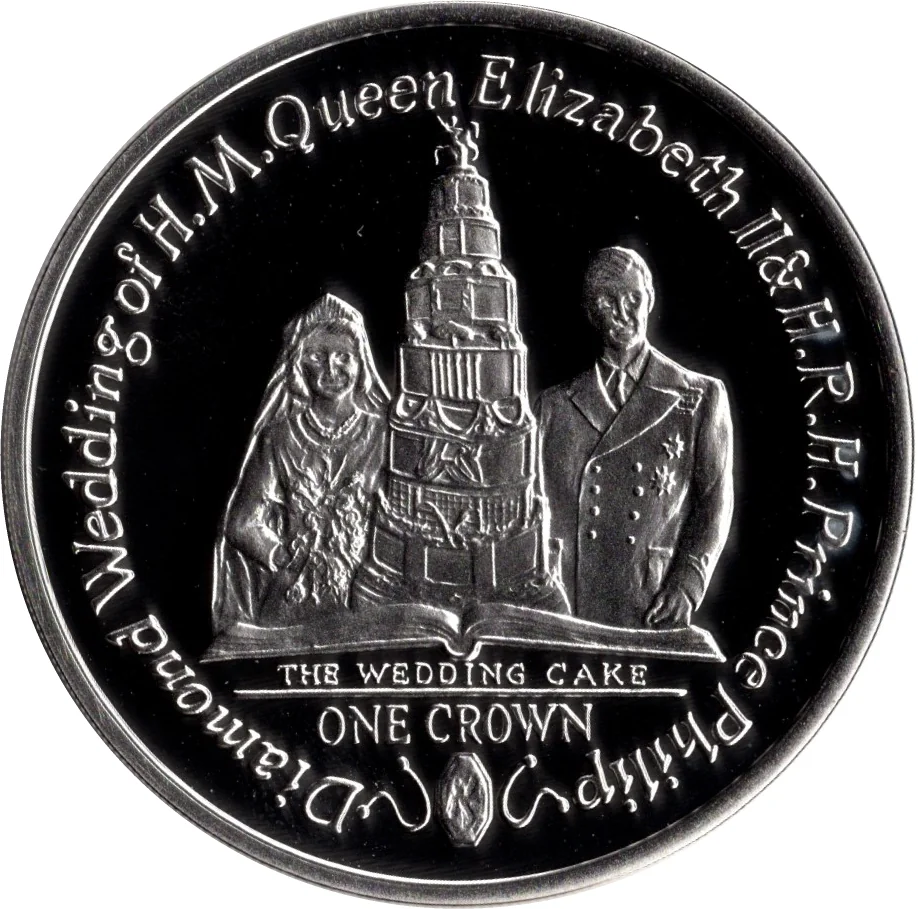
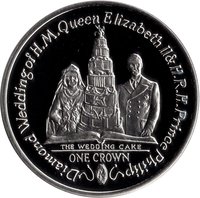
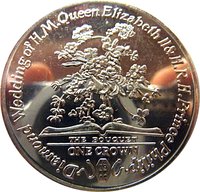
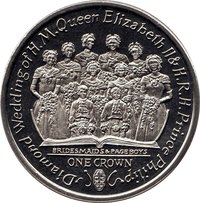
Bride and groom before their wedding cake.
Inscription:
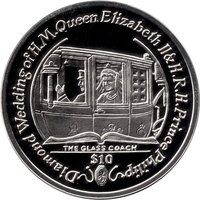
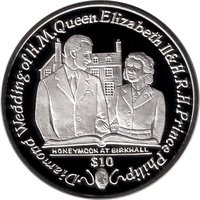
Diamond Wedding of H.M. Queen Elizabeth II & H.R.H. Prince Philip
THE WEDDING CAKE
ONE CROWN
THE WEDDING CAKE
ONE CROWN
Script: Latin
Edge
Reeded
Mints
| Name | Mark |
|---|---|
| Pobjoy Mint | PM |
Mintings
| Year | Mint Mark | Mintage | Quality | Collection |
|---|---|---|---|---|
| 2007 | PM | — | Proof |
Historical background
In 2007, the currency situation in the Falkland Islands remained stable and unaltered, continuing its long-standing dual-currency system. The official currency was (and remains) the Falkland Islands pound (FKP), which is pegged at par with the British pound sterling (GBP). This parity is guaranteed by the Falkland Islands Government, meaning the two currencies are interchangeable on the Islands. Both banknotes and coins, issued by the Falkland Islands Government, circulated alongside UK sterling notes and coins, providing a seamless financial link to the United Kingdom.
This arrangement was fundamental to the Islands' economy, which was heavily reliant on the UK, particularly for defence, public administration, and funding. Key sectors like fisheries (through the sale of licences) and a growing tourism industry generated revenue, but the Sterling peg provided crucial monetary stability and confidence. It insulated the territory from exchange rate volatility and facilitated trade, as most imports came from the UK or via the UK. There were no discussions or movements in 2007 to change this peg or to adopt an independent monetary policy.
Furthermore, 2007 fell within a period of economic growth for the Islands, bolstered by strong fishing revenues and the beginnings of increased tourist visits from cruise ships. The fixed, stable currency environment supported this growth by ensuring predictable costs for businesses and the government. Consequently, the currency situation in 2007 was not a subject of economic crisis or reform, but rather a cornerstone of the territory's financial and political stability, reinforcing its close constitutional ties with Britain.
This arrangement was fundamental to the Islands' economy, which was heavily reliant on the UK, particularly for defence, public administration, and funding. Key sectors like fisheries (through the sale of licences) and a growing tourism industry generated revenue, but the Sterling peg provided crucial monetary stability and confidence. It insulated the territory from exchange rate volatility and facilitated trade, as most imports came from the UK or via the UK. There were no discussions or movements in 2007 to change this peg or to adopt an independent monetary policy.
Furthermore, 2007 fell within a period of economic growth for the Islands, bolstered by strong fishing revenues and the beginnings of increased tourist visits from cruise ships. The fixed, stable currency environment supported this growth by ensuring predictable costs for businesses and the government. Consequently, the currency situation in 2007 was not a subject of economic crisis or reform, but rather a cornerstone of the territory's financial and political stability, reinforcing its close constitutional ties with Britain.
✨ Legendary