

1 paisa – Hyderabad-Shorapur Feudatory
Add to wishlist
India
Context
Year: 1846
Islamic (Hijri) Year:: 1262
Country: India
Issuer: Hyderabad-Shorapur Feudatory
Currency:
Demonetized: Yes
Material
References
Numista: #455126
Obverse
Description:
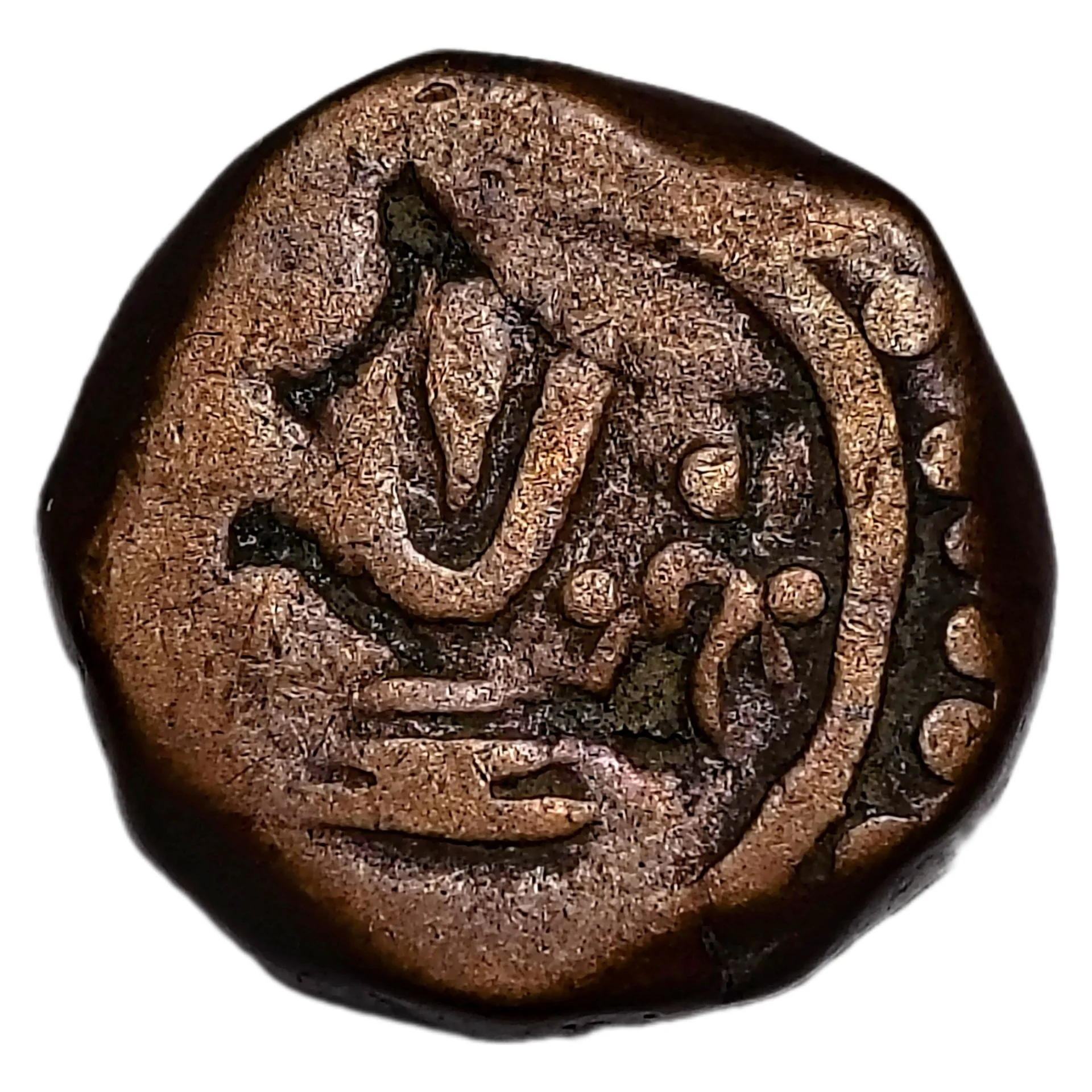
Trishula flanked by a shankha and Sudarshan Chakra.
Reverse
Edge
Plain
Mintings
| Year | Mint Mark | Mintage | Quality | Collection |
|---|---|---|---|---|
| 1846 | — | — |
Historical background
In 1846, the currency situation in the Shorapur Feudatory (a jagir under the Nizam of Hyderabad) was characterized by monetary fragmentation and the pervasive influence of the neighbouring British Raj. While the Nizam's government in Hyderabad issued its own rupee (the Hyderabad Sicca Rupee), the region was not a unified monetary zone. The British East India Company's Company Rupee, along with a variety of older Mughal and regional coins, remained in concurrent circulation, leading to complex exchange rates and valuation challenges in trade and revenue collection.
For a smaller feudatory like Shorapur, this created administrative and economic pressure. The jagirdar (feudatory chief) had to navigate the fixed revenue demands from the Hyderabad Durbar, which were stipulated in a specific currency, while local collections from peasants were made in a medley of coins of varying intrinsic values. This often resulted in shortfalls and required constant currency conversion, a process exploited by money-changers (shroffs) who profited from the confusion. The instability was exacerbated by the political context, as the British, following the recent annexation of Sindh (1843) and growing dominance after the Second Anglo-Sikh War (1846-49), were aggressively standardizing currency in their directly administered territories.
Thus, the 1846 currency scene in Shorapur was one of transition and uncertainty, caught between the declining monetary authority of Hyderabad and the rising, homogenizing force of British India. This lack of a standard medium of exchange stifled local trade, complicated governance, and reflected the broader political subordination of the princely state system, where local rulers managed internal affairs but within an increasingly British-controlled economic framework.
For a smaller feudatory like Shorapur, this created administrative and economic pressure. The jagirdar (feudatory chief) had to navigate the fixed revenue demands from the Hyderabad Durbar, which were stipulated in a specific currency, while local collections from peasants were made in a medley of coins of varying intrinsic values. This often resulted in shortfalls and required constant currency conversion, a process exploited by money-changers (shroffs) who profited from the confusion. The instability was exacerbated by the political context, as the British, following the recent annexation of Sindh (1843) and growing dominance after the Second Anglo-Sikh War (1846-49), were aggressively standardizing currency in their directly administered territories.
Thus, the 1846 currency scene in Shorapur was one of transition and uncertainty, caught between the declining monetary authority of Hyderabad and the rising, homogenizing force of British India. This lack of a standard medium of exchange stifled local trade, complicated governance, and reflected the broader political subordination of the princely state system, where local rulers managed internal affairs but within an increasingly British-controlled economic framework.
✨ Legendary