

1 paisa – Hyderabad-Shorapur Feudatory
Add to wishlist
India
Context
Years: 1840–1850
Country: India
Issuer: Hyderabad-Shorapur Feudatory
Ruler: Victoria
Currency:
Demonetized: Yes
Material
References
Numista: #437217
Obverse
Description:
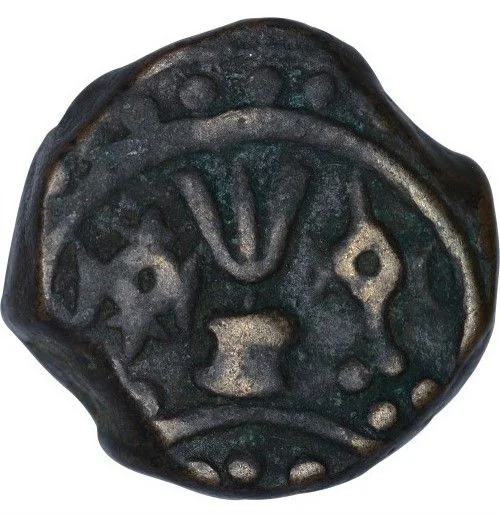
Trishula with two flanking objects.
Reverse
Description:
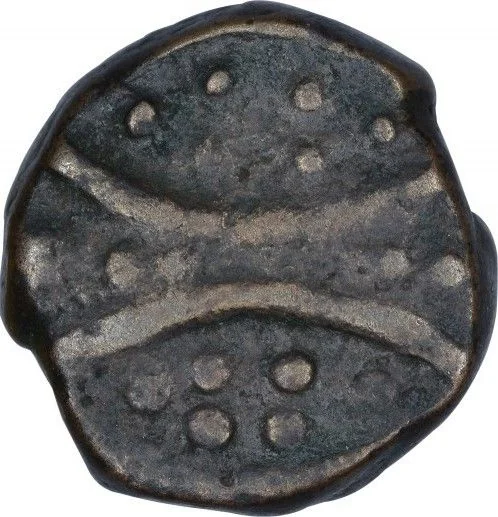
Bahiri emblem.
Edge
Mintings
| Year | Mint Mark | Mintage | Quality | Collection |
|---|---|---|---|---|
| — | — | — |
Historical background
In the early 1840s, the Hyderabad-Shorapur Feudatory, a significant jagir (estate) under the Nizam of Hyderabad, operated within a complex and fragmented monetary system. The region was not a unified currency zone; instead, it existed at the intersection of several circulating currencies. The primary standard was the Hyderabad Sicca Rupee, a silver coin minted by the Nizam's government, but its circulation competed with the British East India Company's rupees and a variety of older, debased Mughal and regional coins. This multiplicity created chronic issues of exchange rates and valuation, complicating revenue collection and trade.
The currency situation was further strained by the political and economic pressures of the time. The Nizam's own finances were deeply indebted to the British, leading to economic instability that trickled down to feudatories like Shorapur. Furthermore, the period saw widespread debasement of coinage, where rulers reduced the precious metal content to fund expenditures. For a feudatory, this meant that revenues collected in locally accepted coins might suffer a loss in value when remitted to Hyderabad, creating fiscal shortfalls. The lack of uniform, trusted coinage also hampered internal commerce and tax administration within the jagir itself.
Ultimately, the monetary chaos in Shorapur reflected the broader transition of power in India. The British East India Company was increasingly asserting financial and political control, pushing for standardized currency to facilitate its own revenue extraction and trade. While the full imposition of the British rupee system was still a few decades away, the 1840s marked a period where the old, fragmented monetary order of the Hyderabad state was under growing strain, caught between the declining authority of the Nizam and the rising, systematizing force of the Company Raj.
The currency situation was further strained by the political and economic pressures of the time. The Nizam's own finances were deeply indebted to the British, leading to economic instability that trickled down to feudatories like Shorapur. Furthermore, the period saw widespread debasement of coinage, where rulers reduced the precious metal content to fund expenditures. For a feudatory, this meant that revenues collected in locally accepted coins might suffer a loss in value when remitted to Hyderabad, creating fiscal shortfalls. The lack of uniform, trusted coinage also hampered internal commerce and tax administration within the jagir itself.
Ultimately, the monetary chaos in Shorapur reflected the broader transition of power in India. The British East India Company was increasingly asserting financial and political control, pushing for standardized currency to facilitate its own revenue extraction and trade. While the full imposition of the British rupee system was still a few decades away, the 1840s marked a period where the old, fragmented monetary order of the Hyderabad state was under growing strain, caught between the declining authority of the Nizam and the rising, systematizing force of the Company Raj.
✨ Legendary