

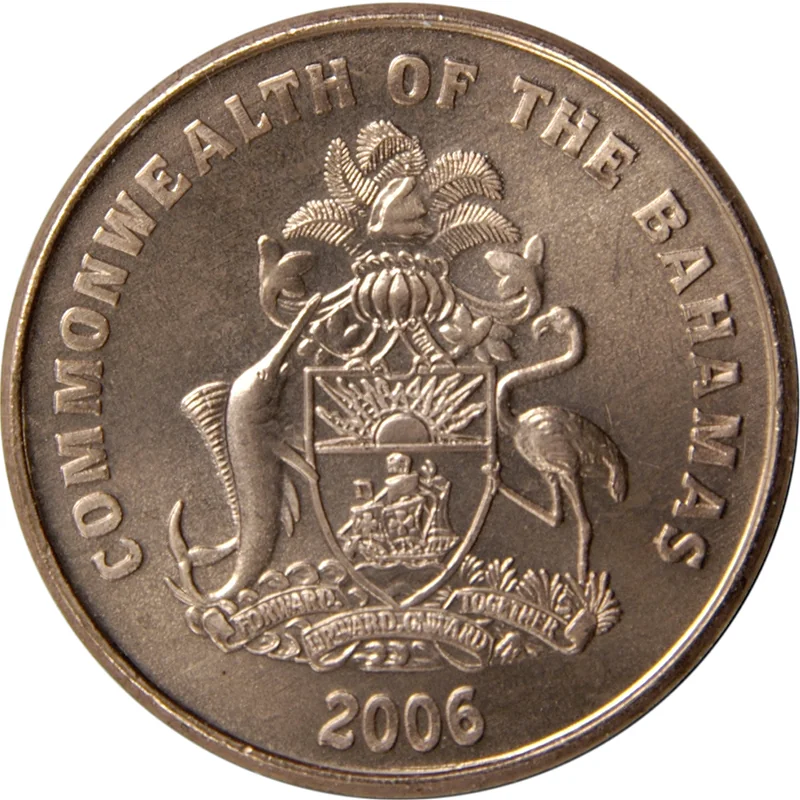
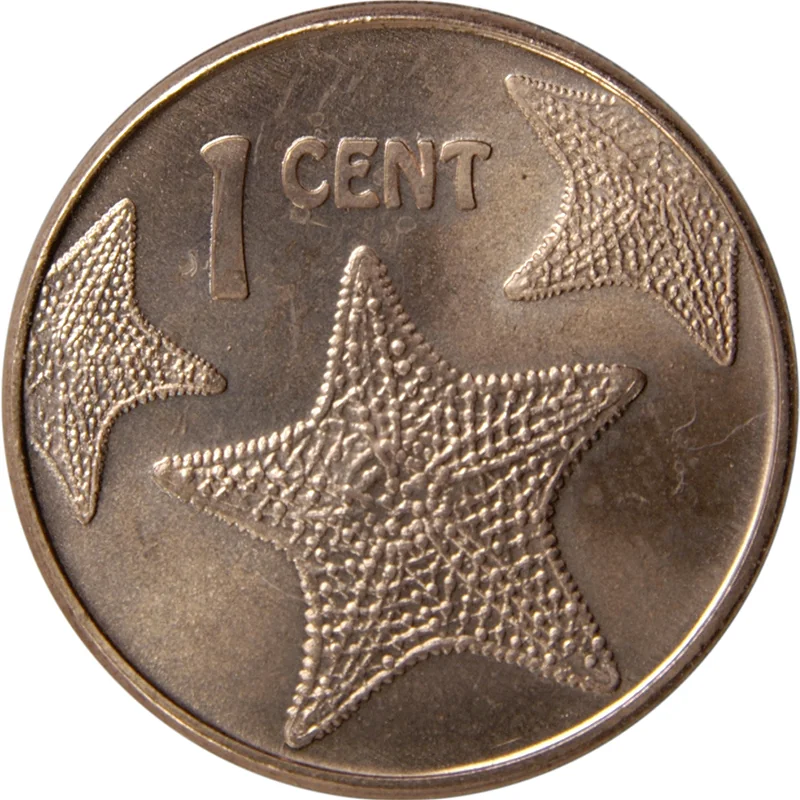
1 cent – The Bahamas
Add to wishlist
Bahamas
Context
Years: 2006–2007
Country: Bahamas
Issuer: The Bahamas
Ruler: Elizabeth II
Currency:
(since 1966)
Demonetization: 31 December 2020
Material
References
KM: #
Numista: #14792
Value
Exchange value: 0.01 BSD
Obverse
Reverse
Edge
Plain
Categories
| Animal> Bird |
| Animal> Fish |
| Symbols> Coat of Arms |
| Animal> Marine invertebrate |
| Symbol> Shell |
Mintings
| Year | Mint Mark | Mintage | Quality | Collection |
|---|---|---|---|---|
| 2006 | — | — | ||
| 2007 | — | — |
Historical background
In 2006, The Bahamas operated under a long-standing and stable currency regime, with the Bahamian dollar (BSD) pegged at a 1:1 parity to the United States dollar (USD). This fixed exchange rate, established in 1973, was a cornerstone of the nation's financial policy, managed by The Central Bank of The Bahamas. The peg provided critical stability for the tourism- and import-dependent economy, insulating it from volatile currency fluctuations and fostering confidence among international investors and the vital financial services sector. This stability was particularly important given that the US is the source of the vast majority of tourist visitors and imports.
The economy in 2006 was experiencing moderate growth, largely driven by a rebound in tourism and foreign direct investment in large-scale resort and real estate projects following the hurricanes of 2004-2005. However, this growth came with underlying pressures. A persistent current account deficit, fueled by a high demand for imported goods and services, was a structural concern. While foreign reserves were adequate to comfortably maintain the peg, the Central Bank remained vigilant, as these reserves were essential for defending the fixed exchange rate and needed to cover several months of imports.
Overall, the currency situation in 2006 was one of deliberate and successful stability, but not without watchful management. The fixed peg to the USD was a non-negotiable pillar of economic policy, successfully maintained through disciplined fiscal and monetary oversight. The primary challenges were not about the peg's viability that year, but rather about managing the broader economic conditions—such as the trade deficit and inflationary pressures from high global oil prices—that could, over the long term, strain the reserves that underpinned the currency's value.
The economy in 2006 was experiencing moderate growth, largely driven by a rebound in tourism and foreign direct investment in large-scale resort and real estate projects following the hurricanes of 2004-2005. However, this growth came with underlying pressures. A persistent current account deficit, fueled by a high demand for imported goods and services, was a structural concern. While foreign reserves were adequate to comfortably maintain the peg, the Central Bank remained vigilant, as these reserves were essential for defending the fixed exchange rate and needed to cover several months of imports.
Overall, the currency situation in 2006 was one of deliberate and successful stability, but not without watchful management. The fixed peg to the USD was a non-negotiable pillar of economic policy, successfully maintained through disciplined fiscal and monetary oversight. The primary challenges were not about the peg's viability that year, but rather about managing the broader economic conditions—such as the trade deficit and inflationary pressures from high global oil prices—that could, over the long term, strain the reserves that underpinned the currency's value.
🌱 Very Common