

25 Cents – The Bahamas
Bahamas
Context
Material
Diameter: 24.26 mm
Weight: 5.75 g
Thickness: 1.65 mm
Shape: Round
Composition: Copper-nickel
Magnetic: No
Technique: Milled
Alignment: Medal alignment
flip
References
KM: #Click to copy to clipboard63.2
Numista: #15296
Value
Exchange value: 0.25 BSD
Obverse
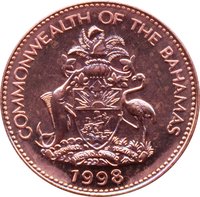
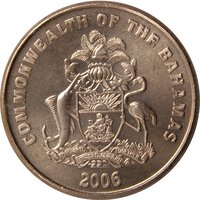
Description:
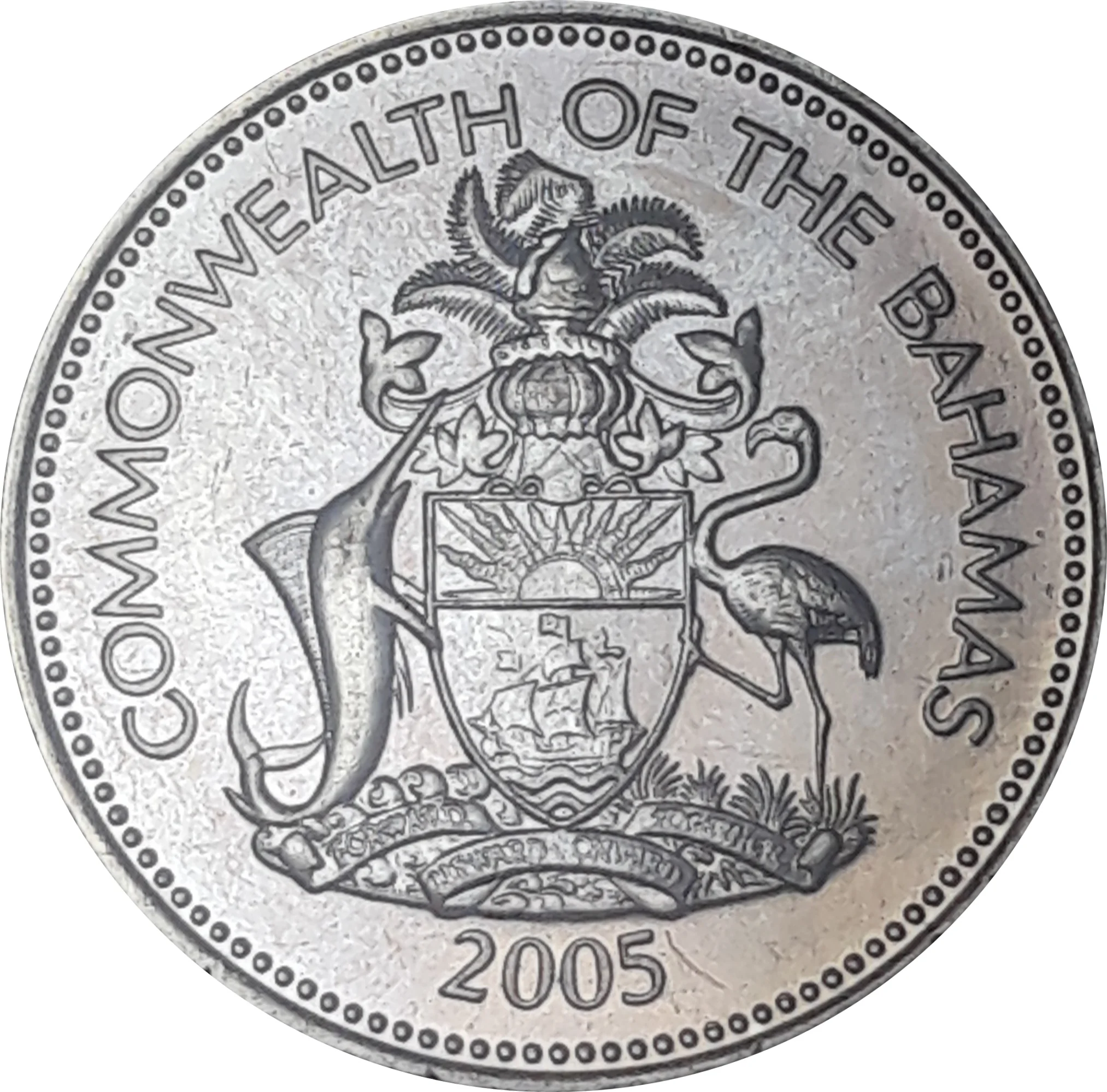
Bahamas arms with name above and date below.
Inscription:
COMMONWEALTH OF THE BAHAMAS
FORWARD, UPWARD, ONWARD TOGETHER
2005
FORWARD, UPWARD, ONWARD TOGETHER
2005
Translation:
COMMONWEALTH OF THE BAHAMAS
FORWARD, UPWARD, ONWARD TOGETHER
2005
FORWARD, UPWARD, ONWARD TOGETHER
2005
Script: Latin
Language: English
Engraver: Arnold Machin
Reverse
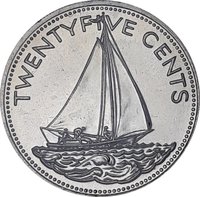
Description:
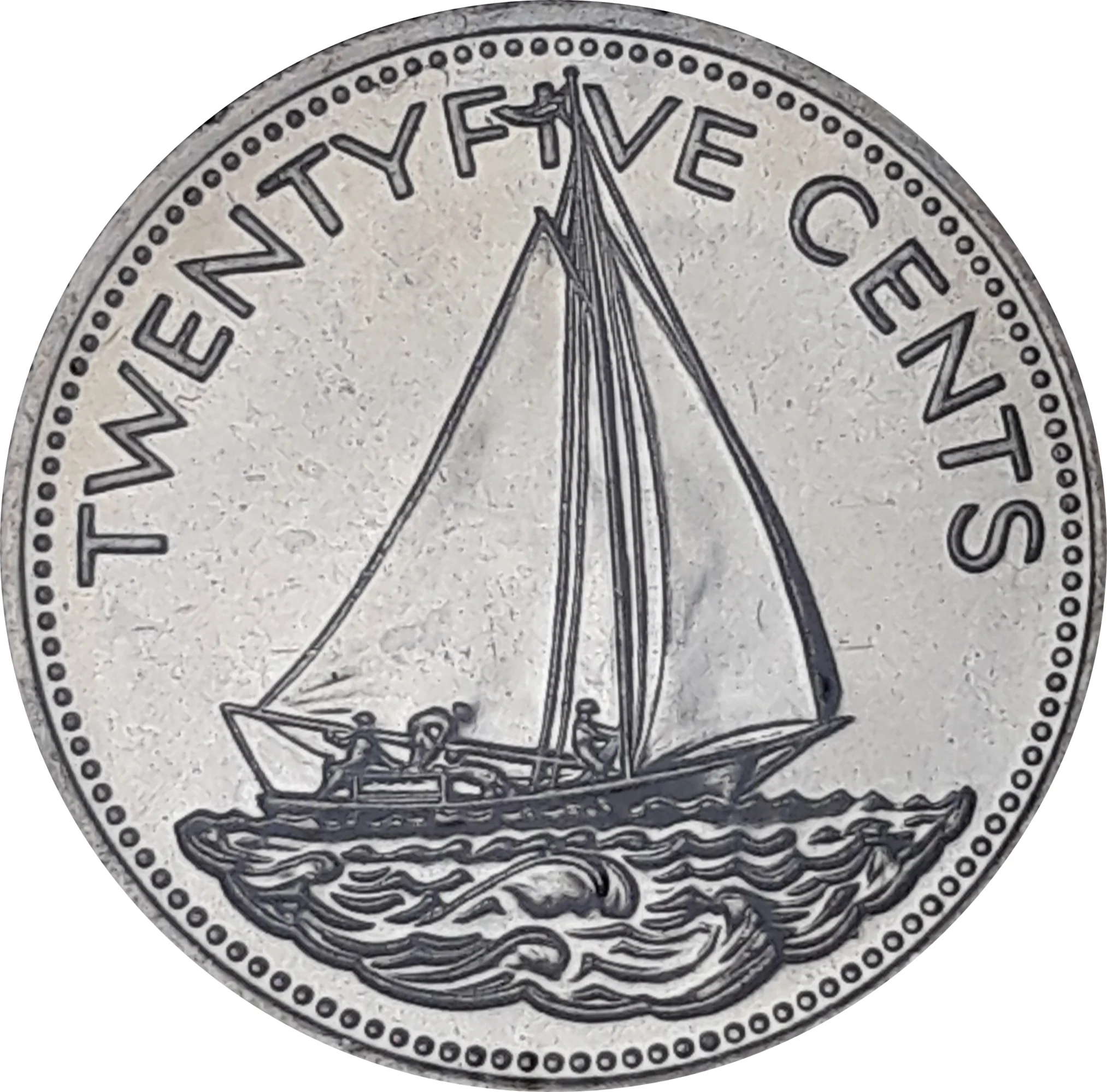
Bahamian sailboat, high-value
Inscription:
TWENTYFIVE CENTS
Script: Latin
Engraver: Arnold Machin
Edge
Reeded
Categories
| Animal> Bird |
| Animal> Fish |
| Symbol> Shell |
| Symbols> Coat of Arms |
| Transportation> Watercraft |
Mints
| Name | Mark |
|---|---|
| Royal Mint | — |
Mintings
| Year | Mint Mark | Mintage | Quality | Collection |
|---|---|---|---|---|
| 1991 | — | — | ||
| 1992 | — | — | ||
| 1996 | — | — | ||
| 1997 | — | — | ||
| 1998 | — | — | ||
| 2000 | — | — | ||
| 2005 | — | — |
Historical background
In 1991, The Bahamas operated under a unique and long-standing currency arrangement known as a "currency board-like system," though it was not a formal currency board. The Bahamian dollar (BSD) had been pegged at par (1:1) to the United States dollar (USD) since 1966, a policy managed by the Central Bank of The Bahamas, established in 1974. This fixed exchange rate regime provided critical stability for an economy heavily dependent on tourism and foreign direct investment, as it eliminated exchange rate risk for the key US market and instilled confidence in both domestic and international financial transactions.
The economic backdrop of 1991 was challenging, characterized by a global recession that dampened tourist arrivals and investment flows. This exposed a vulnerability of the peg: maintaining it required sufficient foreign exchange reserves. While reserves were under pressure, the Central Bank maintained the parity through strict exchange controls for residents, limiting capital outflows. The financial system was dominated by Canadian and British banks, and the country was actively working to shed its earlier association with offshore narcotics money laundering, having enacted the International Business Companies Act in 1989 to reform its financial services sector.
Overall, the currency situation in 1991 was one of managed stability amidst external economic headwinds. The Central Bank successfully defended the peg, which was (and remains) a cornerstone of national economic policy. The challenges of the year reinforced the importance of foreign exchange earnings from tourism and banking, while the authorities balanced the defense of the fixed rate with the ongoing need to modernize and legitimize the nation's financial services industry in the post-narcotics era.
The economic backdrop of 1991 was challenging, characterized by a global recession that dampened tourist arrivals and investment flows. This exposed a vulnerability of the peg: maintaining it required sufficient foreign exchange reserves. While reserves were under pressure, the Central Bank maintained the parity through strict exchange controls for residents, limiting capital outflows. The financial system was dominated by Canadian and British banks, and the country was actively working to shed its earlier association with offshore narcotics money laundering, having enacted the International Business Companies Act in 1989 to reform its financial services sector.
Overall, the currency situation in 1991 was one of managed stability amidst external economic headwinds. The Central Bank successfully defended the peg, which was (and remains) a cornerstone of national economic policy. The challenges of the year reinforced the importance of foreign exchange earnings from tourism and banking, while the authorities balanced the defense of the fixed rate with the ongoing need to modernize and legitimize the nation's financial services industry in the post-narcotics era.
🌱 Very Common