

10 Euro – Greece
Non-circulating coins
Commemoration: International Year of Astronomy
Greece
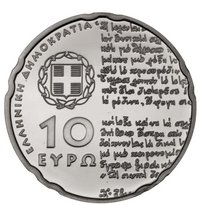
Obverse
Description:
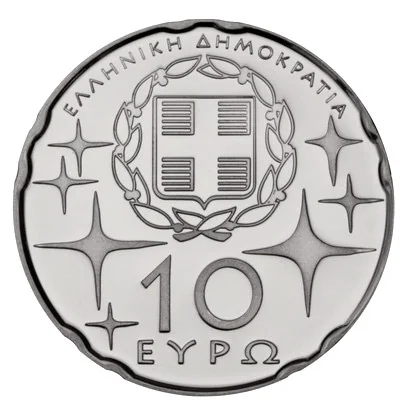
Bright stars, Greece's emblem, and €10.
Inscription:
ΕΛΛΗΝΙΚΗ ΔΗΜΟΚΡΑΤΙΑ
10 ΕΥΡΩ
10 ΕΥΡΩ
Translation:
HELLENIC REPUBLIC
10 EURO
10 EURO
Script: Greek
Language: Greek
Engraver: Geórgios Stamatópoulos
Reverse
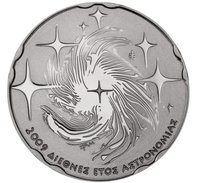
Description:
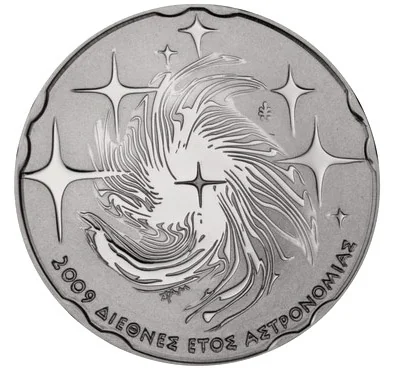
Spiral galaxy encircled by "2009 INTERNATIONAL YEAR OF ASTRONOMY".
Inscription:
2009 ΔΙΕΘΝΕΣ ΕΤΟΣ ΑΣΤΡΟΝΟΜΙΑΣ
Translation:
2009 INTERNATIONAL YEAR OF ASTRONOMY
Script: Greek
Language: Greek
Engraver: Geórgios Stamatópoulos
Edge
Smooth with ten indentations ("Spanish flower")
Categories
| Science |
| Symbols> Coat of Arms |
Mints
| Name | Mark |
|---|---|
| National Mint of the Bank of Greece | — |
Mintings
| Year | Mint Mark | Mintage | Quality | Collection |
|---|---|---|---|---|
| 2009 | — | 5,000 | Proof |
Historical background
The Greek currency crisis of 2009 was the dramatic opening chapter of a sovereign debt drama that threatened the eurozone's stability. The trigger was the October 2009 revelation by the newly elected socialist government that the country's budget deficit was not the previously reported 6.7% of GDP, but a staggering 12.7%—later revised to over 15%. This admission shattered market confidence, exposing years of systematic misreporting of official statistics and chronic fiscal mismanagement. Greece, having adopted the euro in 2001, could no longer devalue its own currency to regain competitiveness and was suddenly facing unsustainable borrowing costs as investors demanded higher premiums for its debt.
The roots of the crisis, however, stretched back over a decade. After joining the euro, Greece enjoyed historically low interest rates, leading to a debt-fueled boom in public spending and private consumption without corresponding gains in productivity. A rigid economy, widespread tax evasion, and a bloated public sector created persistent deficits. The 2008 global financial crisis then delivered a severe blow, collapsing key revenue sources like tourism and shipping, while simultaneously increasing social spending. This perfect storm revealed that Greece’s economic growth within the eurozone had been built on a foundation of accumulating debt rather than genuine reform.
Consequently, by the end of 2009, Greece was effectively locked out of international bond markets, facing the imminent threat of a sovereign default. The situation posed an existential dilemma for Europe: whether to let a member state fail, risking a chaotic exit from the euro and potential financial contagion, or to orchestrate a unprecedented bailout. This set the stage for the tense negotiations in early 2010 that would lead to the first of three international rescue packages, imposing harsh austerity measures on the Greek population in exchange for financial lifelines from the European Central Bank, the European Commission, and the International Monetary Fund—the so-called "Troika."
The roots of the crisis, however, stretched back over a decade. After joining the euro, Greece enjoyed historically low interest rates, leading to a debt-fueled boom in public spending and private consumption without corresponding gains in productivity. A rigid economy, widespread tax evasion, and a bloated public sector created persistent deficits. The 2008 global financial crisis then delivered a severe blow, collapsing key revenue sources like tourism and shipping, while simultaneously increasing social spending. This perfect storm revealed that Greece’s economic growth within the eurozone had been built on a foundation of accumulating debt rather than genuine reform.
Consequently, by the end of 2009, Greece was effectively locked out of international bond markets, facing the imminent threat of a sovereign default. The situation posed an existential dilemma for Europe: whether to let a member state fail, risking a chaotic exit from the euro and potential financial contagion, or to orchestrate a unprecedented bailout. This set the stage for the tense negotiations in early 2010 that would lead to the first of three international rescue packages, imposing harsh austerity measures on the Greek population in exchange for financial lifelines from the European Central Bank, the European Commission, and the International Monetary Fund—the so-called "Troika."
💎 Very Rare