

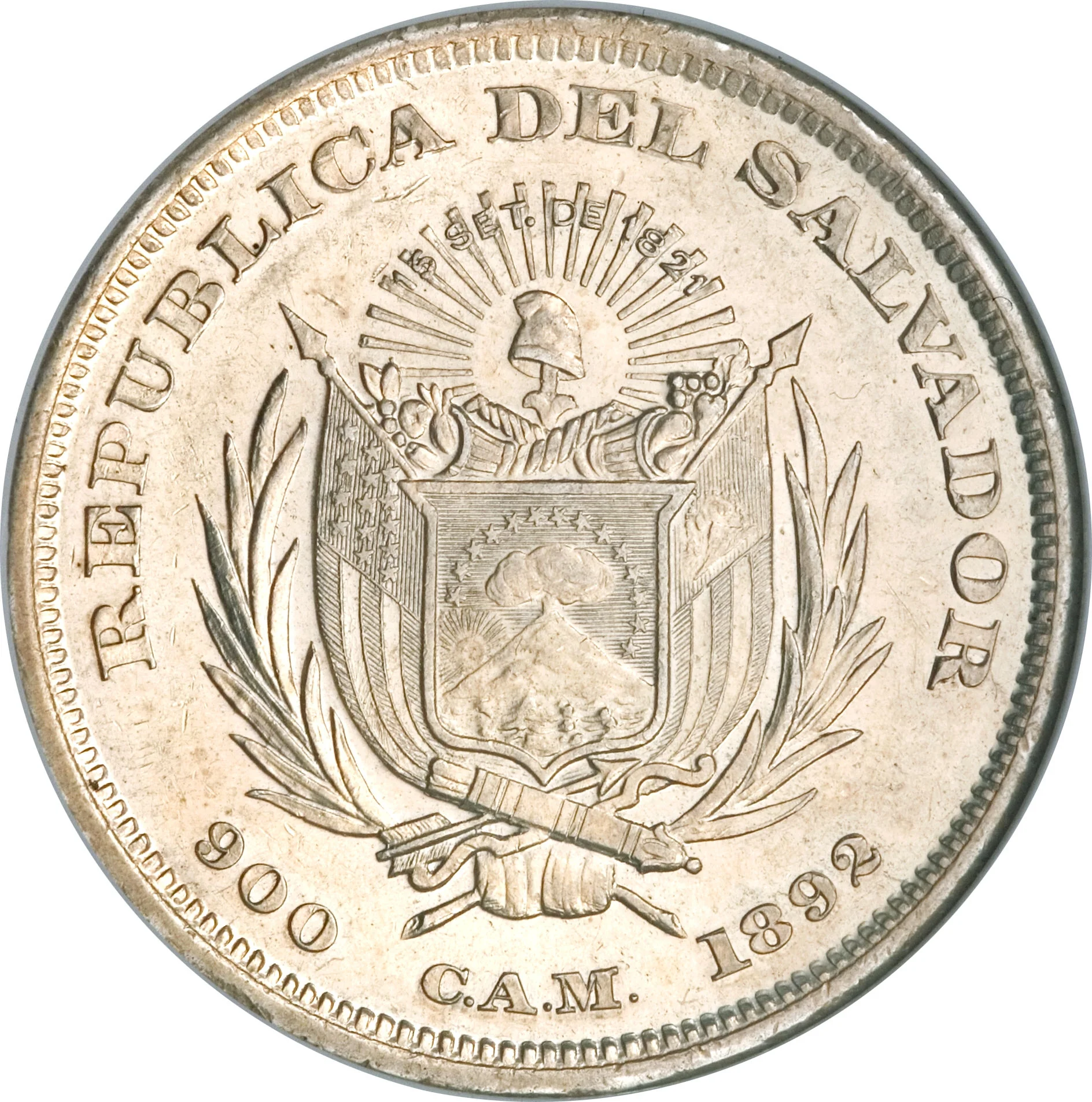
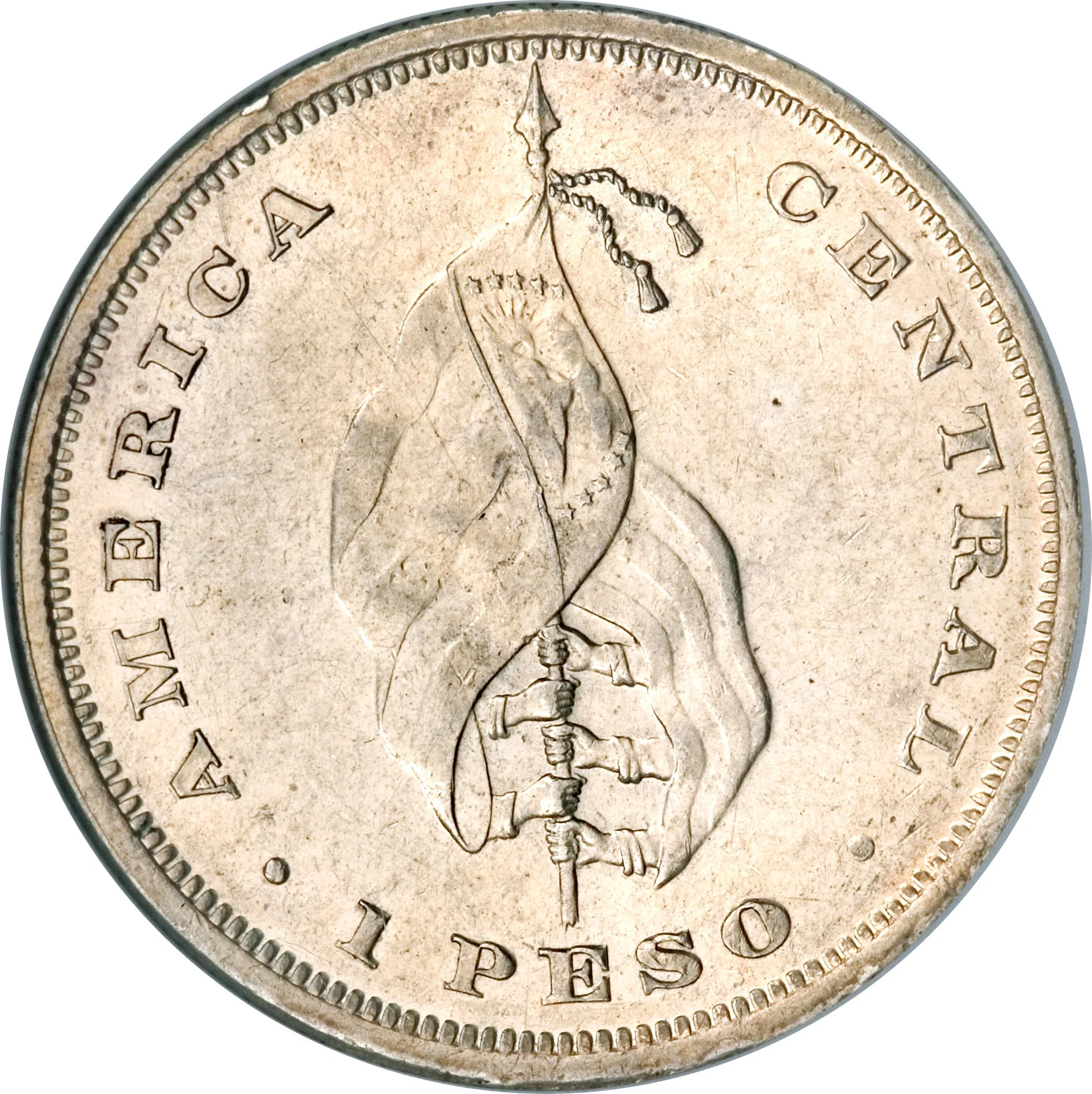
1 Peso – El Salvador
El Salvador
Context
Year: 1892
Issuer: El Salvador 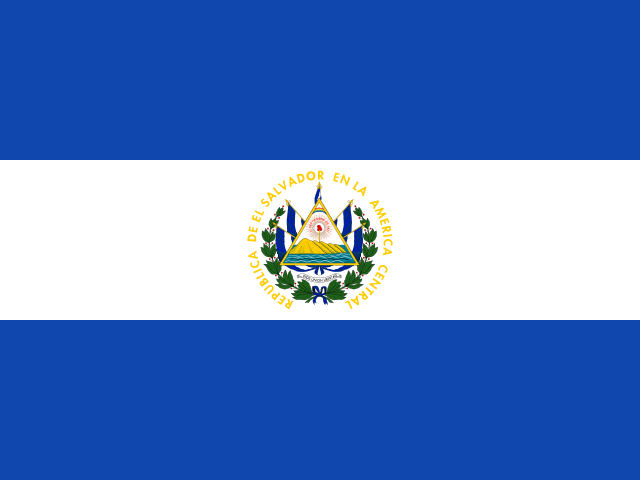
Period:
(since 1841)
Currency:
(1861—1919)
Demonetization: 12 September 1919
Total mintage: 41,000
Material
References
KM: #Click to copy to clipboard114
Numista: #45030
Value
Bullion value: $64.87
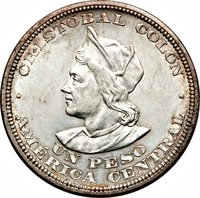
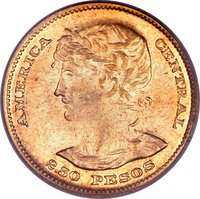
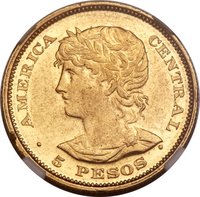
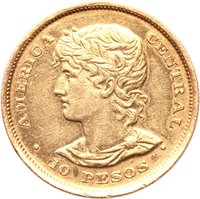
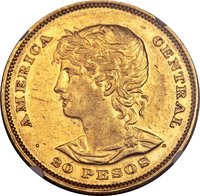
Obverse
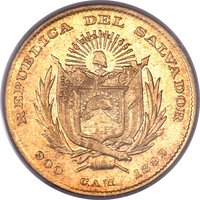
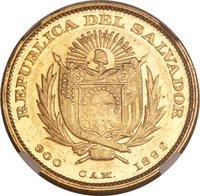
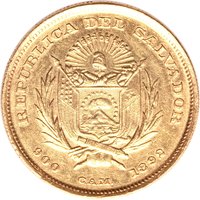
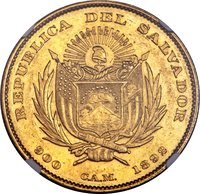
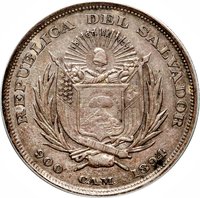
Reverse
Edge
Categories
| Symbols> Coat of Arms |
| Symbol> Flag |
Mints
| Name | Mark |
|---|---|
| Central American Mint | C.A.M. |
Historical background
In 1892, El Salvador's currency situation was characterized by a complex and unstable system dominated by foreign coinage and persistent scarcity of standardized national money. Following independence, the country had struggled to establish a unified currency, leading to a circulation dominated by Peruvian, Bolivian, and Chilean silver pesos, alongside French, U.S., and British gold coins. This monetary fragmentation created significant challenges for commerce and government finance, as the value of these heterogeneous coins fluctuated based on their metallic content and wear, complicating transactions and tax collection.
The government had made previous attempts to impose order, most notably with the creation of the peso salvadoreño in 1883, which was pegged to the French franc on a bimetallic standard. However, the practical issuance of a sufficient national coinage lagged behind policy. By 1892, the pressing need for a more reliable and uniform medium of exchange was a key topic of economic debate. The authorities were actively moving toward a solution that would involve not just coinage but also the establishment of a national bank with the power to issue paper money, a controversial step aimed at alleviating the chronic shortage of physical currency.
Thus, the currency situation in 1892 was a transitional phase, defined by the inadequacies of a fragmented metallic system and the active pursuit of modernization. The groundwork was being laid for the creation of the Banco Internacional de El Salvador in 1893, which would introduce the first official paper currency, the peso salvadoreño, in an effort to centralize monetary authority and stabilize the economy. This period therefore represents the final years of a chaotic, multi-currency circulation before a concerted push toward a centralized banking and fiduciary system.
The government had made previous attempts to impose order, most notably with the creation of the peso salvadoreño in 1883, which was pegged to the French franc on a bimetallic standard. However, the practical issuance of a sufficient national coinage lagged behind policy. By 1892, the pressing need for a more reliable and uniform medium of exchange was a key topic of economic debate. The authorities were actively moving toward a solution that would involve not just coinage but also the establishment of a national bank with the power to issue paper money, a controversial step aimed at alleviating the chronic shortage of physical currency.
Thus, the currency situation in 1892 was a transitional phase, defined by the inadequacies of a fragmented metallic system and the active pursuit of modernization. The groundwork was being laid for the creation of the Banco Internacional de El Salvador in 1893, which would introduce the first official paper currency, the peso salvadoreño, in an effort to centralize monetary authority and stabilize the economy. This period therefore represents the final years of a chaotic, multi-currency circulation before a concerted push toward a centralized banking and fiduciary system.
💎 Extremely Rare