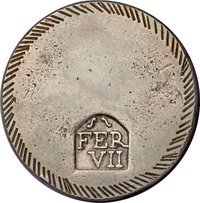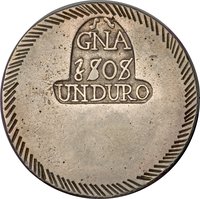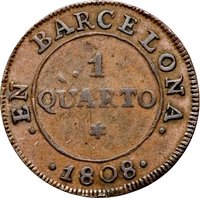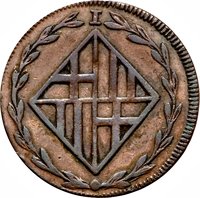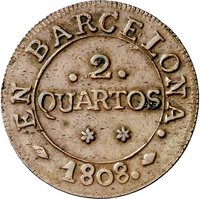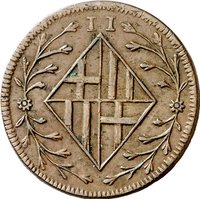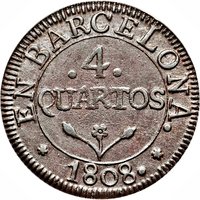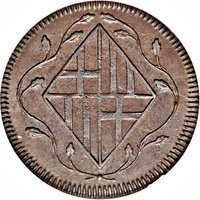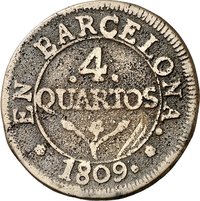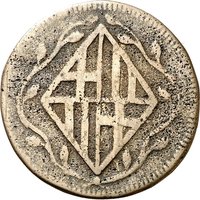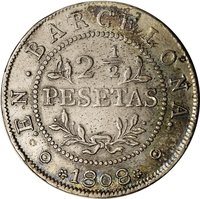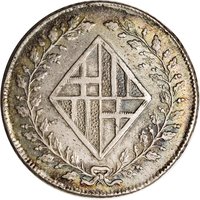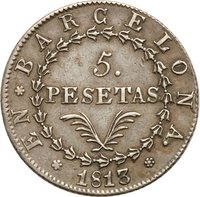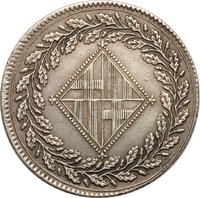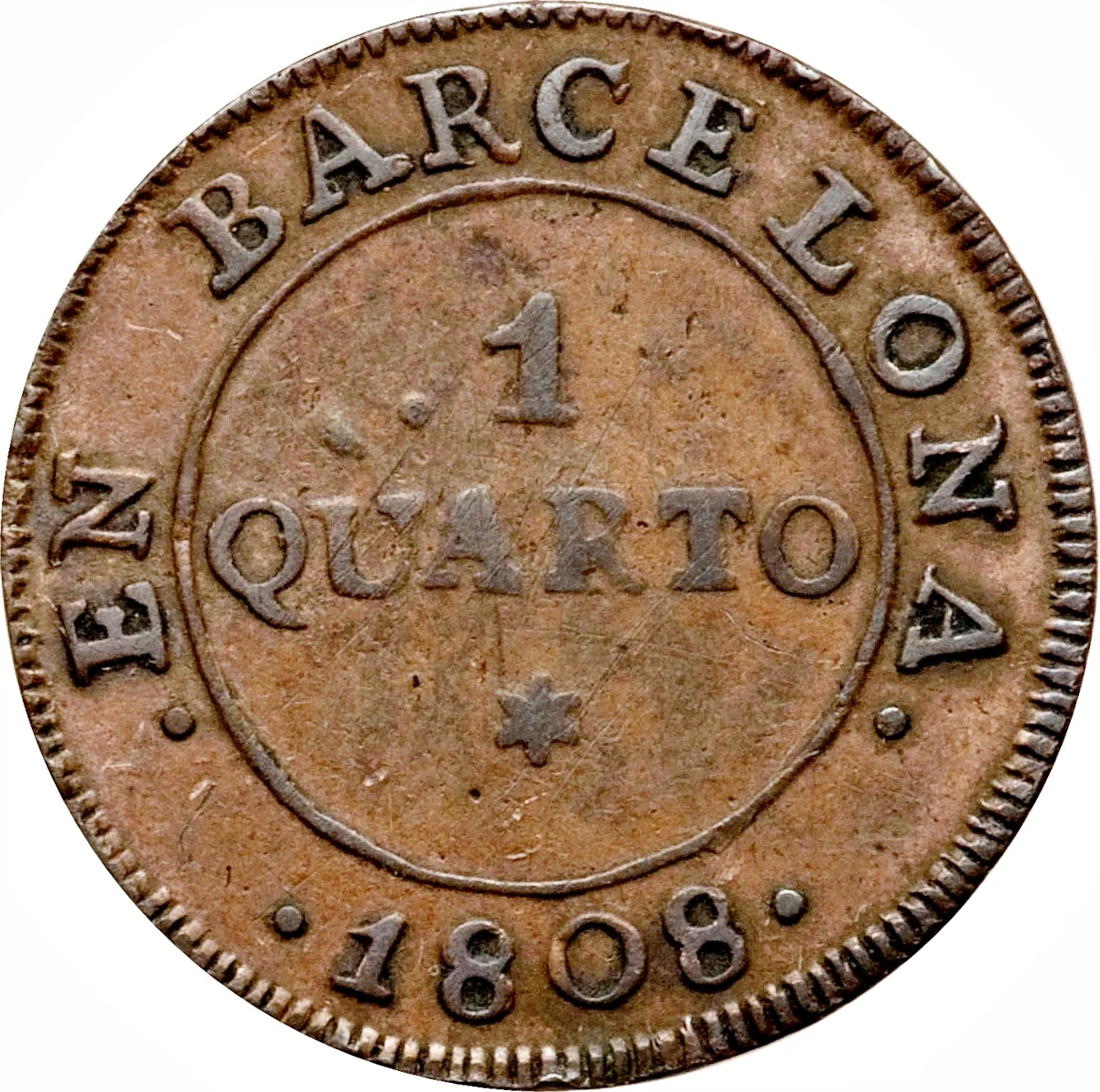
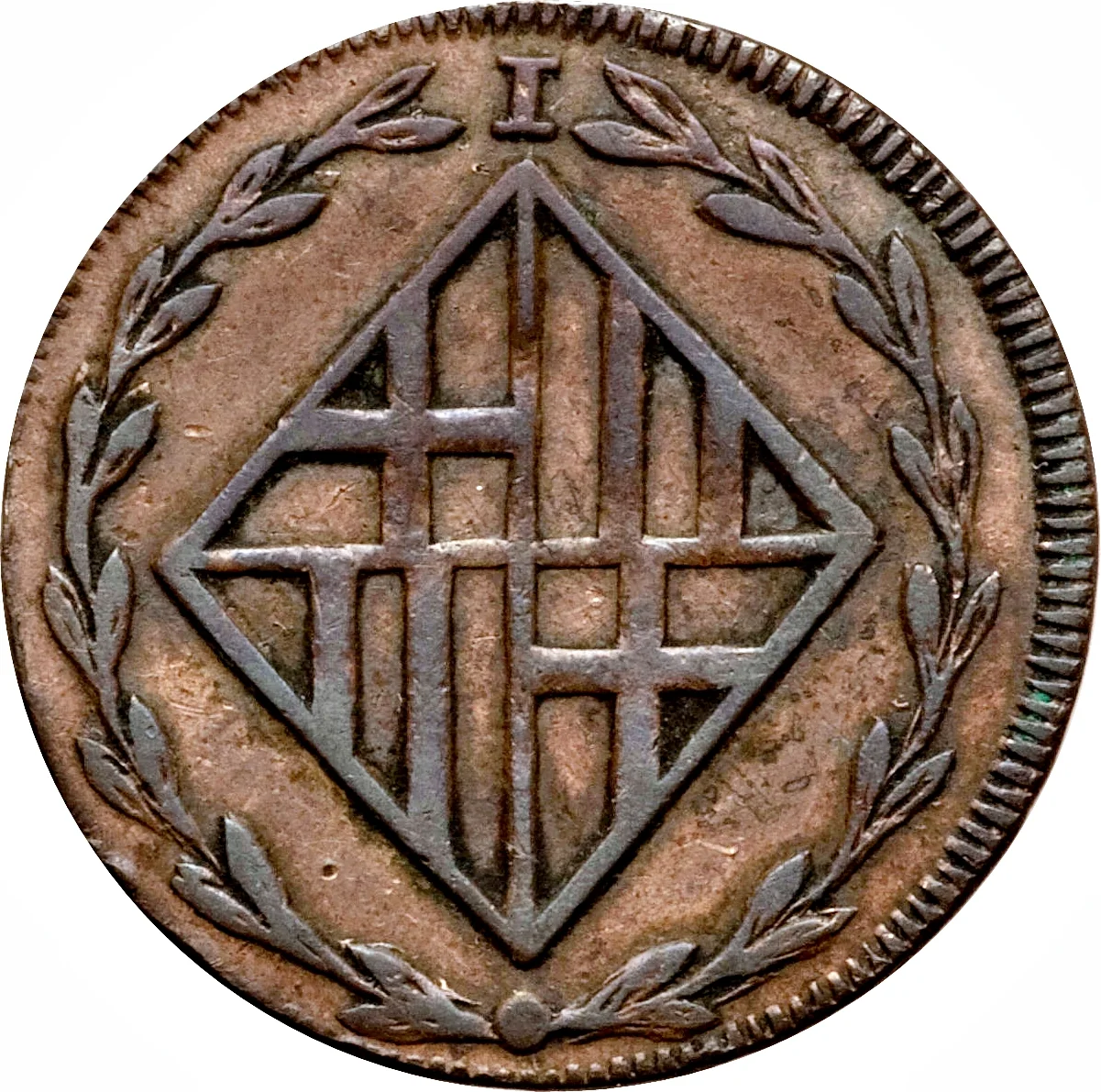
In 1808, the Principality of Catalonia found itself in a state of profound monetary chaos, a direct consequence of the Peninsular War. Following Napoleon's invasion of Spain and the abdication of the Bourbon monarchy, traditional royal authority collapsed. This severed Catalonia from the central minting authority of the Spanish Crown, creating a critical shortage of official coinage, particularly the large silver
peso (or
real de a ocho) and gold coins that were essential for major commerce and international trade. The existing currency in circulation became increasingly scarce and unreliable.
To fill this vacuum, a patchwork of emergency currencies emerged. Most notably, the occupying French military authorities, who controlled key cities like Barcelona after brutal sieges, introduced their own coinage to pay troops and administer the territory. Simultaneously, the emerging Spanish resistance, in the form of local patriotic
juntas, began to issue crude siege coinage and paper
vales (promissory notes) to finance the war effort against the French. This resulted in a fractured monetary landscape where French francs, leftover Spanish colonial reales, and various provisional issues all circulated with uncertain value and acceptance.
The fundamental problem was one of competing sovereignties and a collapse of trust. Neither the French-imstate nor the nascent Spanish resistance institutions had the full legitimacy or economic stability to impose a uniform currency. Consequently, exchange rates fluctuated wildly, counterfeiting was rampant, and merchants and the populace faced severe hardship. The currency situation of 1808 thus mirrored Catalonia's political reality: a contested territory where economic life was destabilized by war, fragmentation, and the struggle for control between imperial and national forces.