

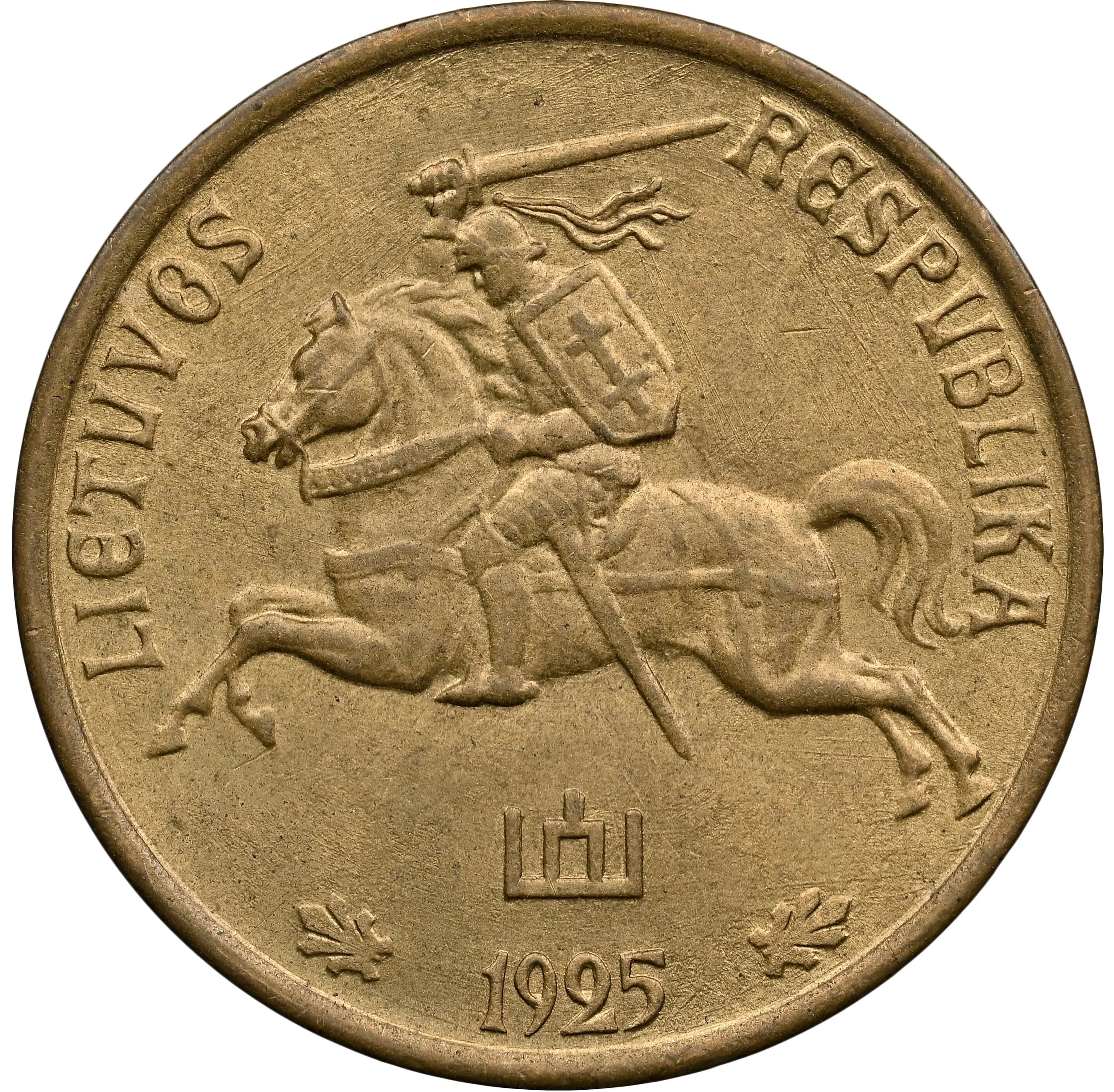
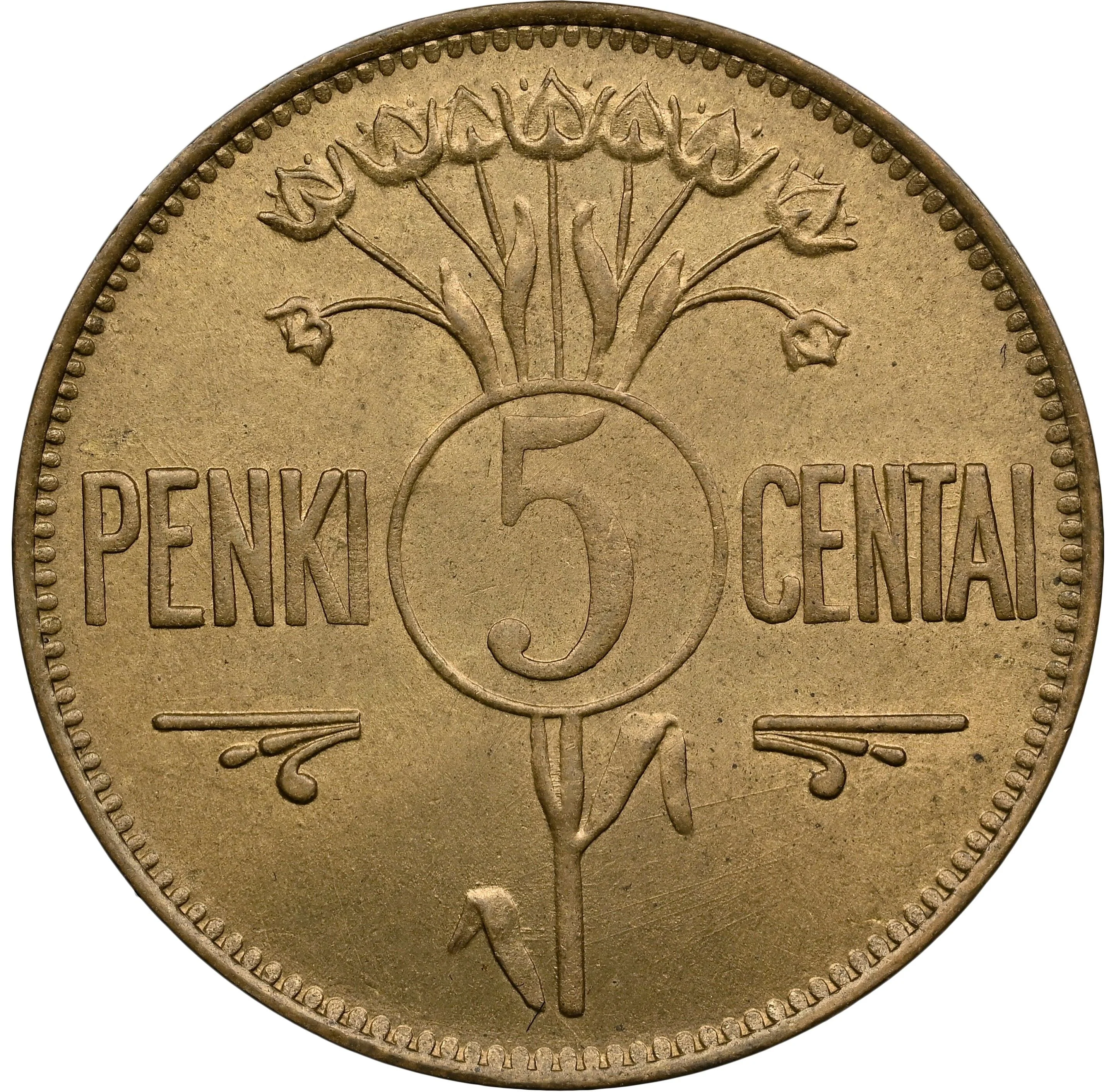
5 centai – Lithuania
Add to wishlist
Lithuania
Context
Material
Diameter: 19 mm
Weight: 2.1 g
Thickness: 1.08 mm
Shape: Round
Composition: Aluminium bronze
Magnetic: No
Technique: Milled
Alignment: Medal alignment
flip
References
KM: #
Numista: #4487
Obverse
Description:
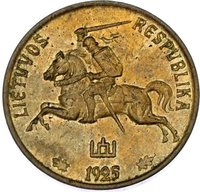
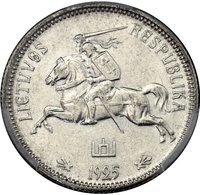
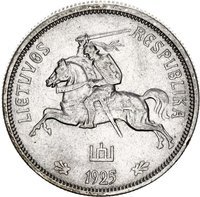
National coat of arms and year
Inscription:
LIETUVOS RESPUBLIKA
1925
1925
Translation:
REPUBLIC OF LITHUANIA
1925
1925
Script: Latin
Language: Lithuanian
Reverse
Edge
Mints
| Name | Mark |
|---|---|
| Kings Norton Metal Company | — |
Mintings
| Year | Mint Mark | Mintage | Quality | Collection |
|---|---|---|---|---|
| 1925 | — | 12,000,000 |
Historical background
In 1925, Lithuania’s currency situation was defined by a period of transition and stabilization following the chaos of World War I and the early years of independence. After declaring independence in 1918, the country initially used a mix of foreign currencies, primarily the German Ostmark and the Russian Ruble, alongside a temporary local currency, the Auksinas. Hyperinflation in the early 1920s, especially from the collapsing German Mark, severely disrupted the economy, creating an urgent need for a stable, national monetary system.
The cornerstone reform came with the introduction of the national currency, the Litas, in 1922. However, its full stabilization was achieved in 1925 with the pivotal Law on the Litas, which established a gold standard. The law fixed the Litas to gold at a rate of 1 US dollar = 10 Litas, a rate chosen for its simplicity and alignment with the pre-war gold ruble. This move was underpinned by a substantial gold and foreign exchange reserve, largely built from a controversial but successful agricultural export loan secured from Great Britain.
Consequently, by the end of 1925, Lithuania possessed one of the most stable currencies in Europe. The gold-backed Litas fostered confidence, attracted foreign investment, and facilitated a period of significant economic growth and modernization in the late 1920s. This hard-currency policy, however, also tied Lithuania's economy closely to international gold movements, a position it maintained until the global economic shocks of the 1930s eventually forced it to abandon the gold standard in 1936.
The cornerstone reform came with the introduction of the national currency, the Litas, in 1922. However, its full stabilization was achieved in 1925 with the pivotal Law on the Litas, which established a gold standard. The law fixed the Litas to gold at a rate of 1 US dollar = 10 Litas, a rate chosen for its simplicity and alignment with the pre-war gold ruble. This move was underpinned by a substantial gold and foreign exchange reserve, largely built from a controversial but successful agricultural export loan secured from Great Britain.
Consequently, by the end of 1925, Lithuania possessed one of the most stable currencies in Europe. The gold-backed Litas fostered confidence, attracted foreign investment, and facilitated a period of significant economic growth and modernization in the late 1920s. This hard-currency policy, however, also tied Lithuania's economy closely to international gold movements, a position it maintained until the global economic shocks of the 1930s eventually forced it to abandon the gold standard in 1936.
Series: 1925 Lithuania circulation coins
🌱 Common