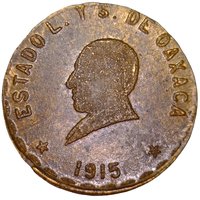
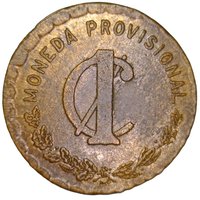
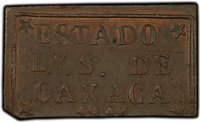
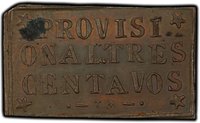
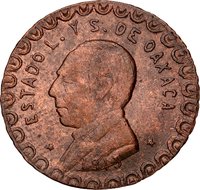
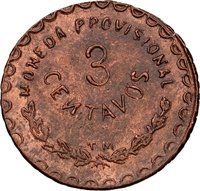
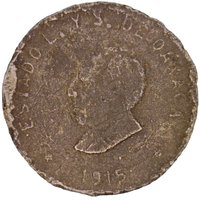
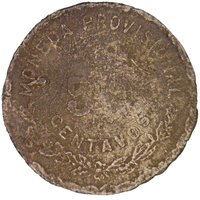
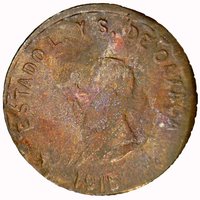
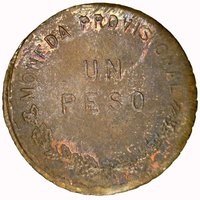
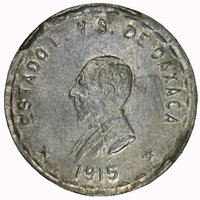
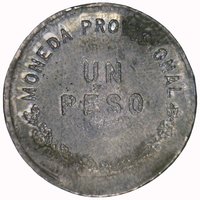
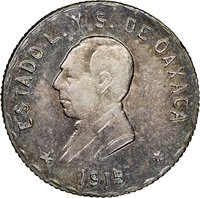
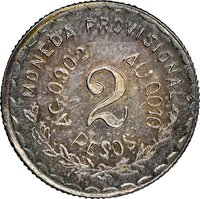
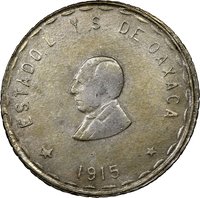
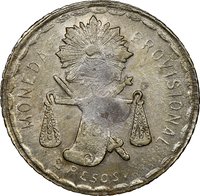
In 1915, the State of Oaxaca, like much of revolutionary Mexico, was engulfed in a severe monetary crisis. The collapse of the Porfirio Díaz regime and the ensuing civil war between rival factions (Constitutionalists, Conventionists, and Zapatistas) shattered the national economy and destroyed confidence in the federal currency. The Huerta government's earlier over-issuance of paper money had caused rampant inflation, and by 1915, Constitutionalist leader Venustiano Carranza's own
bilimbiques were becoming nearly worthless as they flooded the market without silver backing. This hyperinflation rendered federal notes practically unusable in Oaxaca, creating a vacuum in everyday commerce.
In response, Oaxaca resorted to extreme localization of currency. The state government, under the control of Constitutionalist General Jesús Carranza (brother of Venustiano), began issuing its own emergency paper money, known as
vales or
cartones. Simultaneously, municipal authorities, local merchants, haciendas, and even factories issued their own private scrip and tokens to facilitate trade and payroll within their limited spheres of influence. Most significantly, however, the population fell back on the historical bedrock of value: silver and gold. Pre-revolutionary coins, such as the old
peso fuerte and even Spanish colonial pieces, re-emerged as the preferred and most trusted media of exchange, effectively pushing the discredited paper notes out of circulation for substantial transactions.
This fragmented monetary landscape crippled regional trade and exacerbated hardship. The proliferation of unbacked local scripts created a confusing and unreliable patchwork of currencies, each with limited acceptance outside its immediate area. The hoarding of precious metal coinage further contracted the money supply for daily use. Consequently, barter became a widespread necessity for basic goods and services. Thus, in 1915, Oaxaca's currency situation was defined by the rejection of central authority's paper, a desperate retreat into localized trust systems and silver, and a regression to pre-monetary exchange, reflecting the profound social and economic dislocation of the Revolution's most violent phase.