

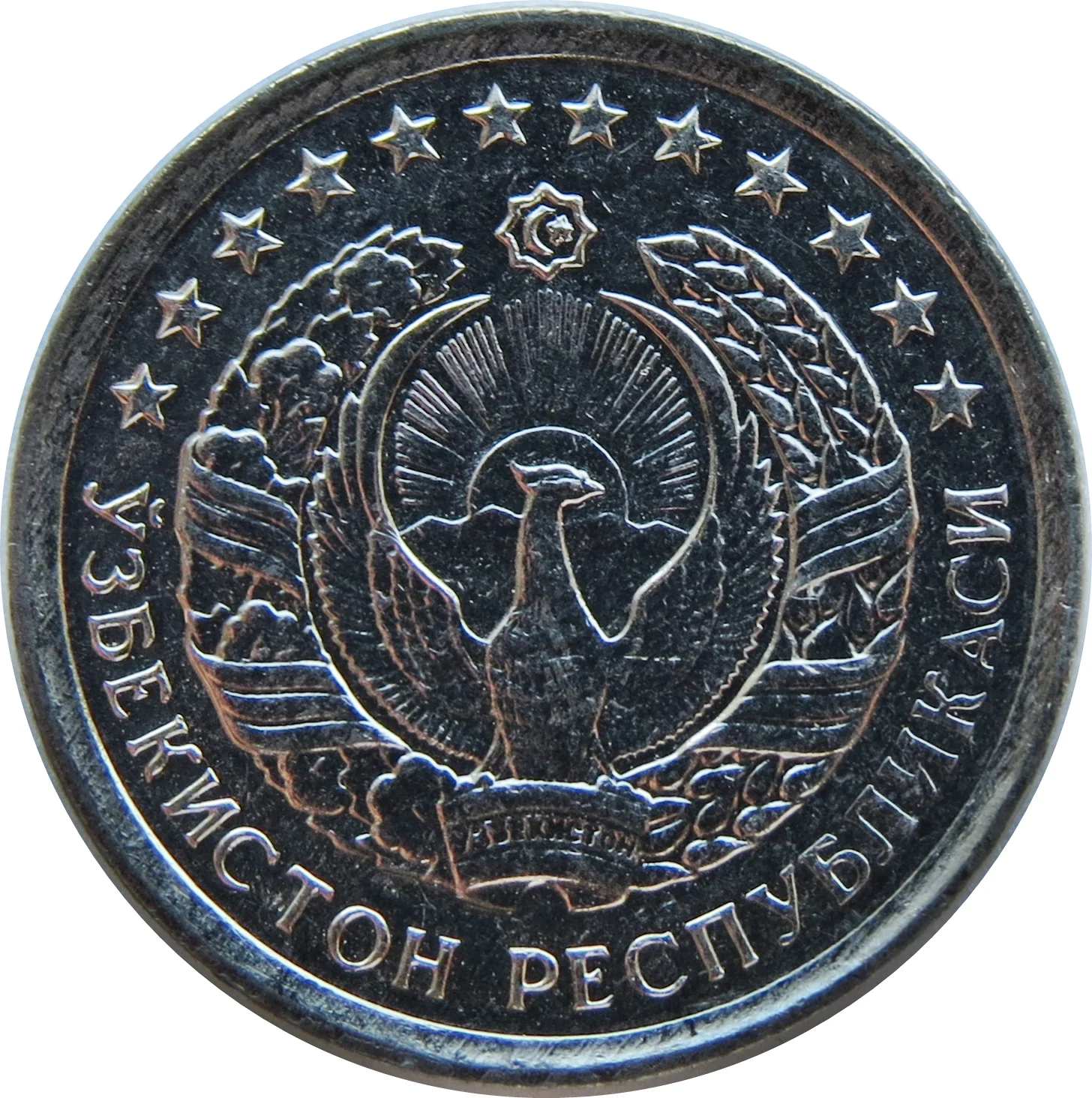
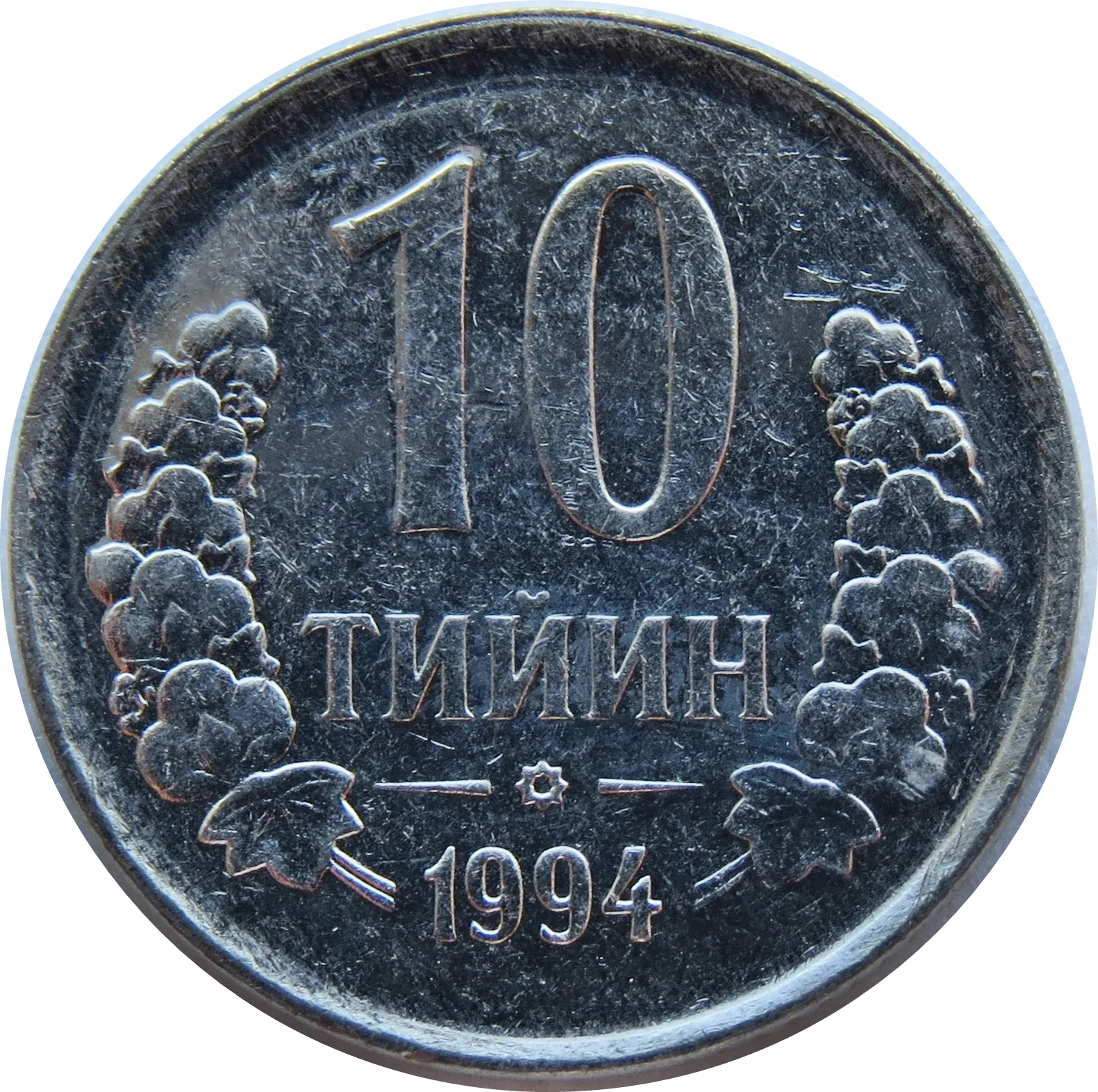
10 tiyin – Uzbekistan
Add to wishlist
Uzbekistan
Context
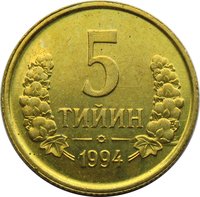
Year: 1994
Issuer: Uzbekistan
Period:
(since 1991)
Currency:
(since 1994)
Demonetization: 1 March 2020
Material
References
KM: #
Numista: #1474
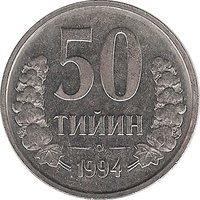
Value
Exchange value: 0.10 UZS
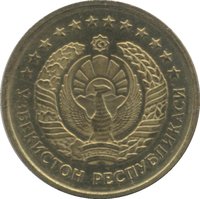
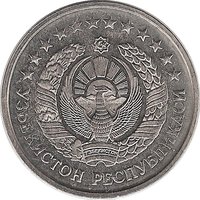
Obverse
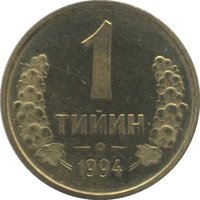
Reverse
Edge
Reeded
Categories
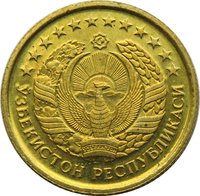
| Symbol> Sun |
| Animal> Bird |
| Mythology> Fantastic animal |
| Symbols> Coat of Arms |
Mints
| Name | Mark |
|---|---|
| Tashkent | — |
| Pobjoy Mint | (PM) |
Mintings
| Year | Mint Mark | Mintage | Quality | Collection |
|---|---|---|---|---|
| 1994 | — | — |
Historical background
In 1994, Uzbekistan was grappling with the severe economic consequences of the Soviet Union's dissolution, with its currency situation being a central point of crisis. The country had introduced the som-coupon as an interim currency in November 1993 to replace the Soviet ruble, but this was not a full-fledged national currency. Instead, it functioned as a parallel monetary instrument that rapidly depreciated due to a lack of public confidence, excessive money printing to cover budget deficits, and the collapse of inter-republican trade. Hyperinflation soared, officially estimated at over 300% for the year, eroding savings and wages and pushing much of the population into a barter economy.
The government's response was characterized by strict administrative controls and a reluctance to embrace the shock therapy seen in other post-Soviet states. Authorities maintained a fixed official exchange rate for the som-coupon that was vastly overvalued compared to the black-market rate, creating a huge disparity. This policy led to severe currency shortages, as individuals and businesses hoarded cash or traded on the lucrative black market, where the Uzbek currency traded for a fraction of its official value. The controls also fostered corruption and stifled foreign investment, as the regime prioritized political stability over economic liberalization.
This unstable period set the stage for a major monetary reform. On July 1, 1994, the government attempted to stabilize the situation by introducing the Uzbekistani som (UZS) as the permanent national currency, replacing the som-coupon at a rate of 1 new som for 1,000 old coupons. However, the fundamental issues of monetary overhang, inflation, and a non-convertible currency persisted. The reform was largely a nominal denomination change without accompanying market reforms, meaning the new som immediately began its own pattern of controlled devaluation and black-market activity, defining Uzbekistan's isolated and inflationary economic path for years to come.
The government's response was characterized by strict administrative controls and a reluctance to embrace the shock therapy seen in other post-Soviet states. Authorities maintained a fixed official exchange rate for the som-coupon that was vastly overvalued compared to the black-market rate, creating a huge disparity. This policy led to severe currency shortages, as individuals and businesses hoarded cash or traded on the lucrative black market, where the Uzbek currency traded for a fraction of its official value. The controls also fostered corruption and stifled foreign investment, as the regime prioritized political stability over economic liberalization.
This unstable period set the stage for a major monetary reform. On July 1, 1994, the government attempted to stabilize the situation by introducing the Uzbekistani som (UZS) as the permanent national currency, replacing the som-coupon at a rate of 1 new som for 1,000 old coupons. However, the fundamental issues of monetary overhang, inflation, and a non-convertible currency persisted. The reform was largely a nominal denomination change without accompanying market reforms, meaning the new som immediately began its own pattern of controlled devaluation and black-market activity, defining Uzbekistan's isolated and inflationary economic path for years to come.
🌱 Very Common