

300 dollars – Australia
Add to wishlist
Australia
Context
Material
References
Numista: #447842
Value
Exchange value: 300 AUD
Bullion value: $24675.31
Inflation-adjusted value: 393.32 AUD
Obverse
Description:
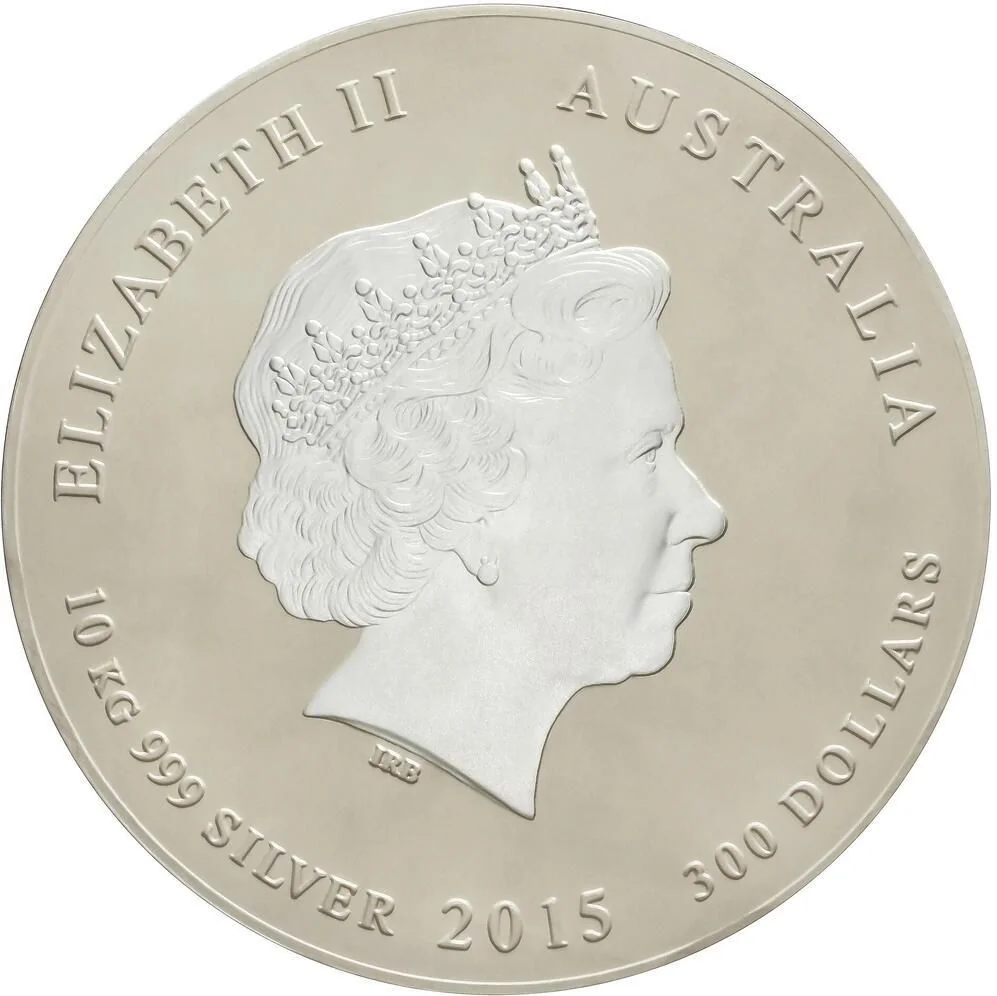
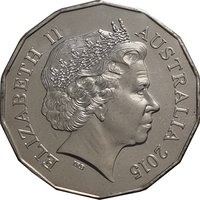
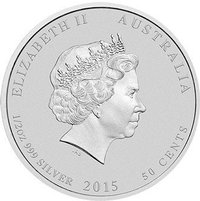
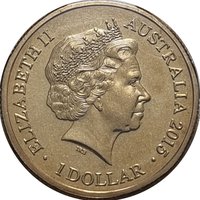
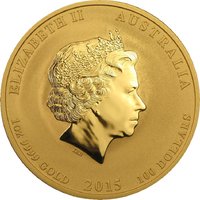
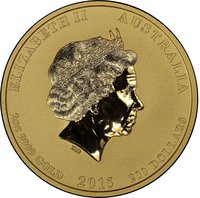
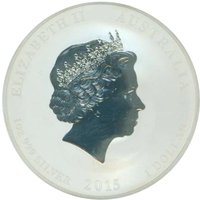
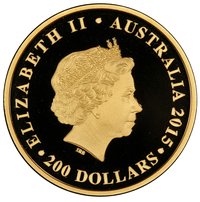
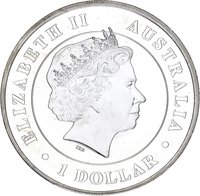
Queen Elizabeth II facing right in the Girls of Great Britain and Ireland Tiara.
Inscription:
ELIZABETH II AUSTRALIA
IRB
10KG 999 SILVER 2015 300 DOLLARS
IRB
10KG 999 SILVER 2015 300 DOLLARS
Script: Latin
Designer: Ian Rank-Broadley
Reverse
Description:
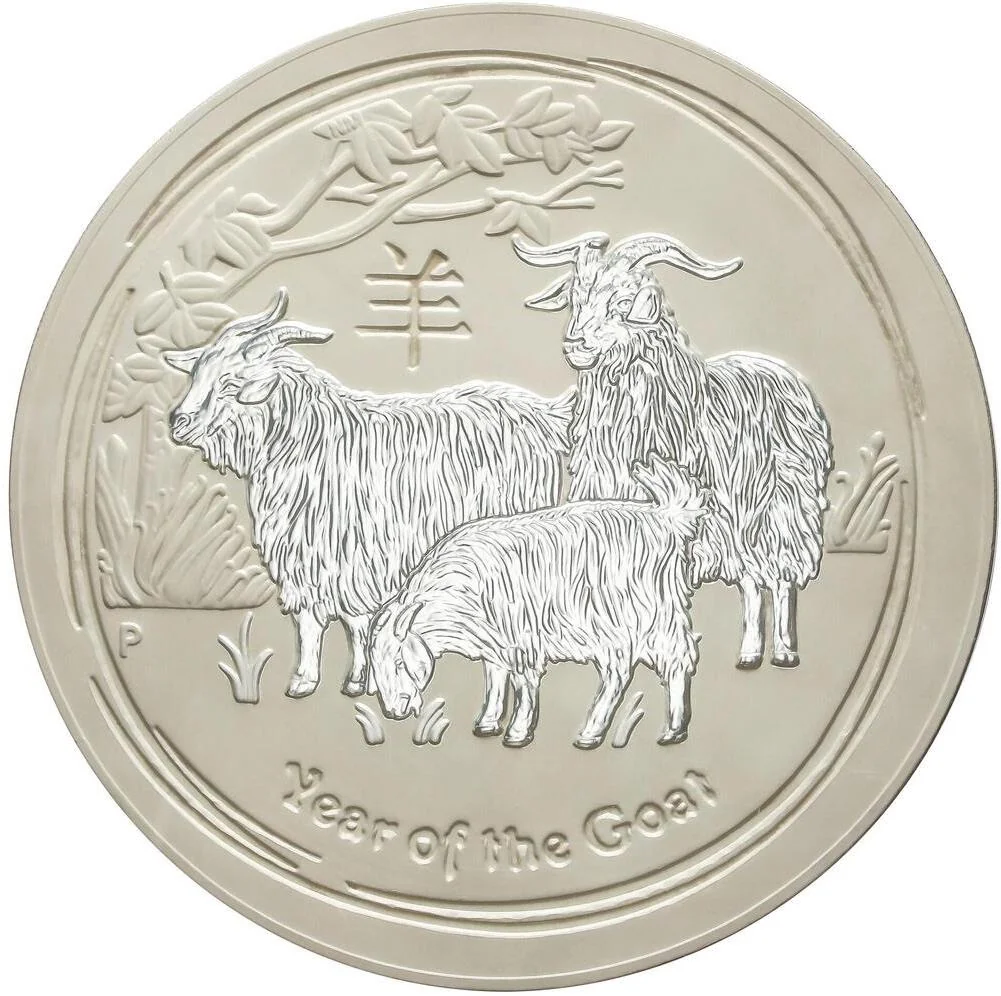
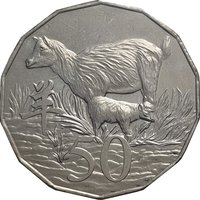
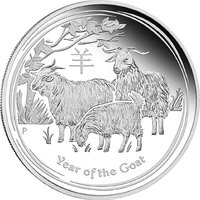
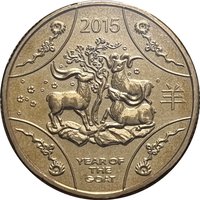
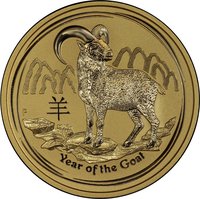
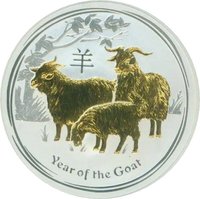
Three stylized goats in a rural scene, with the Chinese character for "goat" above.
Inscription:
NM
羊
P
Year of the Goat
羊
P
Year of the Goat
Translation:
Year of the Goat
Language: Chinese
Designer: Natasha Muhl
Edge
Reeded
Categories
| Animal> Goat |
| Astrology> Chinese calendar |
Mints
| Name | Mark |
|---|---|
| Perth Mint | P |
Mintings
| Year | Mint Mark | Mintage | Quality | Collection |
|---|---|---|---|---|
| 2015 | P | 150 | BU |
Historical background
In 2015, Australia’s currency situation was defined by a sharp and sustained depreciation of the Australian dollar (AUD), which moved from trading above parity with the US dollar in early 2013 to falling below 70 US cents by the end of 2015. This significant decline, roughly 15% in 2015 alone, was primarily driven by two interconnected factors: a dramatic plunge in global commodity prices, particularly for iron ore and coal, and a divergent monetary policy path between Australia and the United States. As a major exporter, Australia's terms of trade fell sharply with the end of the mining investment boom, reducing foreign demand for AUD. Concurrently, the US Federal Reserve moved towards tightening policy, strengthening the US dollar, while the Reserve Bank of Australia (RBA) cut its cash rate to a record low of 2.0% in May to stimulate the non-mining sectors of the economy, further widening the interest rate differential.
The RBA publicly welcomed the currency's fall, describing it as a necessary economic adjustment. Governor Glenn Stevens notably stated the dollar needed to be closer to 75 US cents, and later suggested 65 cents might be preferable, as a lower AUD acted as a shock absorber for the economy. It helped cushion the blow from falling resource prices by boosting the international competitiveness of export-oriented industries like tourism, education, and manufacturing, while also supporting domestic producers against cheaper imports. This "rebalancing act" was central to policy, aiming to facilitate a smooth transition from mining-led growth to broader-based economic drivers.
However, the depreciation also presented challenges, contributing to increased costs for imported goods and overseas travel for households. Financial markets experienced volatility, with the AUD's slide becoming a focal point for global currency traders betting on further declines. Overall, the currency situation in 2015 reflected a period of significant economic transition for Australia, where a weaker dollar was viewed not as a crisis, but as a crucial and deliberate mechanism to support growth and employment during a post-boom adjustment.
The RBA publicly welcomed the currency's fall, describing it as a necessary economic adjustment. Governor Glenn Stevens notably stated the dollar needed to be closer to 75 US cents, and later suggested 65 cents might be preferable, as a lower AUD acted as a shock absorber for the economy. It helped cushion the blow from falling resource prices by boosting the international competitiveness of export-oriented industries like tourism, education, and manufacturing, while also supporting domestic producers against cheaper imports. This "rebalancing act" was central to policy, aiming to facilitate a smooth transition from mining-led growth to broader-based economic drivers.
However, the depreciation also presented challenges, contributing to increased costs for imported goods and overseas travel for households. Financial markets experienced volatility, with the AUD's slide becoming a focal point for global currency traders betting on further declines. Overall, the currency situation in 2015 reflected a period of significant economic transition for Australia, where a weaker dollar was viewed not as a crisis, but as a crucial and deliberate mechanism to support growth and employment during a post-boom adjustment.
Series: Lunar Series II



✨ Legendary