

10 cash – South Xinjiang
Add to wishlist
China
Context
Years: 1855–1857
Country: China
Issuer: South Xinjiang
Ruler: Xianfeng
Currency:
(1759—1909)
Demonetized: Yes
Material
Diameter: 26 mm
Weight: 5.86 g
Thickness: 1.6 mm
Shape: Round with a square hole
Composition: Copper
Magnetic: No
Technique: Cast
Alignment: Medal alignment
flip
References
Numista: #44761
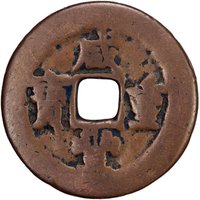
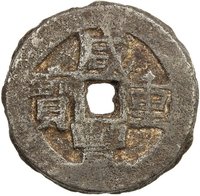
Obverse
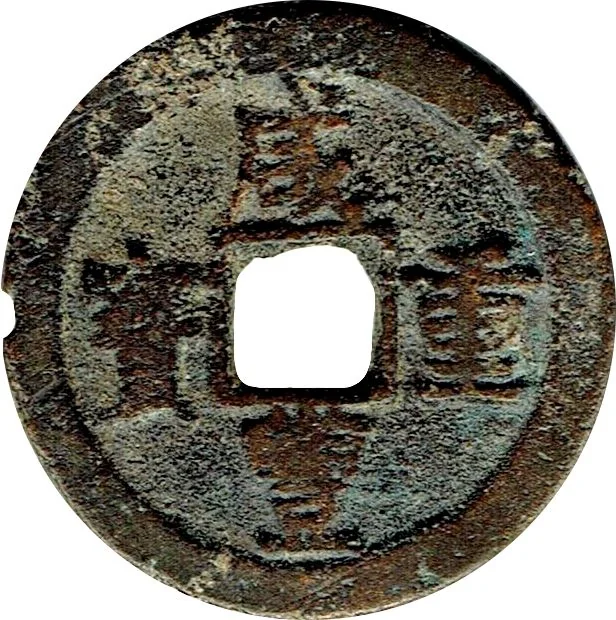
Description:
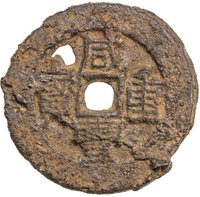
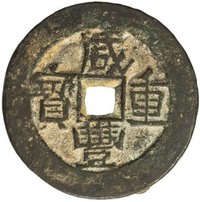
Four Chinese characters read vertically, right to left.
Inscription:
咸
寶 重
豐
寶 重
豐
Translation:
Xianfeng
Treasured Coin
Valuable
Treasured Coin
Valuable
Scripts: Chinese (traditional, regular script)
Language: Chinese
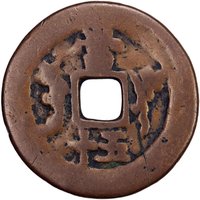
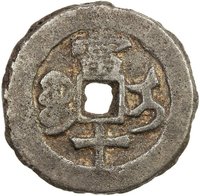
Reverse
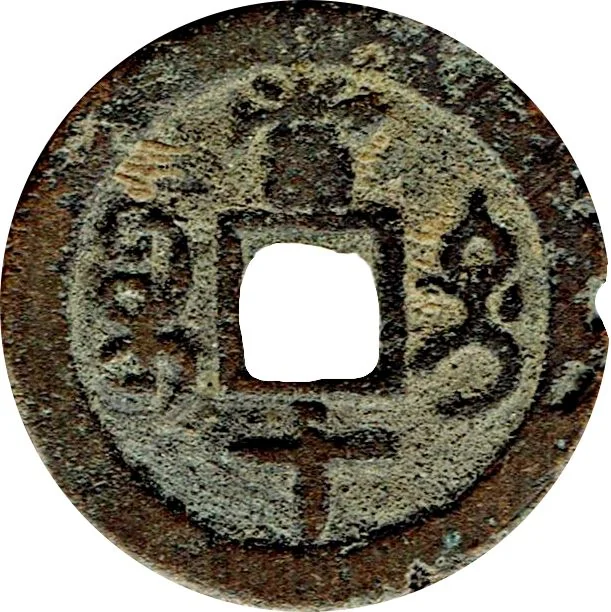
Description:
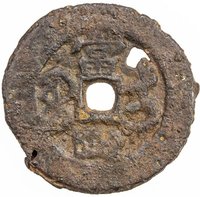
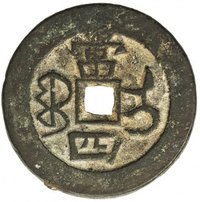
Chinese ideograms top and bottom, two Manchu words flank the hole vertically.
Inscription:
當
ᠪᠣᠣ ᡩᡳ
十
ᠪᠣᠣ ᡩᡳ
十
Translation:
Ten Boo Di
Edge
Plain
Mints
| Name | Mark |
|---|---|
| Urumchi Mint | — |
Mintings
| Year | Mint Mark | Mintage | Quality | Collection |
|---|---|---|---|---|
| — | — | — |
Historical background
In 1855, the currency situation in South Xinjiang (the Tarim Basin region) was defined by profound instability and complexity, a direct consequence of the area's contested political status. The region was nominally under Qing Dynasty control, administered from the distant city of Ili, but local power largely resided with Muslim Begs and Khwajas, with frequent rebellions challenging Qing authority. This fractured governance resulted in a chaotic monetary environment where official Qing coinage—primarily silver sycees and copper-alloy cash coins with both Manchu and Turkic scripts—circulated alongside a multitude of older, locally minted coins from various Central Asian khanates and even handmade pūl coins of minimal value. The scarcity of official mint output led to severe coin shortages, encouraging widespread counterfeiting and the use of worn, clipped, and foreign coins in daily trade.
The fundamental problem was a crippling lack of standardized, trusted small-denomination currency for local markets. High-value silver ingots were impractical for everyday transactions, while the official copper cash coins were in insufficient supply. This vacuum was filled by a debased and heterogeneous mix of private, local, and archaic currencies, leading to wildly fluctuating exchange rates and rampant fraud. Merchants and peasants alike faced constant uncertainty, as the value of coins could differ drastically from one oasis town to the next (such as Kashgar, Khotan, or Yarkand), severely hampering commerce and tax collection. The monetary disorder reflected and exacerbated the Qing's weakening administrative grip, as the state failed to provide a basic pillar of economic stability.
This unstable currency system became both a symptom and a cause of the rising social unrest that would culminate in the massive Muslim Rebellion (Dungan Revolt) just a few years later. The economic hardship inflicted by the unreliable money supply fueled popular discontent against Qing rule, while also impairing the government's ability to pay troops and administer the region effectively. Thus, in 1855, the currency chaos in South Xinjiang was not merely a financial issue but a critical indicator of the collapsing imperial order, contributing directly to the region's descent into widespread violence and the temporary overthrow of Qing authority in the following decade.
The fundamental problem was a crippling lack of standardized, trusted small-denomination currency for local markets. High-value silver ingots were impractical for everyday transactions, while the official copper cash coins were in insufficient supply. This vacuum was filled by a debased and heterogeneous mix of private, local, and archaic currencies, leading to wildly fluctuating exchange rates and rampant fraud. Merchants and peasants alike faced constant uncertainty, as the value of coins could differ drastically from one oasis town to the next (such as Kashgar, Khotan, or Yarkand), severely hampering commerce and tax collection. The monetary disorder reflected and exacerbated the Qing's weakening administrative grip, as the state failed to provide a basic pillar of economic stability.
This unstable currency system became both a symptom and a cause of the rising social unrest that would culminate in the massive Muslim Rebellion (Dungan Revolt) just a few years later. The economic hardship inflicted by the unreliable money supply fueled popular discontent against Qing rule, while also impairing the government's ability to pay troops and administer the region effectively. Thus, in 1855, the currency chaos in South Xinjiang was not merely a financial issue but a critical indicator of the collapsing imperial order, contributing directly to the region's descent into widespread violence and the temporary overthrow of Qing authority in the following decade.

💎 Extremely Rare