

1 Rand – South Africa
South Africa
Context
Years: 1965–1968
Issuer: South Africa 
Period:
(since 1961)
Currency:
(since 1961)
Total mintage: 1,534,000
Material
References
KM: #Click to copy to clipboard71.1
Numista: #14736
Value
Exchange value: 1 ZAR = $0.06
Bullion value: $34.23
Inflation-adjusted value: 108.27 ZAR
Obverse
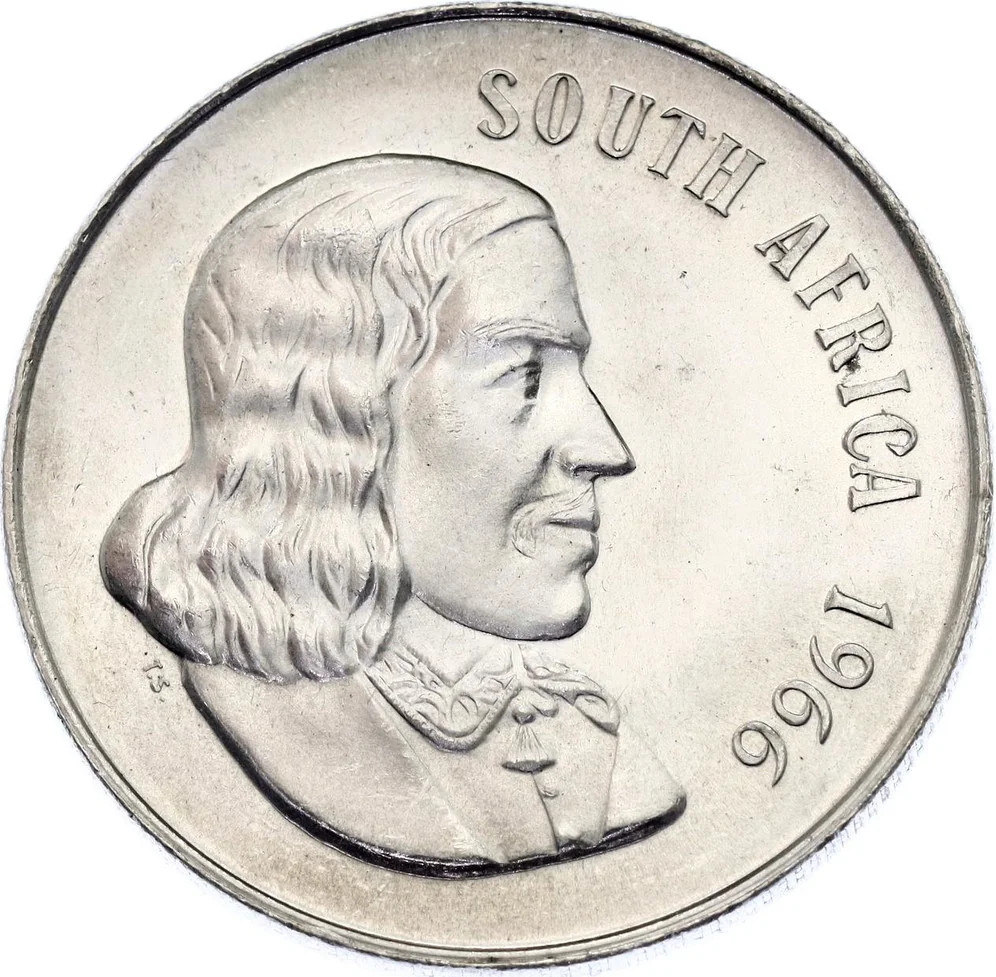
Description:
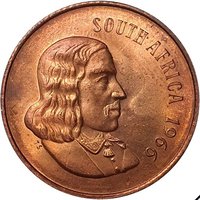
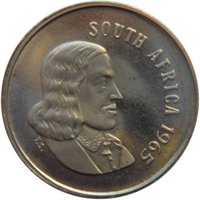
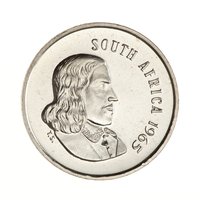
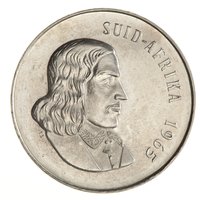
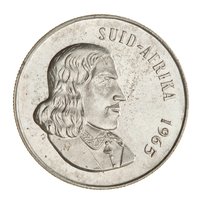
Jan van Riebeeck bust right, English inscription and date.
Inscription:
SOUTH AFRICA 1966
T.S.
T.S.
Script: Latin
Engraver: Tommy Sasseen
Reverse
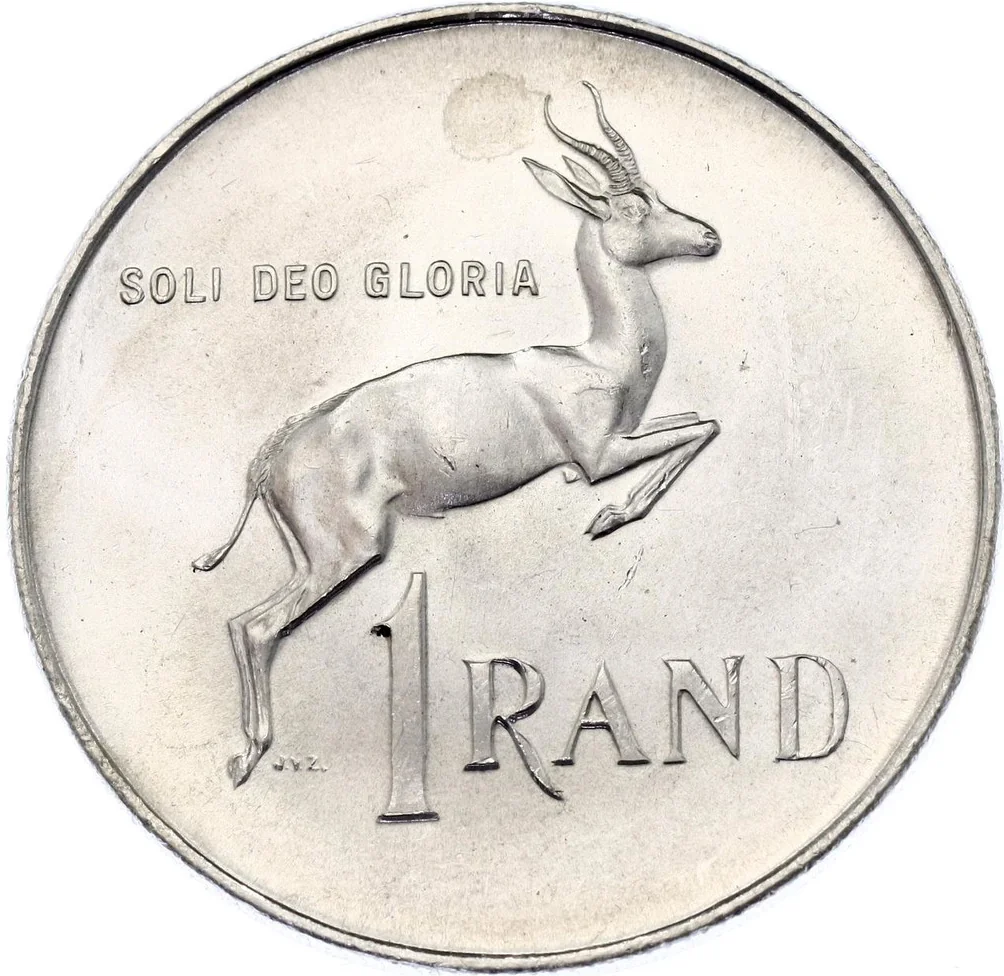
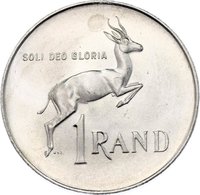
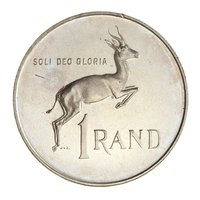
Description:
Springbok over value
Inscription:
SOLI DEO GLORIA
J.V Z.
1 RAND
J.V Z.
1 RAND
Script: Latin
Engraver: Jan van Zyl
Edge
Reeded
Categories
| Animal> Cow |
| Person> Politician |
Mintings
| Year | Mint Mark | Mintage | Quality | Collection |
|---|---|---|---|---|
| 1965 | — | 25,000 | Proof | |
| 1965 | — | — | ||
| 1966 | — | 1,434,000 | ||
| 1968 | — | 50,000 | In sets | |
| 1968 | — | 25,000 | Proof |
Historical background
In 1965, South Africa's currency situation was defined by its position within the Sterling Area and the political pressures of the apartheid era. The country operated on a sterling-exchange standard, with the South African pound (equal to one British pound sterling) backed by reserves held in London. This arrangement facilitated trade with the Commonwealth and provided stability, but it also created vulnerability to British economic policy and growing international condemnation of apartheid. The government maintained strict exchange controls, introduced in 1960 following the Sharpeville Massacre and subsequent capital flight, to insulate its gold-rich economy from sanctions and preserve foreign reserves.
Economically, the period was one of robust growth, fueled by high gold prices and foreign investment, which bolstered the currency's strength. However, this prosperity was deeply uneven and built on the discriminatory structures of apartheid. The financial system was highly regulated, with the South African Reserve Bank managing monetary policy to support state objectives, including funding for parastatals and infrastructure projects that reinforced racial segregation. The reliance on gold exports, which accounted for over 70% of foreign earnings, made the currency susceptible to fluctuations in the global gold market.
The year 1965 itself was a point of transition. While still using the South African pound, the Decimal Coinage Act was passed, setting the stage for a significant change. This legislation paved the way for the introduction of the rand in 1967, a move intended to modernize the financial system and assert a distinct national monetary identity. Thus, 1965 represents the final years of the old sterling-linked system, with the country poised to decimalize and rename its currency amidst both internal economic confidence and mounting external isolation.
Economically, the period was one of robust growth, fueled by high gold prices and foreign investment, which bolstered the currency's strength. However, this prosperity was deeply uneven and built on the discriminatory structures of apartheid. The financial system was highly regulated, with the South African Reserve Bank managing monetary policy to support state objectives, including funding for parastatals and infrastructure projects that reinforced racial segregation. The reliance on gold exports, which accounted for over 70% of foreign earnings, made the currency susceptible to fluctuations in the global gold market.
The year 1965 itself was a point of transition. While still using the South African pound, the Decimal Coinage Act was passed, setting the stage for a significant change. This legislation paved the way for the introduction of the rand in 1967, a move intended to modernize the financial system and assert a distinct national monetary identity. Thus, 1965 represents the final years of the old sterling-linked system, with the country poised to decimalize and rename its currency amidst both internal economic confidence and mounting external isolation.
🌱 Common