

5 rand – South Africa
Add to wishlist
South Africa
Context
Years: 2012–2022
Issuer: South Africa
Period:
(since 1961)
Currency:
(since 1961)
Total mintage: 6,000
Material
References
KM: #
Numista: #44727
Value
Exchange value: 5 ZAR
Inflation-adjusted value: 9.82 ZAR
Obverse
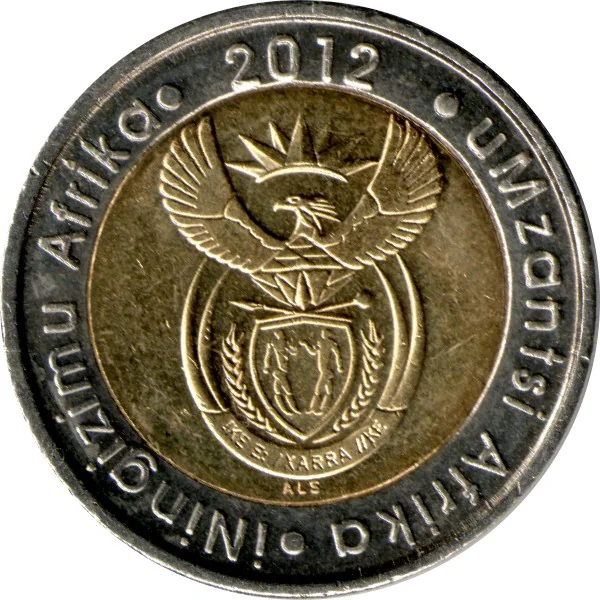
Description:
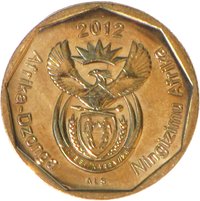
National emblem
Inscription:
iNingizimu Afrika• 2012 • uMzantsi Afrika •
ǃKE E: ǀXARRA ǁKE
ALS
ǃKE E: ǀXARRA ǁKE
ALS
Translation:
South Africa 2012 South Africa
Diverse People Unite
Diverse People Unite
Script: Latin
Engraver: Arthur Sutherland
Reverse
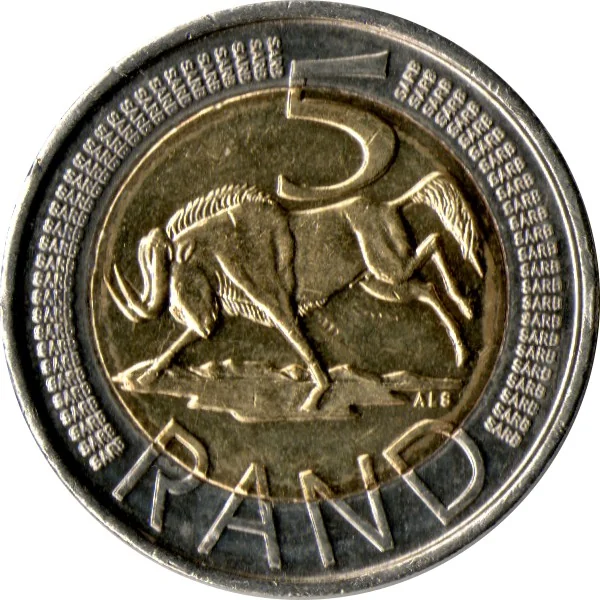
Description:
Wildebeest. 'SARB' for South African Reserve Bank repeats 32 times on the left and 25 on the right.
Inscription:
5
ALS
RAND
ALS
RAND
Script: Latin
Engraver: Arthur Sutherland
Edge
Security edge with lettering
Legend:
SARB R5 SARB R5 SARB R5 SARB R5 SARB R5 SARB R5 SARB R5 SARB R5 SARB R5 SARB R5
Mintings
| Year | Mint Mark | Mintage | Quality | Collection |
|---|---|---|---|---|
| 2012 | — | — | ||
| 2012 | — | — | BU | |
| 2012 | — | 3,000 | Proof | |
| 2022 | — | — | ||
| 2022 | — | — | BU | |
| 2022 | — | 3,000 | Proof |
Historical background
In 2012, South Africa's currency, the rand, navigated a turbulent year characterized by significant volatility and pronounced weakness against major currencies like the US dollar. The primary external pressure stemmed from the Eurozone sovereign debt crisis, which spurred global risk aversion and led investors to flee emerging market assets, including the rand, in favor of perceived safe havens. Domestically, the economy faced mounting challenges, including slowing growth, high unemployment, and frequent labour unrest, most notably the violent strikes in the Marikana platinum mining sector in August, which severely damaged investor confidence and triggered sharp sell-offs.
The rand's value fluctuated dramatically, losing roughly 10% against the dollar over the course of the year, with periods of intense pressure. The South African Reserve Bank (SARB) faced a complex policy dilemma: while a weaker rand benefited exporters, it also imported inflation by making fuel and food more expensive. With consumer price inflation persistently breaching the upper limit of the SARB's 3-6% target band, the Bank maintained a cautious stance, keeping interest rates on hold at multi-decade lows (5.0% for the repo rate) to support fragile economic growth, despite the inflationary pressures from the currency.
Overall, 2012 highlighted South Africa's vulnerability to global financial sentiment and domestic socio-economic tensions. The rand acted as a barometer for these combined pressures, with its weakness reflecting concerns over the country's current account deficit, reliance on volatile portfolio inflows, and unresolved structural economic issues. The year set the stage for continued currency sensitivity and difficult trade-offs for monetary policy in the years that followed.
The rand's value fluctuated dramatically, losing roughly 10% against the dollar over the course of the year, with periods of intense pressure. The South African Reserve Bank (SARB) faced a complex policy dilemma: while a weaker rand benefited exporters, it also imported inflation by making fuel and food more expensive. With consumer price inflation persistently breaching the upper limit of the SARB's 3-6% target band, the Bank maintained a cautious stance, keeping interest rates on hold at multi-decade lows (5.0% for the repo rate) to support fragile economic growth, despite the inflationary pressures from the currency.
Overall, 2012 highlighted South Africa's vulnerability to global financial sentiment and domestic socio-economic tensions. The rand acted as a barometer for these combined pressures, with its weakness reflecting concerns over the country's current account deficit, reliance on volatile portfolio inflows, and unresolved structural economic issues. The year set the stage for continued currency sensitivity and difficult trade-offs for monetary policy in the years that followed.
🌱 Common