

2 shillings – South Africa
Add to wishlist
South Africa
Context
Years: 1953–1960
Issuer: South Africa
Ruler: Elizabeth II
Currency:
(1825—1961)
Demonetization: 31 March 1961
Total mintage: 23,950,487
Material
References
KM: #
Numista: #14731
Value
Bullion value: $14.11
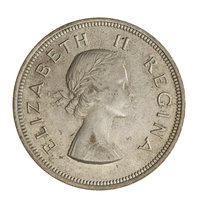
Obverse
Description:
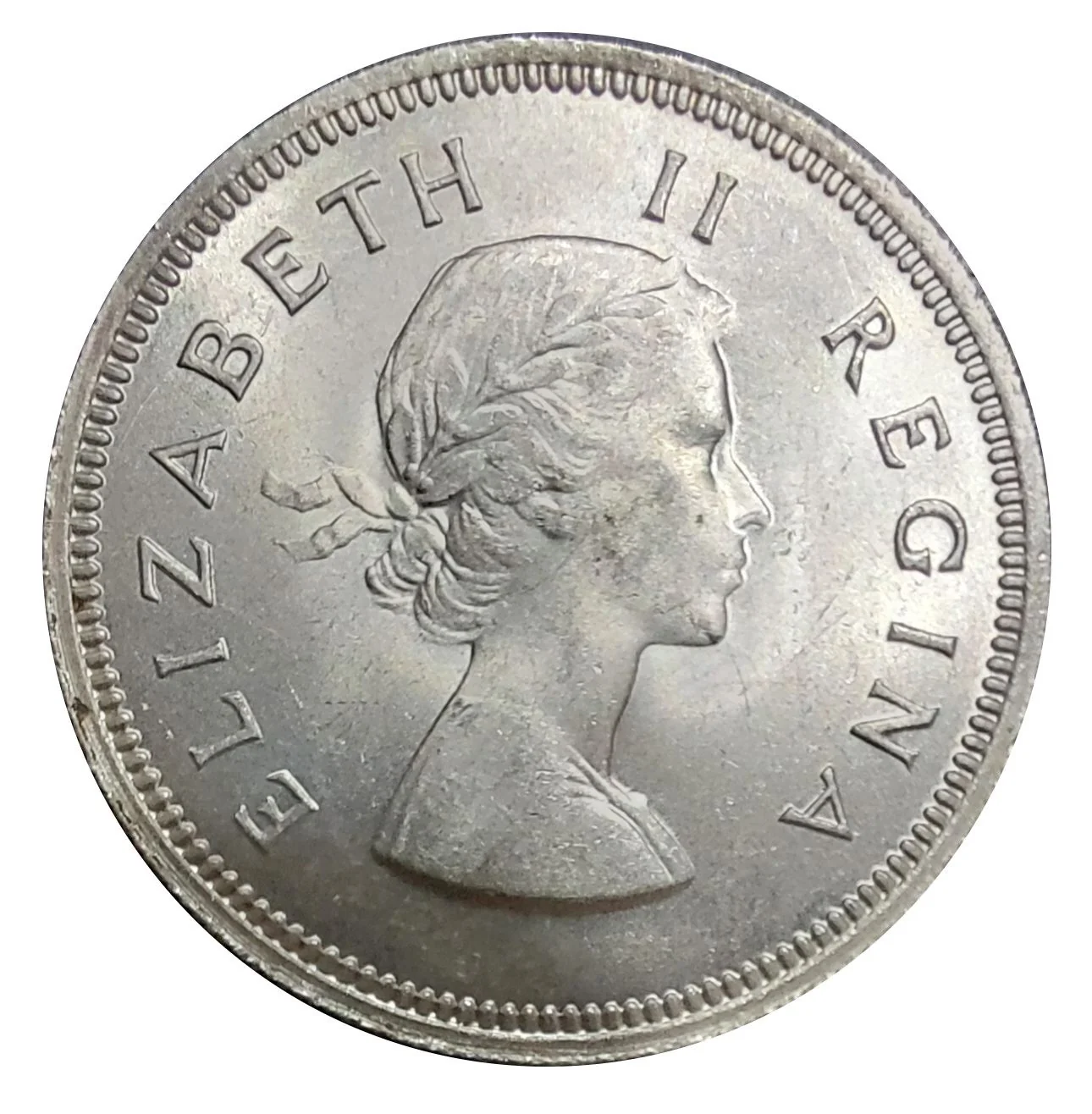
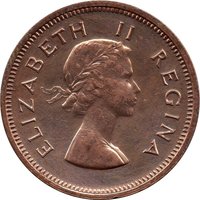
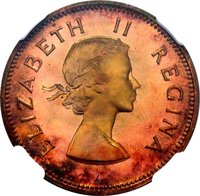
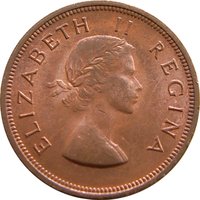
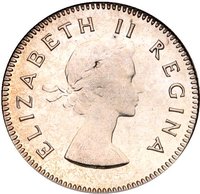
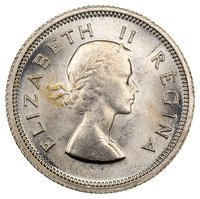
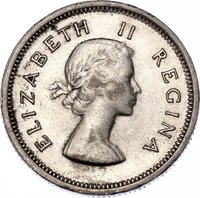
Young laureate bust of Elizabeth II right, legend surrounding, engraver's initials on truncation.
Inscription:
ELIZABETH II REGINA
Translation:
Elizabeth the Second, Queen
Script: Latin
Language: Latin
Engraver: Mary Gillick
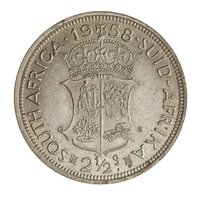
Reverse
Description:
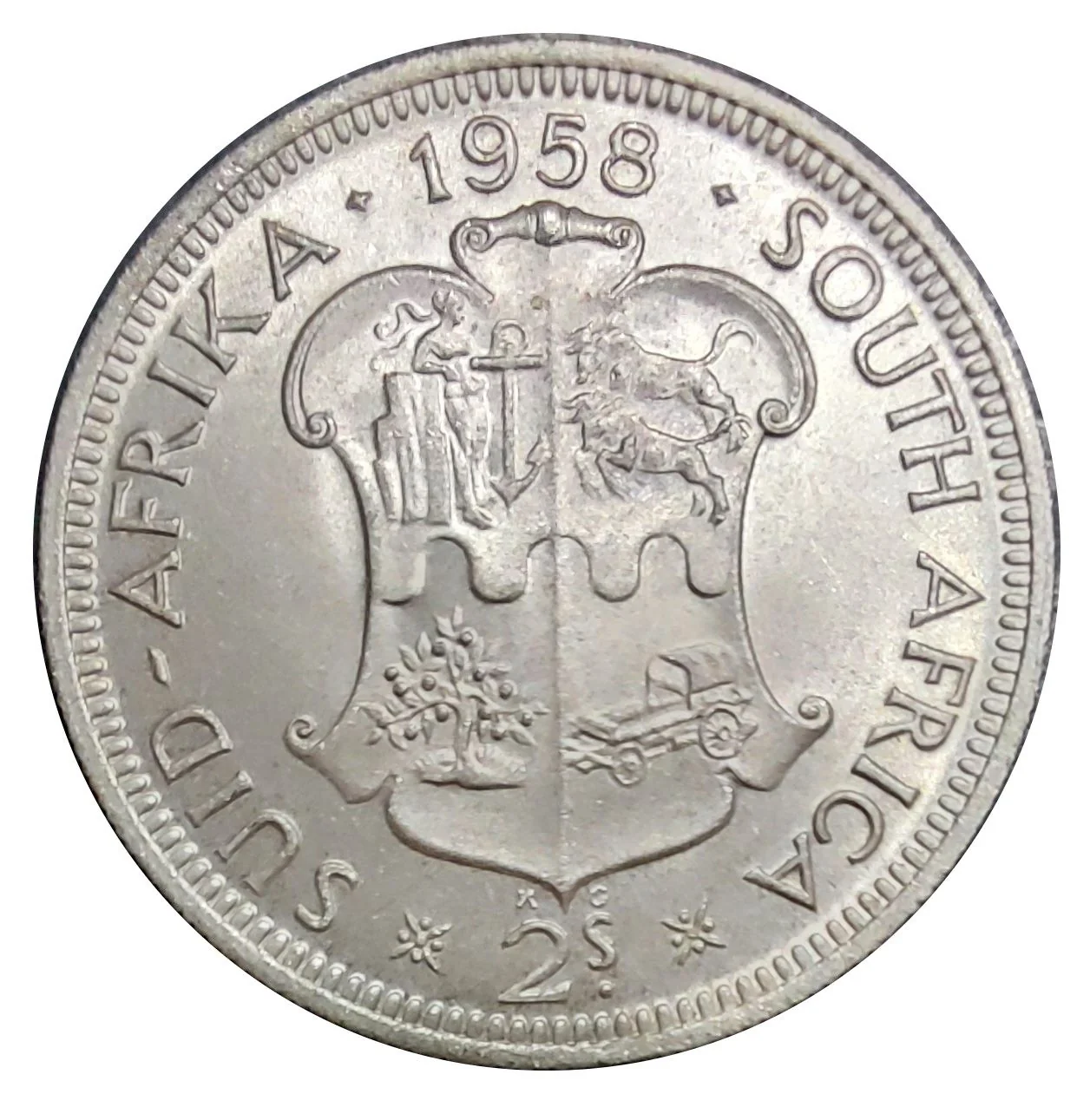
Quartered shield with date, surrounded by legend, denomination and initials below.
Inscription:
SUID-AFRIKA · 1958 · SOUTH AFRICA
K G
2s
K G
2s
Script: Latin
Engraver: George Kruger Gray
Edge
Reeded
Mints
| Name | Mark |
|---|---|
| Pretoria | — |
Mintings
| Year | Mint Mark | Mintage | Quality | Collection |
|---|---|---|---|---|
| 1953 | — | 3,274,171 | ||
| 1953 | — | 5,000 | Proof | |
| 1954 | — | 5,865,691 | ||
| 1954 | — | 3,150 | Proof | |
| 1955 | — | 2,850 | Proof | |
| 1955 | — | 3,744,778 | ||
| 1956 | — | 1,700 | Proof | |
| 1956 | — | 2,549,244 | ||
| 1957 | — | 1,130 | Proof | |
| 1957 | — | 2,507,209 | ||
| 1958 | — | 2,820,502 | ||
| 1958 | — | 985 | Proof | |
| 1959 | — | 1,219,116 | ||
| 1959 | — | 950 | Proof | |
| 1960 | — | 1,950,651 | ||
| 1960 | — | 3,360 | Proof |
Historical background
In 1953, South Africa's currency situation was defined by its recent transition to a fully independent monetary system following the establishment of the South African Reserve Bank (SARB) in 1921 and, more significantly, the dissolution of the Sterling Area link during World War II. The country had formally abandoned the gold standard in 1932, but the pound sterling remained a key anchor. This changed in 1948 when the newly elected National Party government began implementing its policy of apartheid and sought greater economic sovereignty. A critical step was the 1949 devaluation of the South African pound, which was pegged to sterling but adjusted independently, signalling a move towards a more autonomous exchange rate policy.
The domestic currency in circulation was the South African pound (£), which was still on a par with sterling but managed separately. The economy was heavily dependent on gold mining, which generated the bulk of the country's foreign exchange earnings and provided a solid foundation for the currency's value. This gold-backed stability, coupled with strict exchange controls introduced in the late 1940s to protect foreign reserves and direct capital, created a relatively stable but isolated financial environment. These controls were designed to prevent capital flight and to support the government's expanding apartheid state expenditures and infrastructure projects.
Looking forward, the monetary landscape of 1953 was on the cusp of significant change. The decade saw intense debate about decimalisation and the creation of a distinctly South African currency, which would culminate in the 1961 introduction of the Rand, replacing the South African pound. Therefore, the currency situation in 1953 was one of managed stability under a commodity-backed regime, but within a politically isolated economy preparing for a symbolic break from its British colonial past through monetary reform.
The domestic currency in circulation was the South African pound (£), which was still on a par with sterling but managed separately. The economy was heavily dependent on gold mining, which generated the bulk of the country's foreign exchange earnings and provided a solid foundation for the currency's value. This gold-backed stability, coupled with strict exchange controls introduced in the late 1940s to protect foreign reserves and direct capital, created a relatively stable but isolated financial environment. These controls were designed to prevent capital flight and to support the government's expanding apartheid state expenditures and infrastructure projects.
Looking forward, the monetary landscape of 1953 was on the cusp of significant change. The decade saw intense debate about decimalisation and the creation of a distinctly South African currency, which would culminate in the 1961 introduction of the Rand, replacing the South African pound. Therefore, the currency situation in 1953 was one of managed stability under a commodity-backed regime, but within a politically isolated economy preparing for a symbolic break from its British colonial past through monetary reform.
🌱 Common