

1 dollar (King George V) – Canada
Add to wishlist
Circulating commemorative coins
Commemoration: 25th Anniversary of the Reign of King George V
Canada
Context
Material
References
KM: #
Numista: #447
Value
Exchange value: 1 CAD
Bullion value: $45.42
Inflation-adjusted value: 22.43 CAD
Obverse
Description:
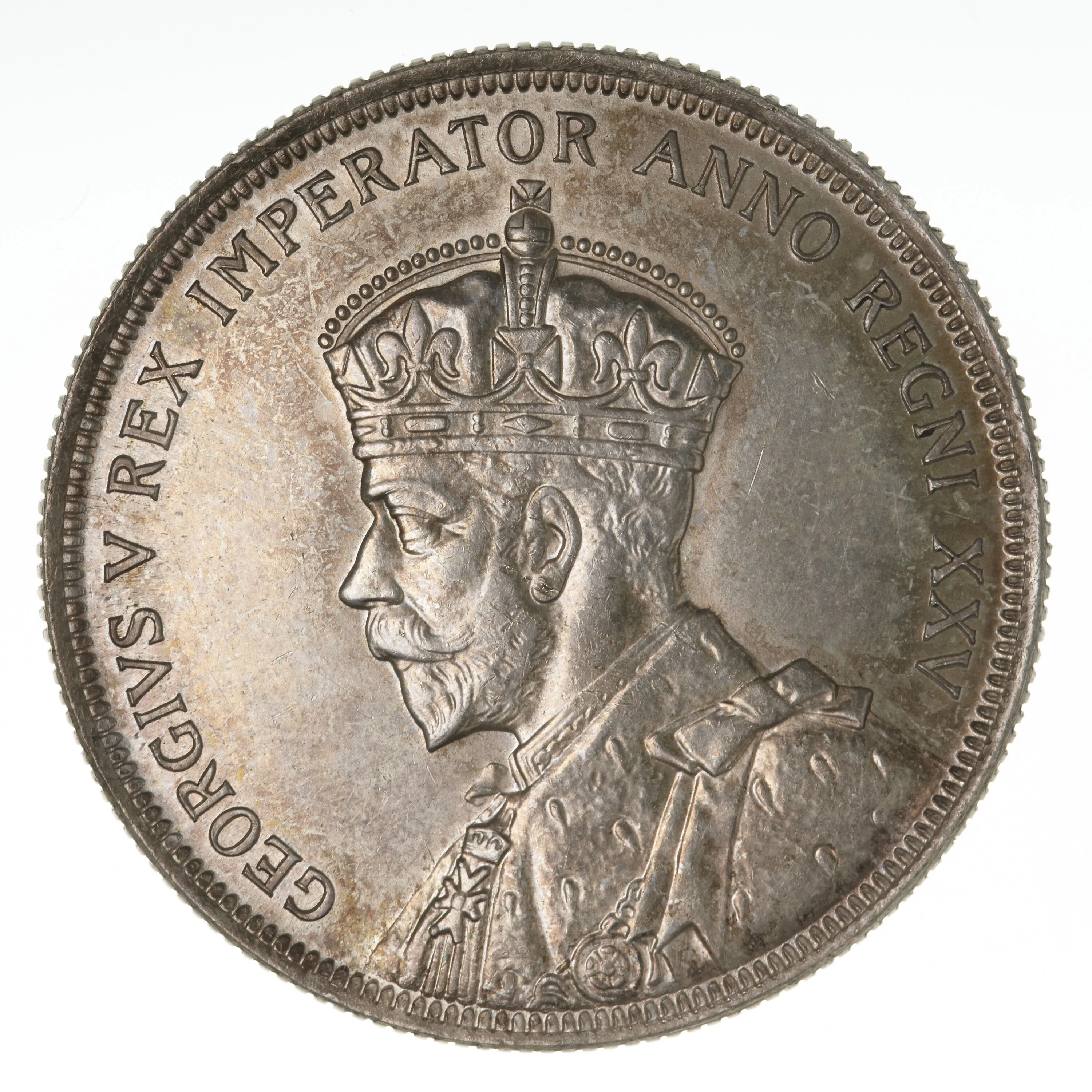
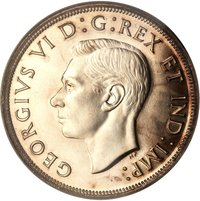
King George V crowned, left-facing bust.
Inscription:
GEORGIVS V REX IMPERATOR ANNO REGNI XXV
Translation:
George V King Emperor In the Year of his Reign 25
Script: Latin
Language: Latin
Engraver: Percy Metcalfe
Reverse
Description:
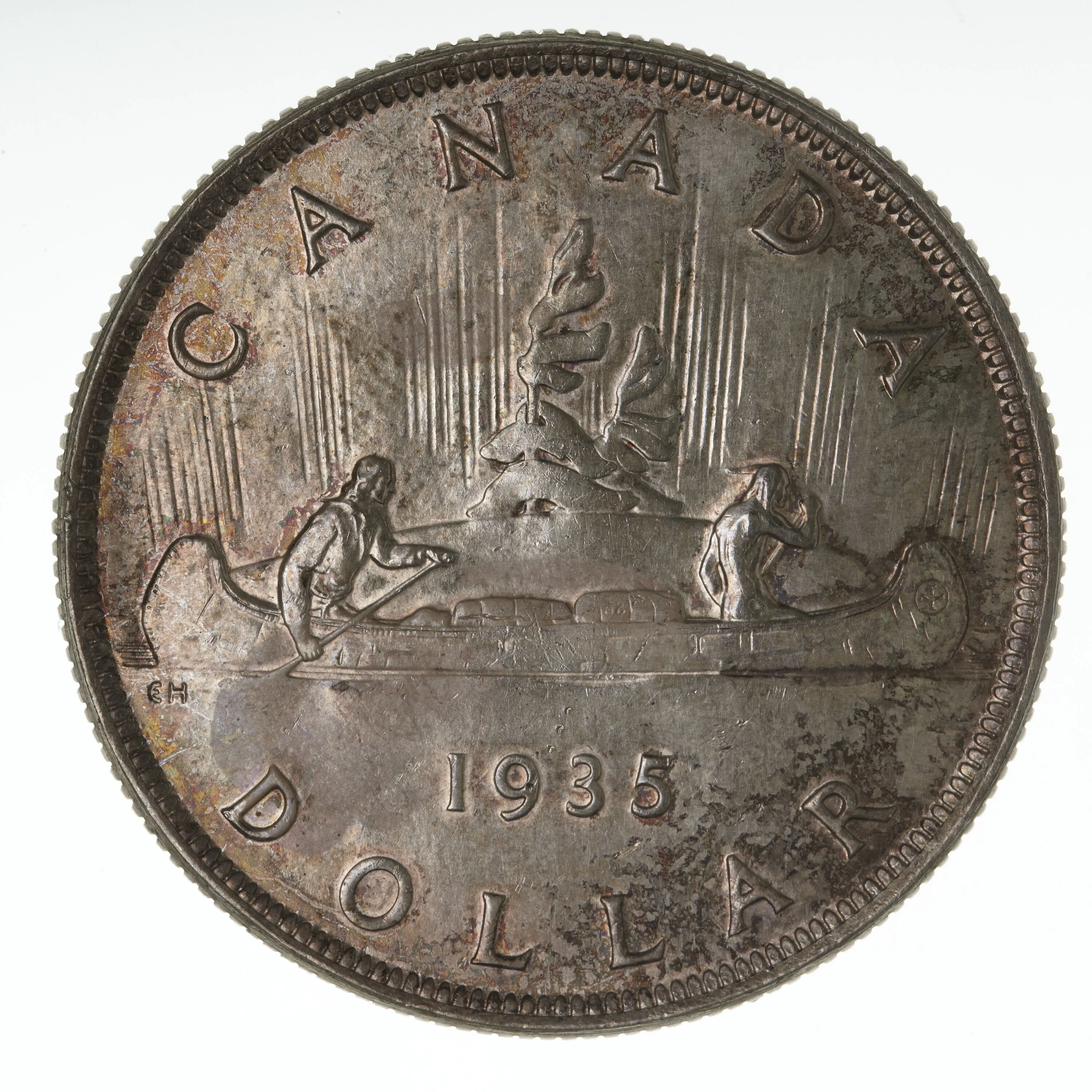
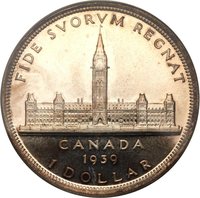
A voyageur and an Aboriginal companion paddle a canoe with H.B. bundles, framed by the face value and "CANADA."
Inscription:
CANADA
1935
DOLLAR
EH
1935
DOLLAR
EH
Script: Latin
Engraver: Emanuel Otto Hahn
Edge
Milled
Categories
| Transportation> Watercraft |
Mints
| Name | Mark |
|---|---|
| Royal Canadian Mint of Ottawa | — |
Mintings
| Year | Mint Mark | Mintage | Quality | Collection |
|---|---|---|---|---|
| 1935 | — | 428,707 |
Historical background
In 1935, Canada’s currency situation was in a state of significant transition, deeply influenced by the lingering Great Depression. The nation was on the cusp of a major monetary shift: the creation of a central bank and a new, distinctly Canadian currency. Prior to this, Canada’s money was a complex patchwork of private bank notes issued by chartered banks, alongside Dominion notes issued by the federal government. This system, while functional, was seen as lacking central control, especially during the economic crisis when confidence in the banking system was fragile and exchange rates with other currencies, particularly the British pound and U.S. dollar, could be volatile.
The key development of the year was the passage of the Bank of Canada Act in July, establishing Canada’s first central bank. Its primary mandates were to regulate credit and currency, act as the government’s fiscal agent, and, crucially, "to mitigate by its influence fluctuations in the general level of production, trade, prices and employment." This was a direct response to the Depression’s deflationary spiral. Concurrently, the Currency, Mint and Exchange Fund Act was passed, authorizing the issuance of a new national currency to be issued by the new central bank, replacing the existing private and Dominion notes.
Therefore, by the end of 1935, the framework for a modern monetary system was in place, though the physical changes were yet to come. The Bank of Canada opened its doors in March 1935 as a privately owned institution (it would be nationalized in 1938), and the first series of "Bank of Canada" notes began circulating in 1935, initially alongside the old chartered bank notes, which were gradually retired. This move centralized monetary policy, provided greater stability, and was a definitive step in asserting Canada’s financial sovereignty as it moved away from a colonial-style currency system toward a managed, independent national currency.
The key development of the year was the passage of the Bank of Canada Act in July, establishing Canada’s first central bank. Its primary mandates were to regulate credit and currency, act as the government’s fiscal agent, and, crucially, "to mitigate by its influence fluctuations in the general level of production, trade, prices and employment." This was a direct response to the Depression’s deflationary spiral. Concurrently, the Currency, Mint and Exchange Fund Act was passed, authorizing the issuance of a new national currency to be issued by the new central bank, replacing the existing private and Dominion notes.
Therefore, by the end of 1935, the framework for a modern monetary system was in place, though the physical changes were yet to come. The Bank of Canada opened its doors in March 1935 as a privately owned institution (it would be nationalized in 1938), and the first series of "Bank of Canada" notes began circulating in 1935, initially alongside the old chartered bank notes, which were gradually retired. This move centralized monetary policy, provided greater stability, and was a definitive step in asserting Canada’s financial sovereignty as it moved away from a colonial-style currency system toward a managed, independent national currency.
🌱 Common