

5 cents – Canada
Add to wishlist
Canada
Context
Years: 1979–1981
Issuer: Canada
Ruler: Elizabeth II
Currency:
(since 1858)
Total mintage: 421,023,989
Material
References
KM: #
Numista: #444616
Value
Exchange value: 0.05 CAD
Inflation-adjusted value: 0.22 CAD
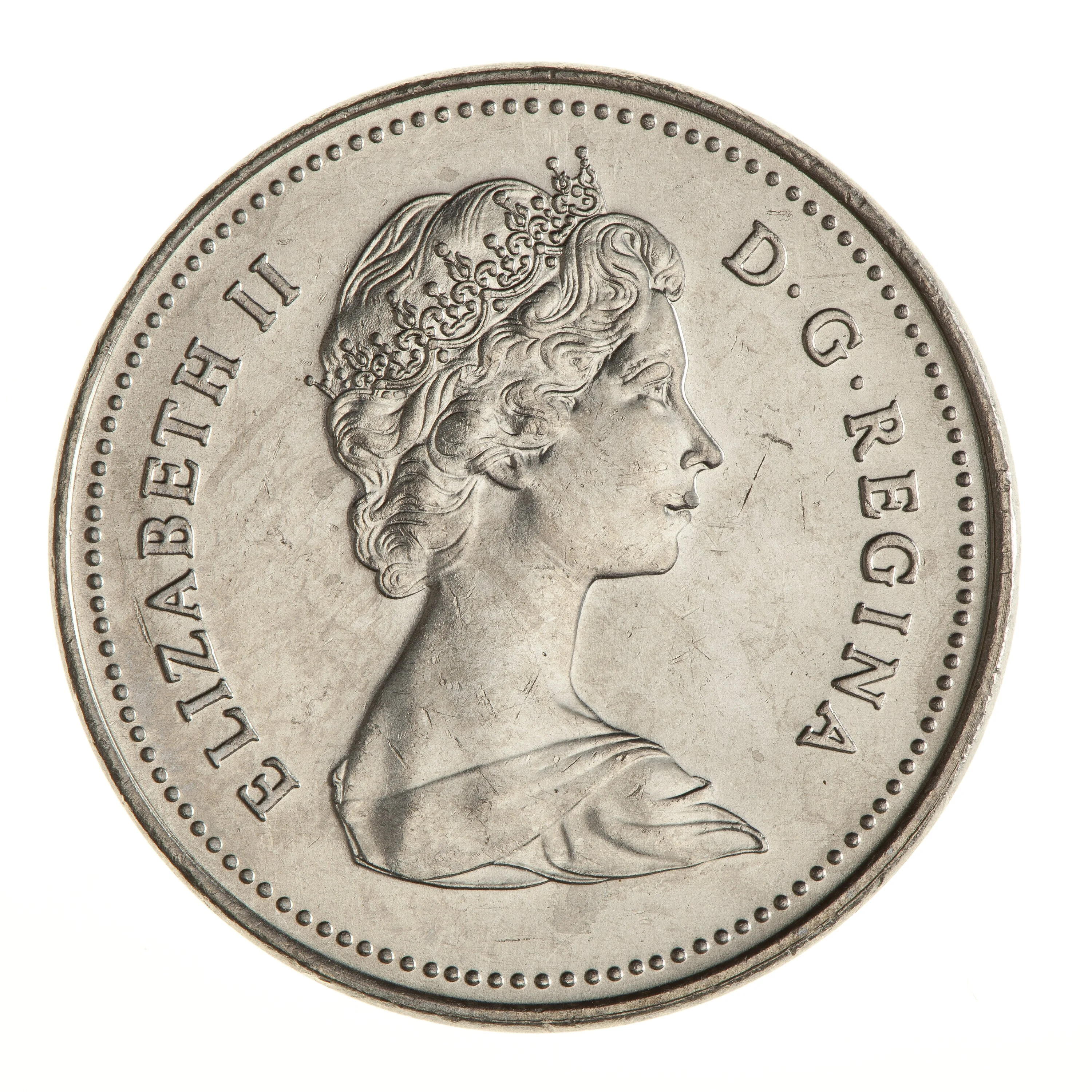
Obverse
Description:
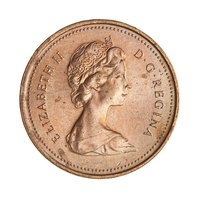
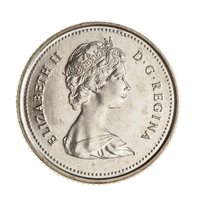
Bust of Queen Elizabeth II at age 37, wearing a tiara and facing right.
Inscription:
ELIZABETH II D·G·REGINA
Translation:
Elizabeth II by the Grace of God Queen
Script: Latin
Designer: Arnold Machin
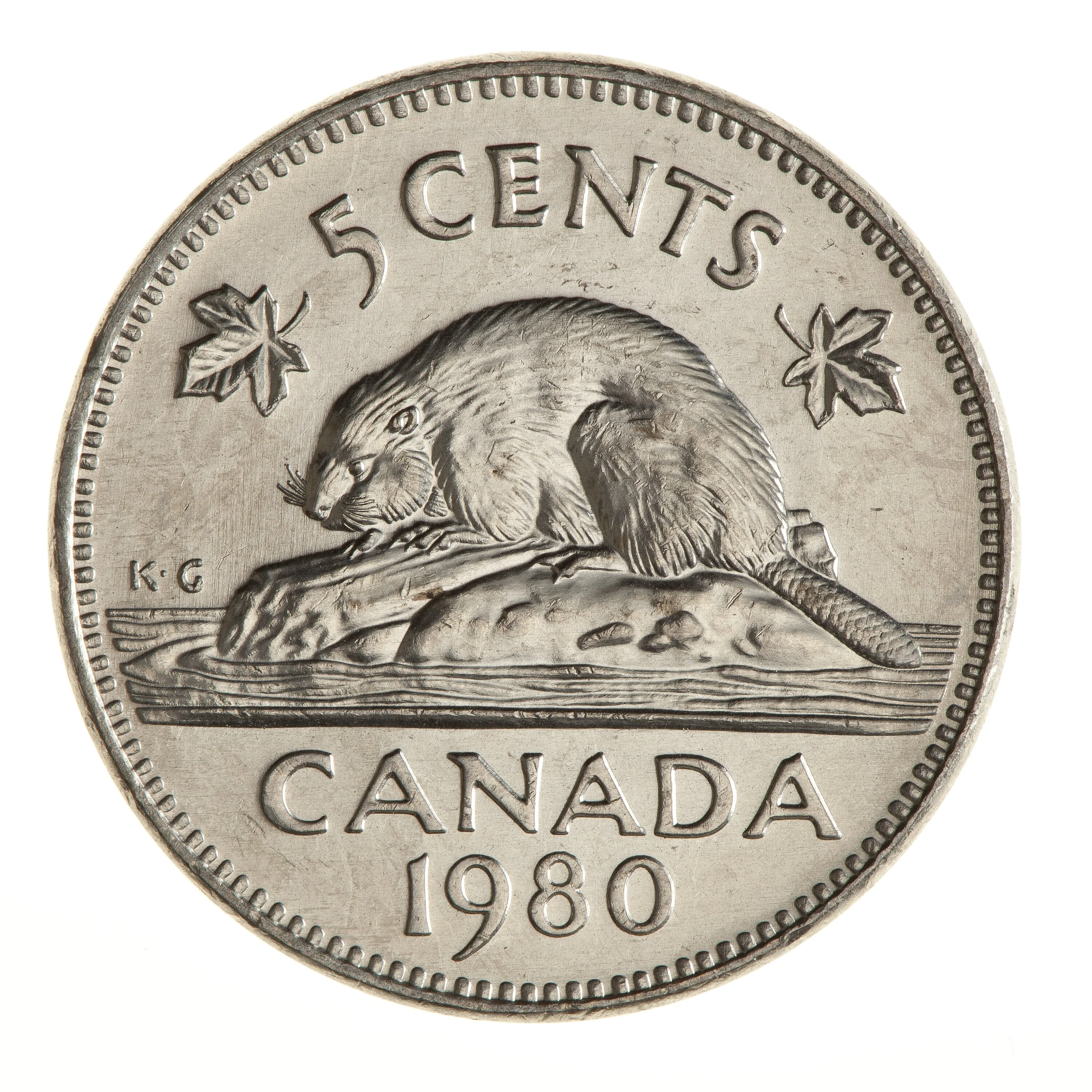
Reverse
Description:
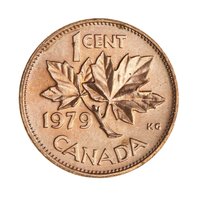
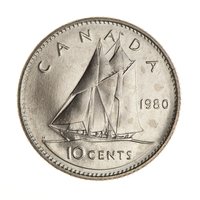
Castor canadensis above "CANADA," flanked by maple leaves with the face value.
Inscription:
5 CENTS
CANADA
1979
K·G
CANADA
1979
K·G
Script: Latin
Engraver: Thomas Shingles
Designer: George Kruger Gray
Edge
Plain
Mints
| Name | Mark |
|---|---|
| Royal Canadian Mint of Winnipeg | — |
Mintings
| Year | Mint Mark | Mintage | Quality | Collection |
|---|---|---|---|---|
| 1979 | — | 186,295,825 | ||
| 1979 | — | 187,624 | Prooflike | |
| 1980 | — | 134,878,000 | ||
| 1980 | — | 169,390 | Prooflike | |
| 1981 | — | 99,107,900 | ||
| 1981 | — | 199,000 | Proof | |
| 1981 | — | 186,250 | Prooflike |
Historical background
In 1979, Canada's currency situation was characterized by persistent inflation and a volatile Canadian dollar, set against a backdrop of global economic uncertainty. Domestically, inflation remained stubbornly high, averaging around 9% for the year, eroding purchasing power and driving the Bank of Canada to maintain a tight monetary policy with high interest rates. This period followed the inflationary shocks of the 1970s oil crises, and the newly elected Progressive Conservative government under Prime Minister Joe Clark faced significant pressure to control prices without stifling economic growth.
The Canadian dollar experienced notable fluctuations, influenced heavily by commodity prices, particularly oil. As a net energy exporter, Canada benefited from rising global oil prices following the 1979 Iranian Revolution, which provided support for the currency. However, this strength was tempered by broader concerns over the nation's large fiscal deficits and a loss of confidence in the government's ability to manage the economy. The dollar traded in a wide range, reflecting the tension between these supportive and negative factors.
Ultimately, the currency climate of 1979 was one of transition and pressure. The Clark government's focus on fiscal restraint, including a controversial proposed gasoline tax, proved politically untenable and contributed to its defeat in a budget vote in December, leading to its fall after less than a year in power. This political instability added another layer of uncertainty for the currency, setting the stage for the more radical anti-inflation measures, including high interest rates and wage and price controls, that would follow in the early 1980s under a returning Liberal government.
The Canadian dollar experienced notable fluctuations, influenced heavily by commodity prices, particularly oil. As a net energy exporter, Canada benefited from rising global oil prices following the 1979 Iranian Revolution, which provided support for the currency. However, this strength was tempered by broader concerns over the nation's large fiscal deficits and a loss of confidence in the government's ability to manage the economy. The dollar traded in a wide range, reflecting the tension between these supportive and negative factors.
Ultimately, the currency climate of 1979 was one of transition and pressure. The Clark government's focus on fiscal restraint, including a controversial proposed gasoline tax, proved politically untenable and contributed to its defeat in a budget vote in December, leading to its fall after less than a year in power. This political instability added another layer of uncertainty for the currency, setting the stage for the more radical anti-inflation measures, including high interest rates and wage and price controls, that would follow in the early 1980s under a returning Liberal government.
Series: 1979 Canada circulation coins
🌱 Very Common