

50 Ngwee (United Nations) – Zambia
Circulating commemorative coins
Commemoration: 40th Anniversary of the United Nations
Zambia
Context

Material
Diameter: 30 mm
Weight: 11.6 g
Shape: Dodecagonal
Composition: Copper-nickel
Technique: Milled
Alignment: Medal alignment
flip
References
KM: #Click to copy to clipboard24
Numista: #4442
Value
Exchange value: 0.50 ZMK
Obverse
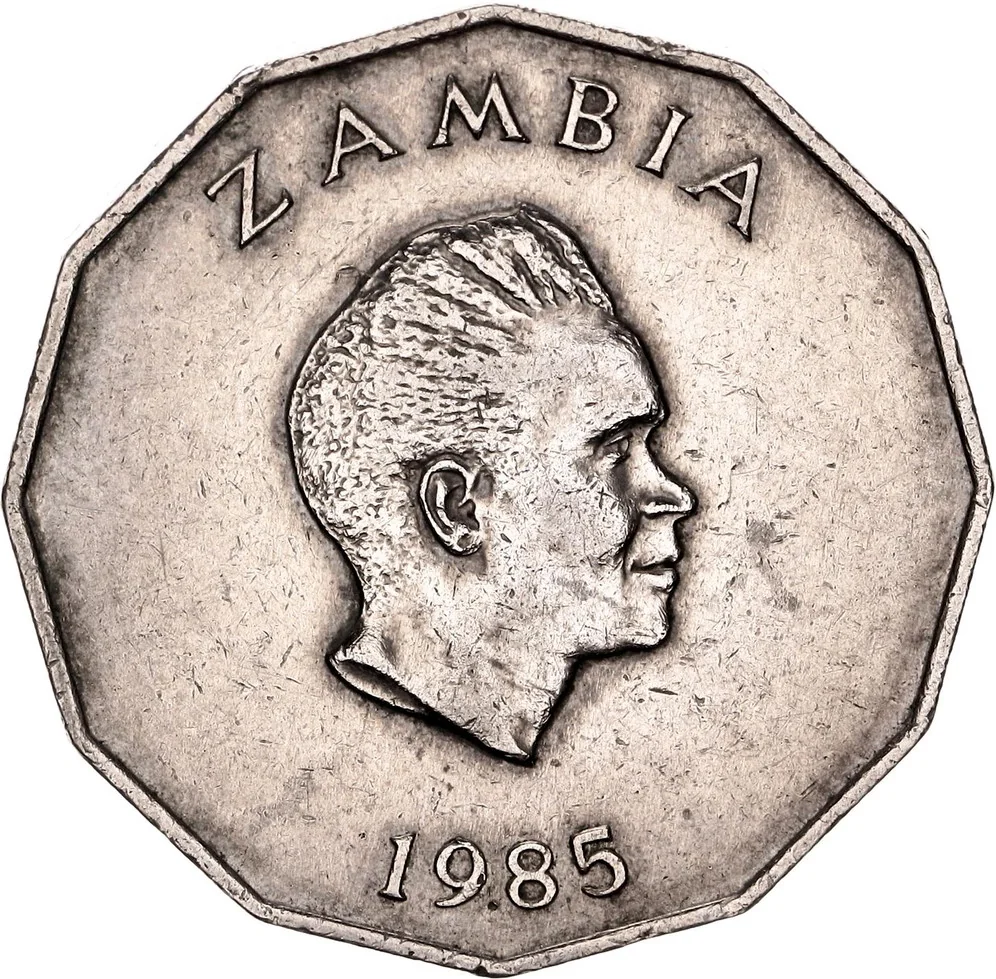
Description:
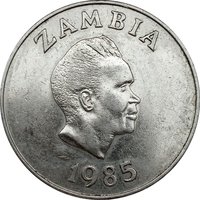
Kenneth Kaunda, Zambian president, facing right. Date below.
Inscription:
ZAMBIA
1985
1985
Script: Latin
Reverse
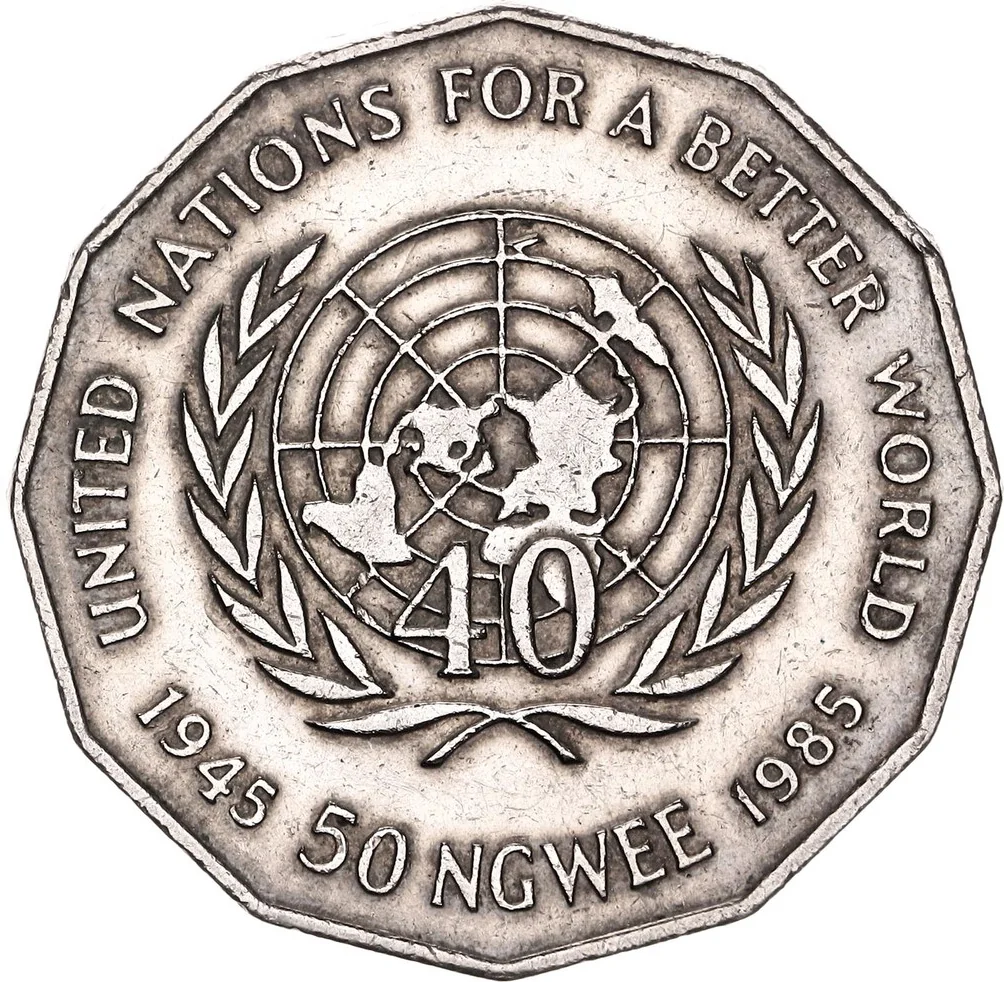
Description:
United Nations seal centered, text encircling.
Inscription:
UNITED NATIONS FOR A BETTER WORLD
40
1945 50 NGWEE 1985
40
1945 50 NGWEE 1985
Script: Latin
Edge
Plain
Categories
| Symbol> Wreath |
| Person> Politician |
| Map |
| Organization> United Nations |
Mints
| Name | Mark |
|---|---|
| Royal Mint | — |
Mintings
| Year | Mint Mark | Mintage | Quality | Collection |
|---|---|---|---|---|
| 1985 | — | — |
Historical background
In 1985, Zambia's currency situation was a critical symptom of its profound economic crisis, rooted in a decade of falling copper prices, unsustainable debt, and structural imbalances. The country's overvalued official exchange rate for the Kwacha, maintained through strict controls, created a vast disparity with the black market, where the currency traded at a fraction of its official value. This dual system fueled rampant smuggling, crippled formal exports, and led to severe shortages of foreign exchange, which was desperately needed to import essential goods like medicines, spare parts, and fuel.
The government, under President Kenneth Kaunda and adhering to International Monetary Fund (IMF) guidance, attempted a major reform in October 1985. This involved a sharp devaluation of the Kwacha by nearly 80% and the introduction of a weekly auction system to determine the exchange rate, aiming to unify the official and parallel markets and attract donor support. Initially, the auction succeeded in stabilizing the currency and generating a modest inflow of foreign exchange, but the devaluation also triggered an immediate and severe spike in inflation, dramatically increasing the cost of living for the already struggling population.
Ultimately, the 1985 reforms proved unsustainable. The auction system was poorly managed and lacked transparency, leading to accusations of favouritism in the allocation of scarce foreign exchange. Furthermore, the government failed to implement necessary complementary measures, such as fiscal discipline and the removal of subsidies, which undermined confidence. By 1987, facing intense public pressure from soaring prices and empty shelves, President Kaunda abandoned the IMF program, reintroduced price controls, and effectively suspended the auction, plunging the currency regime back into disarray and deepening the economic isolation.
The government, under President Kenneth Kaunda and adhering to International Monetary Fund (IMF) guidance, attempted a major reform in October 1985. This involved a sharp devaluation of the Kwacha by nearly 80% and the introduction of a weekly auction system to determine the exchange rate, aiming to unify the official and parallel markets and attract donor support. Initially, the auction succeeded in stabilizing the currency and generating a modest inflow of foreign exchange, but the devaluation also triggered an immediate and severe spike in inflation, dramatically increasing the cost of living for the already struggling population.
Ultimately, the 1985 reforms proved unsustainable. The auction system was poorly managed and lacked transparency, leading to accusations of favouritism in the allocation of scarce foreign exchange. Furthermore, the government failed to implement necessary complementary measures, such as fiscal discipline and the removal of subsidies, which undermined confidence. By 1987, facing intense public pressure from soaring prices and empty shelves, President Kaunda abandoned the IMF program, reintroduced price controls, and effectively suspended the auction, plunging the currency regime back into disarray and deepening the economic isolation.
🌟 Uncommon